In the wake of his recent humanitarian visit to Cuba, RICHARD BURGON points to the now urgent need to defend the island’s political sovereignty and its right to self-determination


 Latest editorial
Life inside foodbank Britain
Across the country we are seeing austerity economics at its cruellest – the deliberate targeting by the state of the poorest in society in order to pay for the mistakes, corruption and greed of the richest, writes MIKE QUILLE
Thousands of jobs are at risk across higher education, yet government funding appears only when universities can be linked to military objectives, says JO GRADY, in the run-up to the Stop the War International Conference this Saturday
The Wye, Usk, Arrow and Lugg were once treasured for their clean waters – today, pollution and corporate excess are fuelling demands for a return to public ownership, says MARK SEDDON
The new Employment Rights Act is a step forward, but restoring collective bargaining and union power remains essential to tackling insecurity, outsourcing and low pay, says PAUL WHITEHOUSE
Rising support for Farage’s party reflects Labour’s failure to defend working-class living standards or offer a credible alternative to neoliberal decline, says JOSEPH MILLS
Trade unionists are mobilising to support Cuban workers and public services, amid escalating US pressure on the socialist island. RONAN OGILVY explains




Jade is 19 and a client of the Children’s Society, as she gets through a difficult period of her life. Eight weeks ago her benefits were stopped for not attending an appointment at the jobcentre. Since then, she has been surviving on a hardship payment of about £30 a week. Twice she has run out of food and had to go to a foodbank on Tyneside for help.
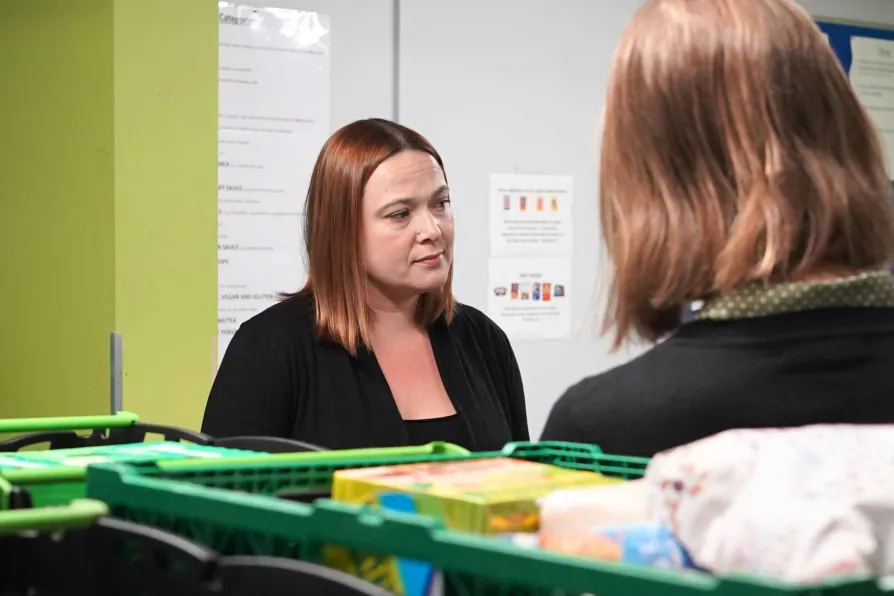
In 2010 there were a handful of foodbanks in the UK. Since then, one has opened every two days, and there are now over 1,000, covering the whole of the country.The Trussell Trust operates a “social franchise,” running over 400 foodbanks across the UK which are self-financing and self-managing, but which operate to common standards. They all distribute a nutritionally balanced selection of food in parcels which provide three meals for three days.
During the last financial year, Trussell Trust foodbanks alone handed out enough food to feed over a million people, including 400,000 children. This is a 20 per cent increase in usage from the year before. I visited the West End Foodbank in Newcastle, which is the biggest in the country, to find out how they work. It only opened two years ago, but already it issues four tons of food a week. In the last week of April this year it handed out 270 parcels of food to families, couples and single people. In the last financial year, over 50,000 people were fed with food parcels designed to last three days. That number includes 23,000 children.

Similar stories


DYLAN MURPHY reports that far from helping people back into work, the sanctions regime is inflicting unnecessary trauma on working-class families

Our housing crisis isn’t an accident – it’s class war, trapping millions in poverty while landlords and billionaires profit. To solve it, we need comprehensive transformation, not mere tokenistic reform, writes BECK ROBERTSON