HENRY FOWLER, assistant general secretary of the General Federation of Trade Unions (GFTU), reports on Day 2 from the GFTU’s residential Summer School at the Workers’ Retreat, Quorn Grange Hotel


 Latest editorial
Dead rivers and living corporations?
Capitalism has exploited — and polluted — our natural resources for too long, it’s time we treated our rivers as living beings, writes MIRIUM GAUNTLETT, LIAM SHAW and ROX MIDDLETON
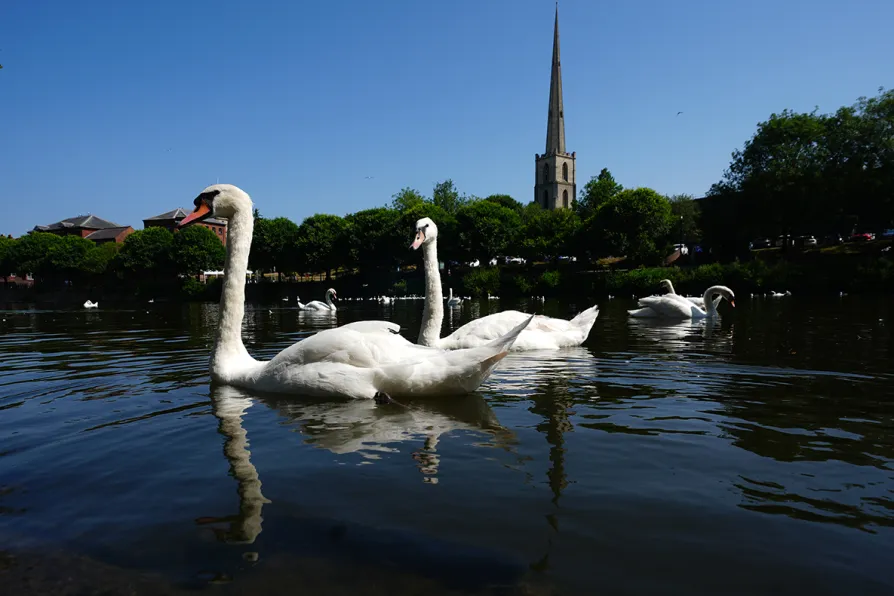 Swans on the river Severn in Worcester. Temperatures are set to continue to rise across the UK throughout the week, and more regions are likely to reach their local heatwave thresholds, July 9, 2026
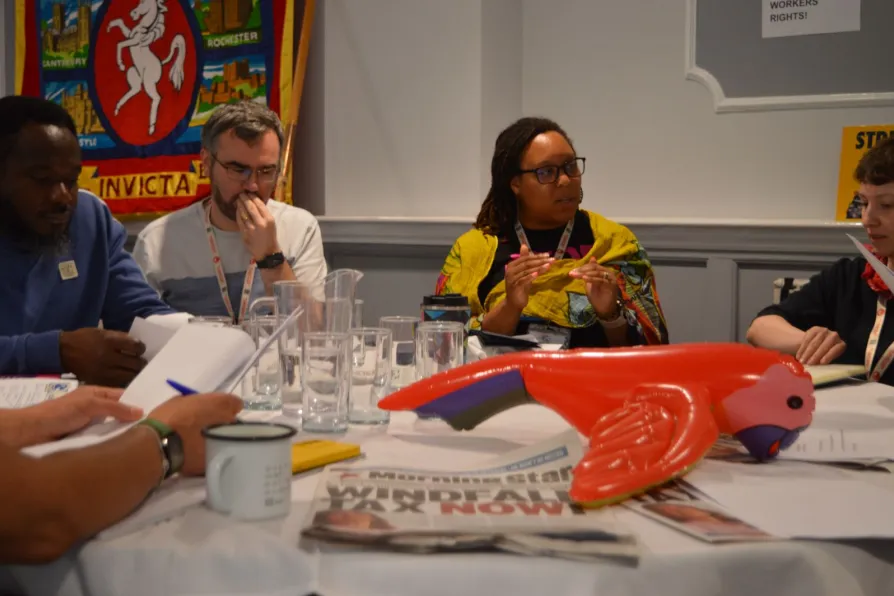
Assistant general secretary of the General Federation of Trade Unions HENRY FOWLER reports on day 1 from the GFTU’s residential Summer School at Quorn Grange Hotel
MPs and others called for the urgent release of tortured Palestinian doctor, Hussam Abu Safiya, held hostage by Israel and reportedly near death, reports LINDA PENTZ GUNTER
Strike Map co-founder HENRY FOWLER discusses the significance of today’s joint union letter to video game giant Rockstar, demanding trade union recognition for its workers. Their conversation highlights how our movement can harness its collective power to rebuild union power across the private sector
The PM leaves office having squandered Labour’s electoral mandate and alienated its grassroots. He will not be missed, writes BRIAN LEISHMAN MP



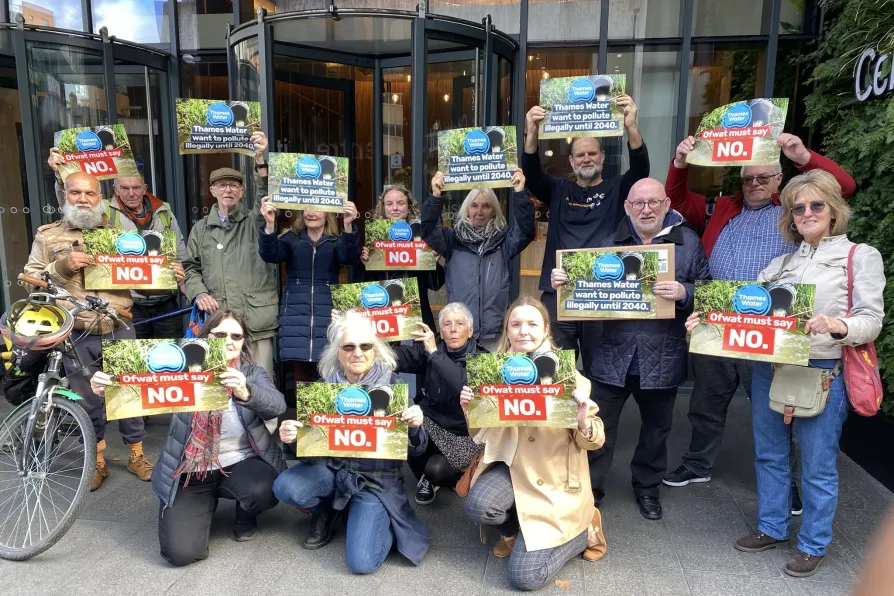
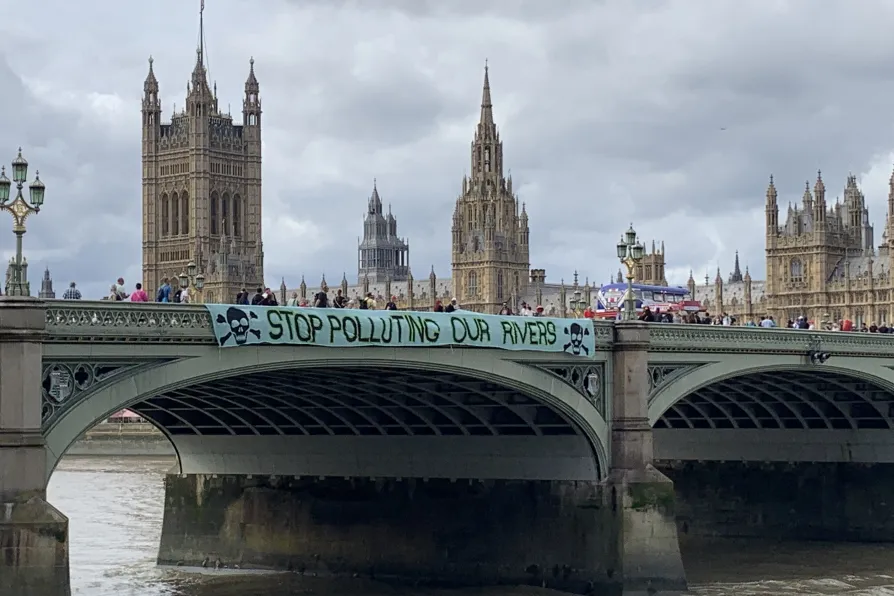
IN 2023, a FOI request sent to Thames Water revealed that the company had discharged at least 72 billion litres of sewage into the river Thames since 2020. The total amount was likely to be far higher than this, as only part of the sewage network is fitted with monitors that are able to judge the amount discharged. “We are clear that volume of sewage being discharged into our waters is utterly unacceptable,” said a government spokesperson at the time. However, a year later in 2024, it was discovered that 50 per cent more raw sewage was discharged into all rivers in England by Thames Water as compared with the previous 12 months.
Thames Water, the largest of the privatised water companies (we wrote about the detrimental effects of privatising water back in August 2022 here), dumped raw sewage for almost 300,000 hours in 2024. Most of this sewage came from its sewage treatment plants, as well as its network of combined sewer overflows and from sewage pumping stations. Instead of treating and safely storing sewage, Thames Water has been cutting costs by dumping it into rivers and streams.
Although it was handed a huge fine of over £120 million last year, improvement has been slow. In Surrey, Burstow stream has been polluted by the nearby Thames Water sewage treatment works for years: since 2019, over 1,200 hours of untreated sewage have been discharged into the stream every year. According to Thames Water, it has committed to spending £6 billion upgrading its sewage network over the next five years. And meanwhile, destruction of the flora and fauna supported by the stream continues.
The Thames Water crisis is partly due to privatisation and the prioritisation of profit over providing clean, safe drinking water for people. But it’s also linked to a wider problem: that for hundreds of years, capitalism and imperialism has considered the natural world solely as a resource to be exploited for capital. Rivers are an example: simple drains for sewage and pollution; a source of hydroelectric power through dams; transport routes. Worse still, where they’re not considered assets, they’ve been eliminated, diverted and treated as things that can be bricked over and buried so urbanisation can continue. London is known for the Thames, but over 20 more ghost rivers flow deep beneath the streets, confined to drains and tunnels: the Fleet, the Tyburn, the Peck, the Falconbrook.
In his book, Is a River Alive? Robert Macfarlane argues in the affirmative. He draws upon examples from Maori communities in Aotearoa New Zealand and indigenous Ecuadoreans, agreeing with their beliefs that rivers should be considered as living beings, the same as humans are. In Ecuador, such a concept is actually enshrined in the constitution.
In 2008, a national referendum ratified a new constitution in Ecuador, with four articles that became known as the “Rights of Nature” articles. The first states that “Nature, or Pacha Mama, where life is reproduced and occurs, has the right to integral respect for its existence and for the maintenance and regeneration of its life cycles, structure, functions and evolutionary processes.” The second, that “nature has the right to restoration.”
The third article outlines the state’s obligation to “apply precaution and restriction measures in all the activities that can lead to the extinction of species, the destruction of the ecosystems or the permanent alteration of the natural cycles.” The fourth article recognises the relationship between nature and humans, that all people “will have the right to benefit from the environment and form natural wealth that will allow wellbeing.” These ideas originate directly from elders and leaders from Ecuador’s 14 indigenous nations, and CONAIE, Ecuador’s largest indigenous rights organisation.
What could this mean in practice? Jacinta Ruru, a Maori legal scholar, wrote this in 2010 alongside James D K Morris: “Maori view many rivers as tupuna (ancestors) … There is a deep belief that humans and water are intertwined as is encapsulated in common tribal sayings such as ‘I am the river and the river is me’ and ‘the river belongs to us just as we belong to the river’.” They go on to argue that, “By regarding the river as having its own standing, the mana (authority) and mauri (life force) of the river would be more likely to be regarded as a holistic being, rather than a fragmented entity of flowing water, river-bed and river-bank.” In other words, rivers could, and should, be regarded as having legal rights. This concept, in their view, best reflects the Maori way of experiencing the natural world.
In 2017, Ruru and Morris’s ideas took concrete form in the Te Awa Tupua Act, which was passed by the Aotearoa New Zealand Parliament in March of that year. The Act legally recognised the Whanganui river as an indivisible living whole, an ancestor to the Whanganui tribe. And in doing so, it granted the river the legal rights, powers and duties of a person. This includes the right to flourish; the right to flow unpolluted and undammed to the sea; and the right to represent itself in court if these are threatened. To uphold these, a representative body was established, formed from the regional iwi (a Maori group), local government and Crown (the Aotearoa New Zealand state), with two appointed guardians to act as the human face and voice of the Whanganui river in legal and administrative matters.
Passing these acts is not the beginning and end of the matter. In Ecuador, controversial mining and drilling concessions have been granted to foreign mining companies to extract copper and gold, directly threatening its precious cloud forests and the rivers that flow through it. In Aotearoa New Zealand, the election of a conservative government has provoked fear that the Te Awa Tupua Act could be superseded by future legislation. And it’s difficult to imagine any British government acknowledging the Thames as deserving of legal rights and, further, holding to that principle by depolluting it.
Yet the idea of considering a river as a person, an alive being, is one that will continue to shift the narrative, and has the potential to reverse years of destruction and pollution. Corporations have been recognised as legal persons for years; why not rivers? We don’t need to agree on the metaphysical implications to recognise the value of this legal framework. The Elwha River was undammed after decades of struggle by the Lower Elwha Klallam Tribe, and now flows freely into the Strait of Juan de Fuca.
This process revitalised salmon populations, enabling them to return up the river to their ancestral spawning grounds. In turn, the salmon feed the soil of the upper Elwha waterhead when they die and decompose, thus providing nourishment to the forests growing there too. Perhaps something similar may happen one day with the buried rivers beneath London, or the polluted rivers of other cities and rural areas. When allowed to flourish, a river can transform the urban landscape in unpredictable and beautiful ways. Unlike a corporation, which is a capitalist device for extracting value from the natural world, a living river itself is life-giving. It’s a strange world where Thames Water is a person but the Thames isn’t.

Similar stories