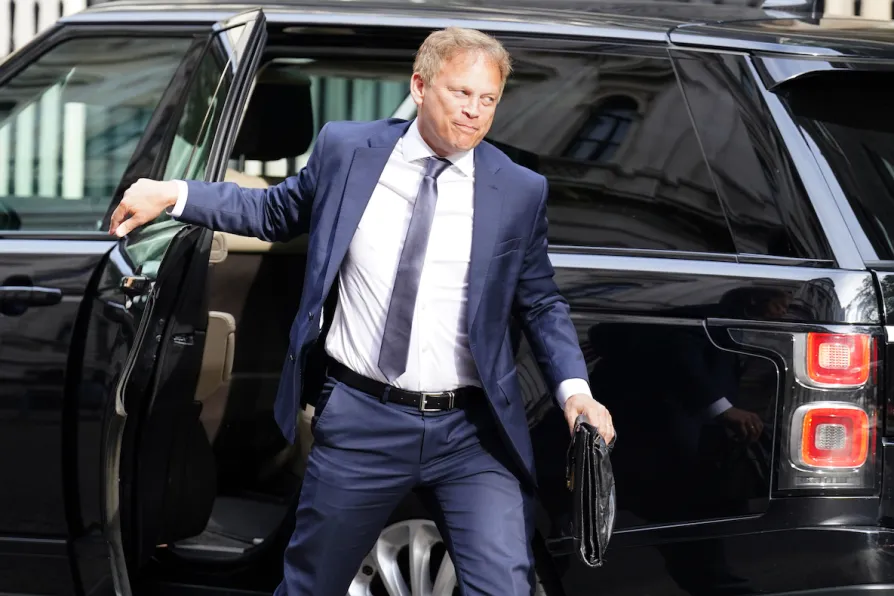
 Grant Shapps arrives in Downing Street, central London, ahead of an expected Cabinet reshuffle. Picture date: Thursday August 31, 2023.
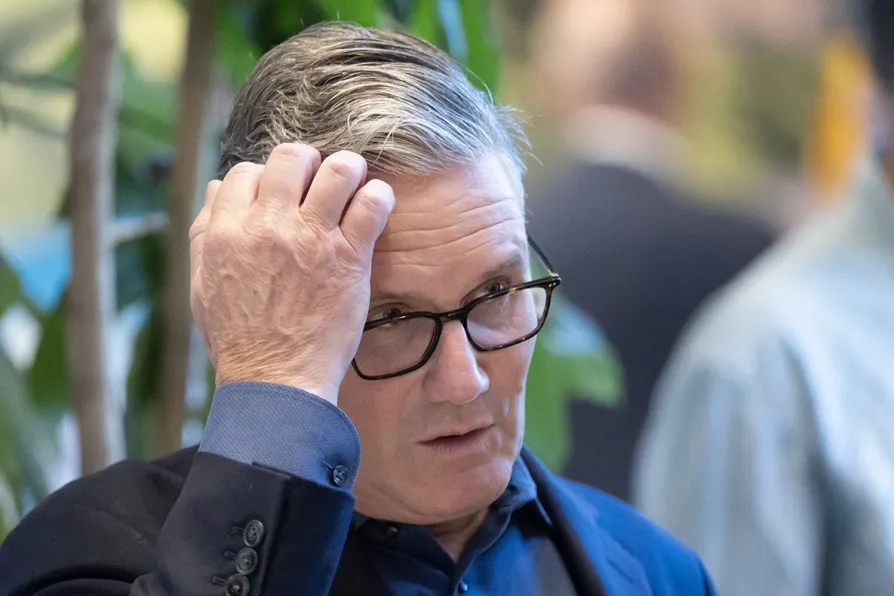



GRANT SHAPPS’S principal qualification for his promotion to secretary of defence is his loyalty to Rishi Sunak.
The Prime Minister has replaced Ben Wallace, Boris Johnson’s pick for the post.
Shapps has no military background, unlike Wallace who rose to the rank of captain and saw service in Germany and the colonial outposts of Cyprus, Belize and Northern Ireland.
He has little chance of matching Wallace in length of service at the MoD. With an election coming, Shapps is now cast in a caretaker role with a brief that prioritises dampening down controversy and avoiding scandal.
For this he is particularly unsuited.
Shapps’s slippery reputation arises not just from his ministerial merry-go-round, with one job — as Liz Truss’s home secretary — lasting just days, but also from his exceedingly odd business history.
In 2015 he denied having a second job while an MP and was forced to retract a month later. This followed a controversy over his use, in his business operations, of the names Michael Green, Corinne Stockheath and Sebastian Fox.
By coincidence his appointment comes the same day that Ukraine’s minister of defence — in the wake of a corruption scandal in his ministry — was removed from office and exiled to London as ambassador.
MoD manoeuvrings are notoriously opaque and speculation surrounds Wallace’s long-anticipated departure. Wallace showed a spark of independent thinking, firstly when he criticised Volodymyr Zelensky’s never-ending importuning and again in announcing in advance his resignation.
Wallace wanted to succeed Jens Stoltenberg as Nato secretary-general but the US vetoed this and instead the bellicose Norwegian social democrat was again pressed into service.
Britain’s strikingly bipartisan political class is more or less united on the broad outlines of defence policy. The Lib Dems say that at a time when the armed forces need someone to stand up for them, Sunak has appointed a yes-man.
Labour’s shadow defence secretary — former TUC functionary John Healey — congratulated his new opposite number but opined that after 13 years of Tory defence failures, a change at the top will not change this record.
The Greens have abandoned their longstanding opposition to Nato membership. The SNP opposition to Nato’s nuclear policy is limited to thinking it should be sited somewhere other than Scotland and decorates its hypocrisy with the ludicrous statement that “we continue to be pro-Nato because we are pro-peace.”
This century has been scarred by Nato’s wars, from Yugoslavia, to Afghanistan, from Libya to Iraq.
Britain’s “defence” policy is largely shared with the US and reflects the close integration of the aerospace and military industries in both states, which is deepened by the global Aukus intelligence-gathering operation and put into effect in each of Nato’s wars.
Britain laid out £2.3 billion of military aid to Ukraine in 2022 and Sunak promised to match this in 2023.
The mountain of ordnance supplied so far includes 10,000 anti-tank missiles, 100,000 rounds of artillery ammunition (with 100,000 more planned for supply in 2023), more than 100 anti-aircraft guns and self-propelled artillery. Britain has trained more than 15,000 recruits to Ukraine’s armed forces.
A majority at the 2022 TUC Congress called for increased “defence” expenditure and arms exports to Ukraine, supported Nato and in doing so abandoned earlier TUC policy in favour of diversifying manufacturing into civilian production.
This reflects, on the part of some in the labour movement, a complete abandonment of class politics on an issue where an independent working-class position is vitally important.
A year on and the false premises and magical thinking which underlies support for Nato’s proxy war in Ukraine are increasingly revealed for what they are. Trade unionists know that every conflict ends in negotiations and the time for talks to end the Ukraine war is now.

The defence secretary’s resignation reveals not a split over principle but a dispute over pace of military spending, as Britain’s political Establishment unites behind deeper Nato commitments, argues NICK WRIGHT
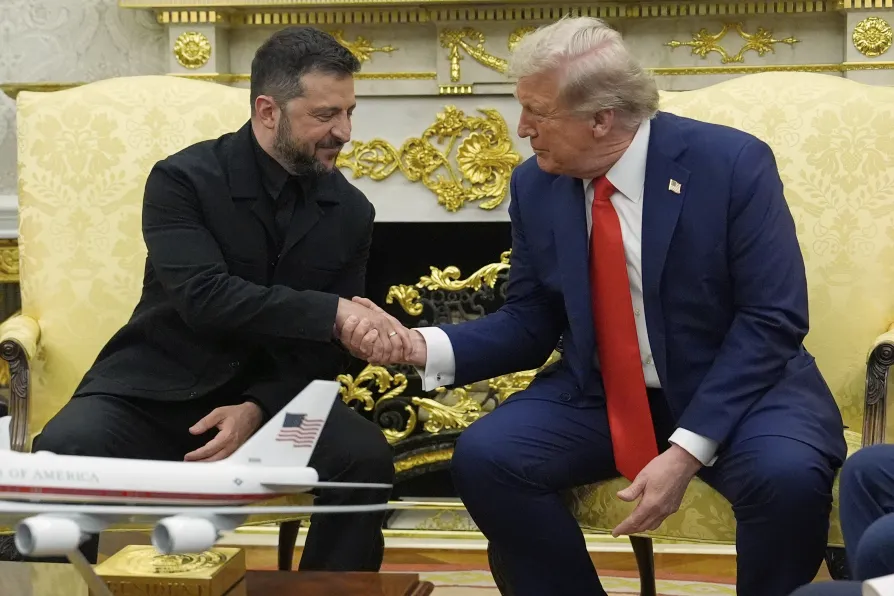
Washington plays innocent bystander while pouring weapons and intelligence into Ukraine, just as it enables the Gaza genocide — but every US escalation leaves Ukraine weaker than the neutrality deal rejected in 2022, argue MEDEA BENJAMIN and NICOLAS JS DAVIES
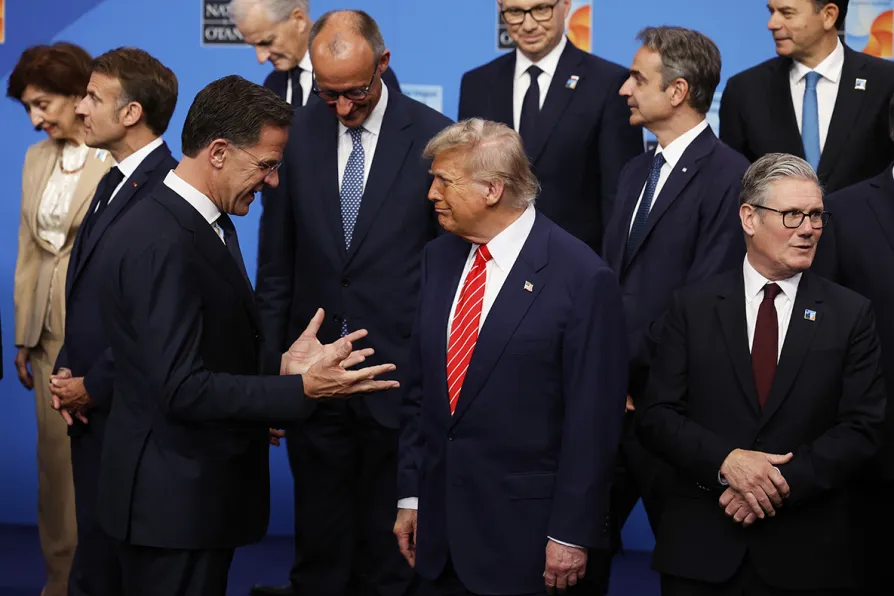
In an address to the Communist Party’s executive at the weekend international secretary KEVAN NELSON explained why the communists’ watchwords must be Jobs not Bombs and Welfare not Warfare