

 Latest editorial
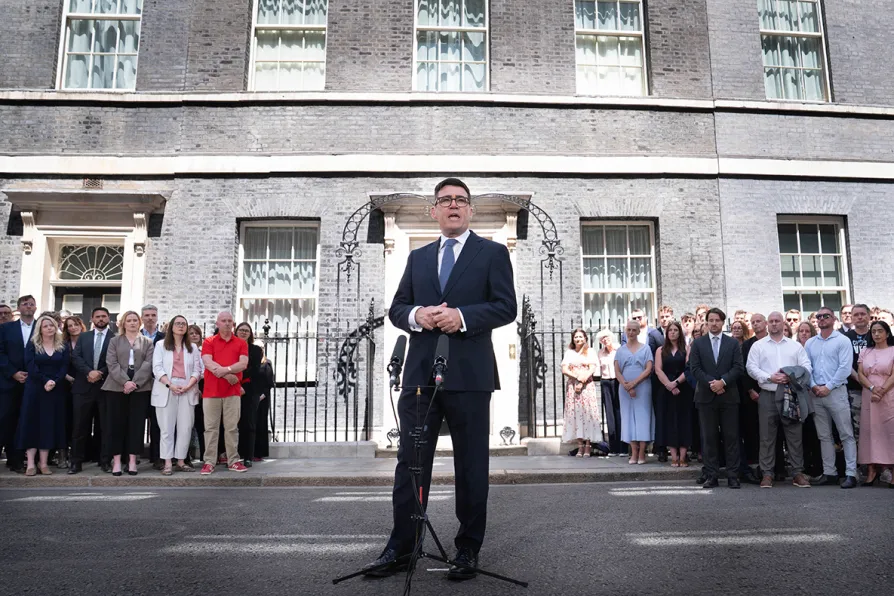
 Prime Minister Andy Burnham speaks to staff and media at 10 Downing Street in London, July 20, 2026





A REAL-TERMS fall in private-sector pay and a new 11-year youth unemployment high shows that Prime Minister Andy Burnham must go further than cutting VAT on energy bills, the TUC said today.
Data from the Office for National Statistics (ONS) revealed that regular average wage growth in the private sector fell below 3 per cent in the three months to May for the first time since 2020.
While unemployment has remained unchanged at 4.9 per cent over the three months, it now stands at 16.4 per cent for 16 to 24-year-olds, with around one in six young people seeking work.
The figures also showed there were 7,000 fewer vacancies in the quarter to June at 712,000, following a 19,000 drop in the previous three months.
TUC general secretary Paul Nowak said the figures show Mr Burnham is “doing the right thing” by pledging action on the cost of living.
“Working people are up against it with stagnant real pay, over a million people stuck on insecure zero-hour contracts, and a million young people not in employment, education, or training,” he said.
“Andy Burnham is sending the right signals by pledging to help young people into work. In the months ahead, he will need to expand the youth jobs guarantee and double down on his pledge to reindustrialise Britain and deliver good growth in every postcode.”
Work Foundation senior researcher and policy analyst Aman Navani added: “Young jobseekers face an acute shortage of opportunities, with starter job vacancies down by almost half over the past decade.
“This shortage is especially significant in the north-east and East Midlands, underlining how a young person’s prospects can depend heavily on where they live.
“While the government is right to focus on making the education system work better, it must also focus on the demand side.
“Improving education and employment support will only go so far without concerted action to create more good-quality jobs and give young people a clear route into secure and sustainable work.”
Labour could raise £10 billion a year with a 2 per cent minimum charge on households with more than £100m in wealth, research by Paris School of Economics and King’s College London found.




PHILIP ENGLISH says military spending will not create the jobs young people need — instead, build an economy based around needs, not profit