

 Latest editorial
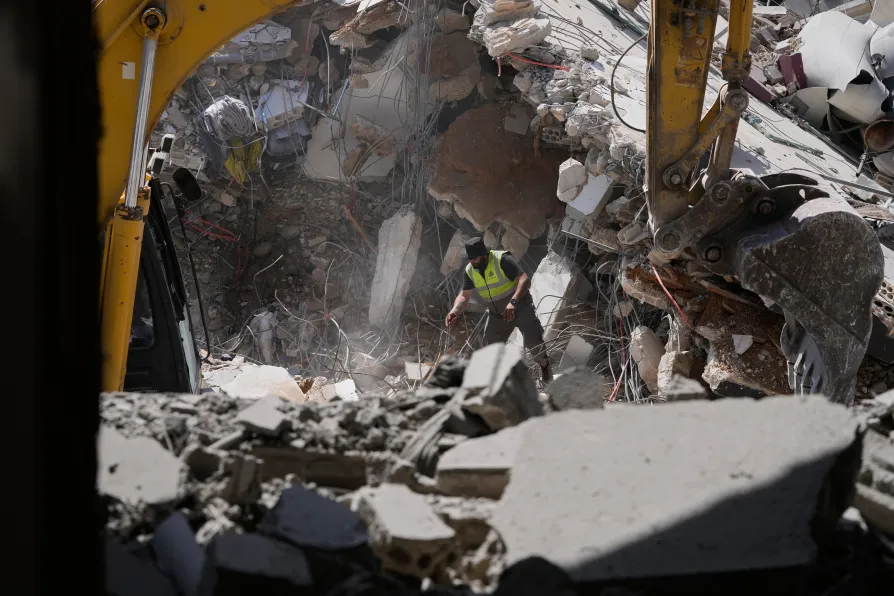 A rescue worker searches for victims under the rubble of a building that was hit Monday in an Israeli airstrike in the southern port city of Tyre, Lebanon, June 2, 2026




HEZBOLLAH today rejected the latest ceasefire agreement reached between Israel and the Lebanese government, demanding a complete Israeli withdrawal.
The new deal includes the creation of “pilot” security zones inside Lebanon from which Hezbollah would be banned, and a stipulation about the group’s eventual disbanding.
This came as Israeli strikes killed at least four people, according to local authorities. A United Nations peacekeeper was also killed in the crossfire.
Hezbollah secretary-general Naim Kassem, in a written statement, said that the agreement’s demand that Hezbollah fighters leave southern Lebanon under fire would mean “surrender, defeat and achieve the enemy’s goals.
“What we are concerned about is an end to the aggression, ceasefire and Israel’s withdrawal.”
He said: “We did not make any commitment to any party to stop resisting as long as there is occupation.”
The ongoing fighting in Lebanon, where Israeli forces have seized large swaths of the south, threatens efforts to end the Iran war and reopen the Strait of Hormuz, a key transit point for oil and gas, whose closure has jolted the world economy.
A Serbian peacekeeper was killed and two other peacekeepers were wounded when a mortar struck their location near Marjayoun, a Christian-majority town that has seen intense fighting, according to the UN peacekeeping mission and Serbia’s Defence Ministry.
Neither said whether the mortar fire came from Israel or Hezbollah.
Lebanon’s National News Agency said a drone strike killed a motorcyclist and wounded four people in the village of Maaroub.
It said that air strikes on the village of Sohmor in the Bekaa Valley, in eastern Lebanon, killed three people and wounded others. It also reported air strikes in other areas of the south.
There was no immediate comment from the Israeli military, which claims it is striking Hezbollah facilities.
Hezbollah resumed its rocket fire days after Israel and the United States launched their surprise attack on Iran on February 28.
Before then, Israel had regularly carried out strikes in Lebanon against what it said were militant targets, often killing civilians, despite an earlier truce reached in 2024.
In the southern city of Sidon, many residents said previous ceasefire agreements had failed to stop the violence.
“Every few days a ceasefire is announced, but people keep getting killed,” said Mayada Hijazi.
“It’s all talk and no action,” said Salah Nassab. “We keep going back to our homes and then we get displaced again. We’re very tired.”
More than 3,500 people have been killed in Lebanon and over 1.2 million have been displaced. The fighting has officially killed 27 Israeli soldiers and three civilians.
