CHRIS SEARLE welcomes a startling vision of contemporary Newport from a veteran photographer of the British working class


 Latest editorial
Messy people vs authoritarian systems
ANDY HEDGECOCK welcomes an entertaining, useful guide to the threats and promises of mathematical rationality
 HUMAN THINKING VS MACHINE PROCESS: Health workers a the London headquarters of US tech giant Palantir, awarded a £330 million contract by NHS England to create a new data management system, December 2023.

ANGUS REID recommends a very unusual documentary: a love story between two disillusioned journalists
In verse and polemic, the bard points out that he is a poet and musician, not a political party
MARIA DUARTE, JAMES WALSH and ANDY HEDGECOCK review The Invite, My Father’s Island, Nirvanna: the Band, the Show, the Movie, and Oh My Goodness!
PAUL DONOVAN is chilled by the contemporary resonance of Harper Lee’s coming of age tale amidst racism and white supremacy in this excellent production
GEOFF BOTTOMS recommends the unashamedly light-hearted escapism on offer in this stage version of the 1963 film




The Irrational Decision
by Benjamin Recht, Princeton University Press, £25
FORTY years ago, Joseph Weizenbaum’s Computer Power and Human Reason (1976) demolished my optimistic view of computer-based decision-making.
The Irrational Decision – a much less impassioned book – focuses on the limitations of technology rather than its dangers. Nevertheless, it is apparent that Weizenbaum’s jeremiad on the surrender of judgement to calculation informs this timely and persuasive exploration of the relationship between people and systems.
Mathematician and computer scientist Benjamin Recht explores the dominant role of mathematical rationality in contemporary policy making and tracks its history from the statistical analysis of Blaise Pascal to the “rational optimism” of cognitive psychologist Steven Pinker. Recht’s explanations of complex developments in mathematics, AI and cognitive science are clear, accessible and engaging.
The book begins with a definition of mathematical rationality based on four fields, or pillars. These are mathematical optimisation (mathematical modelling); game theory (strategies for meeting objectives in competitive situations); randomised experiments (the foundation of machine learning); and statistical prediction. There are chapters tracing longitudinal developments in relation to each of the pillars.
Astonishingly, it is revealed that algorithms used in a variety of contemporary contexts have their roots in prototypes developed by pioneering computer scientists 80 years ago. For example, early work on optimisation has roots in resource planning during World War II, but its linear programming methods were later applied in socio-economic policymaking and control of the Apollo moon mission.
Recht explains how advances in mathematical methods and computer systems triggered complementary progress in integrated circuit (chip) design. These advances were crucial to the emergence of big data and bitcoin mining. It is noted that computers are constantly being optimised – becoming smaller, faster, more accessible and increasingly powerful over time – while human societies remain “messy” and resistant to authority. This mismatch – between the behaviour of people and development of systems – is a theme that recurs throughout the book.
The chapter on game theory is the most demanding, but specific examples from Go, Poker, Prisoner’s Dilemma and others – some supported by tables – support understanding. Recht asserts that gaming techniques have enhanced processes allocating medical residencies, school places and organ donation. However, he adds that ever-changing priorities and values mean it is a valuable tool only when used in tandem with human judgement.
Recht believes tempering rule-based systems with informed choice is essential in the pharmaceutical sector. Decisions relating to the control of medicines benefit from experimentation within a rule-based system. This provides the safest starting point, but human agency must become involved when findings are ambiguous – or turn out to be wrong.
In a chapter on the statistical and predictive power of machine learning, Recht highlights an unsettling dilemma for computer scientists: they are now involved in the creation of systems whose potential they cannot fully understand.
Closing chapters switch the emphasis from machine processes to human thinking. A review of investigations in cognitive psychology – on heuristics and biases – shows people are far less rational than is widely assumed. For Recht, this is a characteristic rather than a deficit. Being aware of, and valuing, our naturalistic decision making, while selectively drawing on robotic knowledge, could increase the scope of human choice and support positive social transformation. This, he suggests, will depend on recognising that rule-based systems are artificial and limited. They can be oppressive, flawed and joyless; and, sometimes, they need to be modified by human judgement.
The book ends on a powerful note, with Recht acknowledging that we “can’t compute our way to utopia” but remaining cautiously optimistic that focused collective action can ensure human values remain central to social and economic planning.
Recht’s analysis of the rise of computer decision-making is extensive but not comprehensive. He focuses on technical, philosophical and bureaucratic issues: matters arising from the ownership of data, systems and other resources are alluded to but not explored in depth.
That aside, this guide to the threats and promises of mathematical rationality is entertaining and essential reading.

Similar stories

ANSELM ELDERGILL explains why the rule of law is fundamental to our liberty and welfare
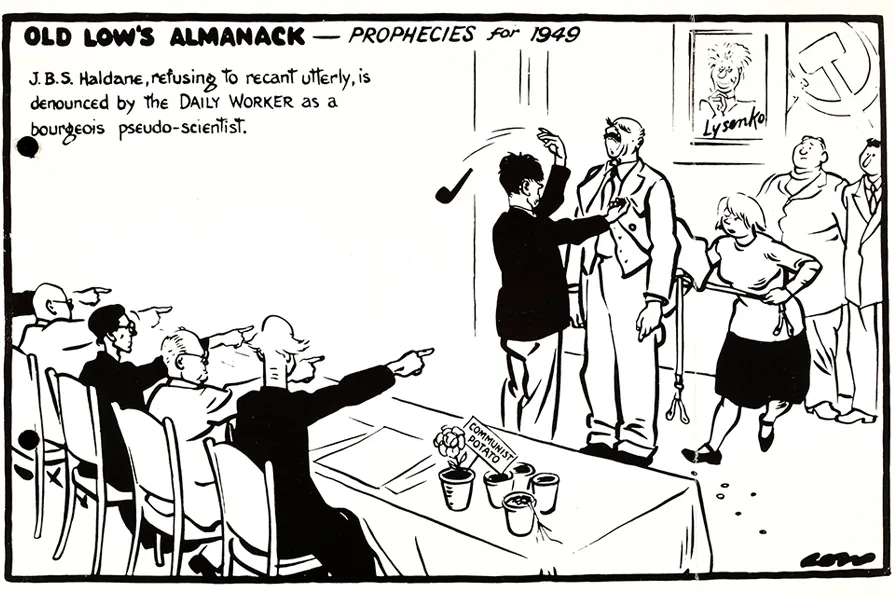
JOHN GREEN’s palate is tickled by useful information leavened by amusing and unusual anecdotes, incidental gossip and scare stories

JOHN GREEN asks how can we take decisive action on population levels with a world leader who is a destructive ignoramus
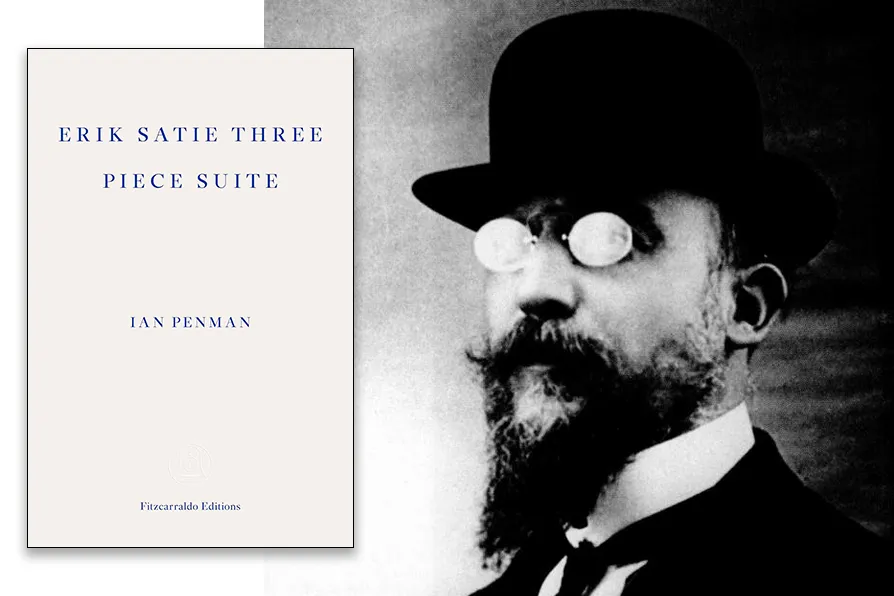
ANDY HEDGECOCK relishes an exuberant blend of emotion and analysis that captures the politics and contrarian nature of the French composer