In the wake of Ann Widdecombe’s murder, JOHN GREEN wonders whether the government will really get to grips with the root cause of these attacks on our MPs


 Latest editorial
Nature as well as society works dialectically, asserts the Marx Memorial Library and Workers’ School
 Planet Earth pic by Kevin M Gill


In the wake of Ann Widdecombe’s murder, JOHN GREEN wonders whether the government will really get to grips with the root cause of these attacks on our MPs
Despite the screeching from the right-wing media, Burnham’s speech showed that far from being stuck in the past — he’s learning from it, says Morning Star editor BEN CHACKO
Rising temperatures and human activity are making life far harder for these vital pollinators. ALEX DITTRICH explains
Lesbians and Gays Support the Miners co-founder MIKE JACKSON talks to Matt Kerr about the enduring power of Pride, protest and trade unionism
Behind the language of military strategy is a confrontation that risks drawing the wider Middle East into war, says STEVE BISHOP



THE short answer is “yes.”
Two early answers in this series examined the fundamental assertions of materialist dialectics: that “nature” — from subatomic particles to the cosmos as a whole — not only “exists” in reality but that its parts are interconnected and constantly in flux. Importantly, changes in any part of that interconnected system are a consequence not just of external forces but also of the often opposing (or “contradictory”) interplay of internal processes: they can lead to the replacement of one set of relationships by another and quantitative changes can give rise to qualitatively new states and “emergent properties.”
These ideas had already begun to be firmly embedded in science well before Marx — in physics (especially electro-magnetism and thermodynamics), in geology and earth processes, and in evolutionary theory. The significant contribution of Marx and Engels was to recognise them as a general principle which could be seen operating also in human affairs.
For example, dialectical processes can be seen in the interplay of economic, technological and social change which led to the emergence of capitalism from feudalism. Within capitalism the search for profit involves the development of new technologies, which on the one hand displace jobs but may also create new products and markets. At a more general level, capitalism itself is based on the exploitation by capitalists of a working class whose consciousness enables them to challenge the power of capital and, potentially, transform society into something new.
Throughout their work, both Marx and Engels were concerned to understand the dynamics not just of human society but of our planet as a whole. In Capital Marx emphasised the way that humans are both part of nature and at the same time transform it, often with detrimental consequences.
A series of essays on contemporary advances in science and technology written by Engels between 1872 and 1882 were not published until 1925, after his death, with the first English edition of Dialectics of Nature in 1939. They included his ground-breaking but unfinished The Part played by Labour in the Transition from Ape to Human; a demolition of the paranormal, Natural Science and the Spirit World; and notes on physics, chemistry, biology — and dialectics.
Dialectics subsequently became codified by Lenin, Stalin, Mao and other Marxists as a series of ontological principles or “laws”; the transformation of quantity into quality; the unity and interpenetration of opposites; and the negation of the negation.
That all sounds pretty abstract but before we move to examples of dialectical processes operating in nature, let’s ask why we have to ask the question at all.
From the mid-1920s onwards, a division developed within Marxist theory in the West. This impeded the development of a coherent ecological view within the left. On one side, shaped primarily by the failure of socialist revolutions in the metropolitan capitalist heartlands which they saw as a refutation of Leninism, some “Western” Marxists became concerned less with the relevance of Marxism to political economy, imperialism and class struggle, than with its philosophical interpretation.
In analysing the inarguable success of capitalist society, they focused on ideology, culture, consciousness and subjectivity. Mainly intellectuals and university-based academics, they saw dialectics as pertaining only to the interactions between humans and their social and natural environment (the “subject — object” relationship) and not to nature itself.
Engels became sidelined as secondary to Marx, to whom he was portrayed primarily as an assistant. His Dialectics of Nature was considered at best an aberration. The subsequent development of dialectics within the Soviet Union, particularly under Stalin and its applications (for example in agriculture, cosmology and geology) was rightly seen as mechanical, dogmatic and (in the Lysenko period) catastrophic.
On the other side were Marxist economists, historians, and, most relevant to this answer, radical physicists, chemists, biologists and polymaths. The latter included prominent figures such as Albert Einstein, JD Bernal, JBS Haldane, Hyman Levy, Lancelot Hogben, CH Waddington, Eric Burhop and Joseph Needham.
The biologists built on the approach of Soviet scientists such as biochemist Alexander Oparin, best known for the “primordial soup” theory of the origin of life, and mineralogist Vladimir Vernadsky who coined the term “biosphere.” Their tradition continues through their more recent successors from Rachel Carson to Barry Commoner, Richard Levins, Richard Lewontin, Stephen Jay Gould, and Steven Rose — all active from the 1970s onwards in the radical science and ecosocialist/environmental movements and notable researchers in their own right.
Alongside their scientific work, they also developed the “methodological principles” of dialectics. These include historicity (understanding how scientific thinking about a problem is conditioned not just by nature, but the way it has been approached in the past); universal interconnection (the assumption that everything is connected unless proved otherwise); and integrative levels (how complex systems — from the human body to earth system processes to the biosphere as a whole — must be understood in their own terms and cannot be simply reduced to collections of their composite parts).
Today, many of the most productive research scientists have their own analogous set of (often implicit) guiding principles relating to their own field of expertise.
“Dialectical” approaches go back some time and are not always explicit. Arthur Tansley’s The British Islands and their Vegetation (1939) became a principal reference text for generations of ecology students. It introduced the word “ecosystem” and it was one of the first studies to analyse plant communities not with reference to static descriptors but in terms of their interactions and dynamics.
Tansley’s earlier (1917) collaboration with other botanists arguing for a more dynamic (effectively, dialectical) approach to the teaching of botany came to be known as the Tansley Manifesto. Along with their support to the new National Union of Scientific Workers (later ASTMS and eventually part of Unite) this led to accusations of “botanical bolshevism.”
Tansley was by no means a Marxist and certainly not a communist. But, alongside classification, the search for pattern in nature led to a new, dynamic understanding of how natural and semi-natural ecosystems behave. One of Tansley’s tutors was the evolutionary biologist (and director of the London Natural History Museum) Ray Lankester, a friend of the Marx family and one of a handful of people at Marx’s funeral.
Today, whether articulated formally or not, nature as a whole has come to be seen as operating dialectically. Perhaps the clearest examples are to be found in the living world. They range from the origin of life itself, through the evolutionary processes which have produced today’s extraordinary diversity of species and the development of individual organisms (from the fertilised egg to the adult with their complex behaviour patterns securing the necessities of life and reproducing the next generation) to the way species interact in different ecological communities and their dynamics as in the colonisation of rock or water bodies leading through successive communities to a dynamic woodland “climax.”
Alongside their work in describing, analysing, classifying, most good scientists (not just biologists, ecologists and conservationists) concerned with processes in the natural world, think dialectically, and see nature as dialectical, though few may use or even be aware of the term.
As earlier answers have emphasised, dialectics is not a predictive tool, except in the most general, abstract sense. And there’s nothing particularly difficult about it. To quote Engels again, people “thought dialectically long before they knew what dialectics was, just as they spoke prose long before the term prose existed.” It provides no answers, no explanations in itself: that’s the job of physicists, chemists, biologists, ecologists. But dialectics can help to frame questions, to suggest paths of potentially fruitful research and to challenge or refine answers which have already been given.
As that research is underway, it is invariably found to be the case that dialectical processes are at work. That’s as true in the natural sciences as it is in the world of human affairs.
Yes, nature is dialectical. As Engels declared: “Nature is the proof of dialectics.” An understanding of nature and natural processes and the way they are affected by human activity is an essential element of Marxist theory and practice.
Details of the Marx Memorial Library and Workers’ School rich autumn programme can be found on www.marx-memorial-library.org.uk/ together with links to past ‘Full Marx’ Q&A (this is number 133). A recording of a discussion on the nature of evolution between Steven Rose (a Marxist) and Richard Dawkins (who isn’t) can be viewed on https://tinyurl.com/RoseDawkins/

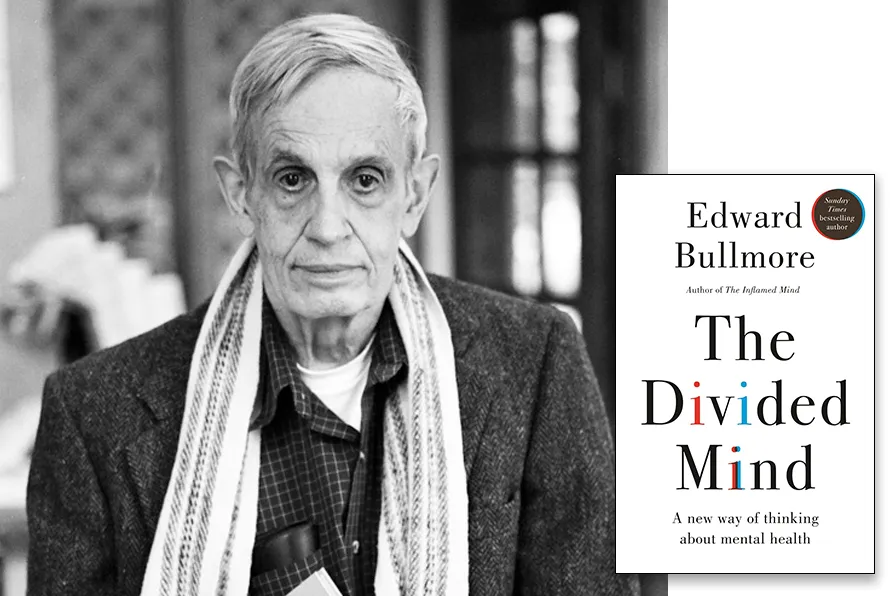
RICHARD SHILLCOCK examines an enjoyable, but philosophically conventional book, and urges Marxists to employ their capacity to embrace the totality in any explanation
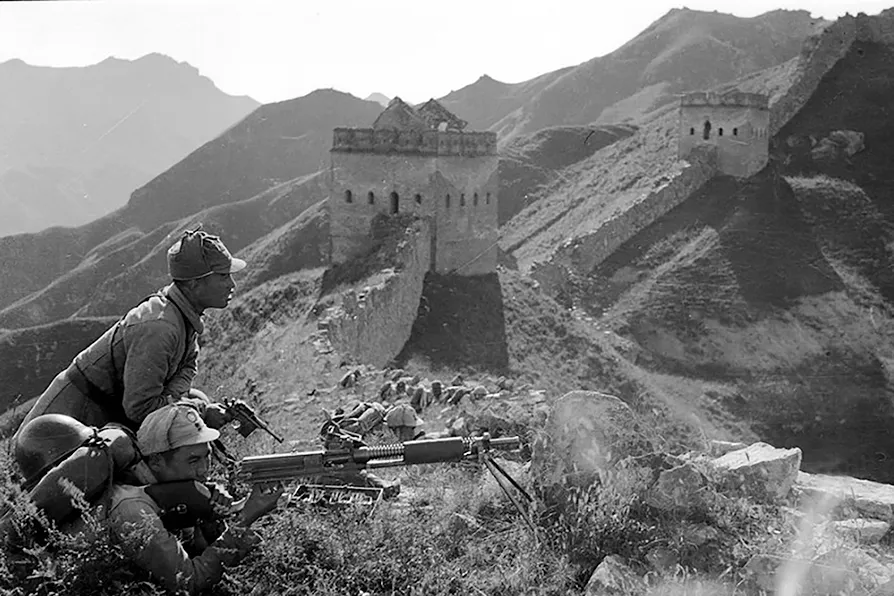
In Part 4 of her look at the Chinese revolution JENNY CLEGG addresses the relationship between the Peasant Movement and the National Movement

The selection, analysis and interpretation of historical ‘facts’ always takes place within a paradigm, a model of how the world works. That’s why history is always a battleground, declares the Marx Memorial Library

From hunting rare pamphlets at book sales to online panels and courses on trade unionism and class politics, the MML continues connecting archive treasures with the movements fighting for a better world, writes director MEIRIAN JUMP