ANDY HEDGECOCK, MARIA DUARTE and ANGUS REID review Synthetic Sincerity, Our Hero, Balthazar, Heartstopper Forever, and A Year In London


 Latest editorial
Restore our woodlands
JAN WOOLF relishes an extensive history of our long relationship to trees in Britain that underlines the current emergency
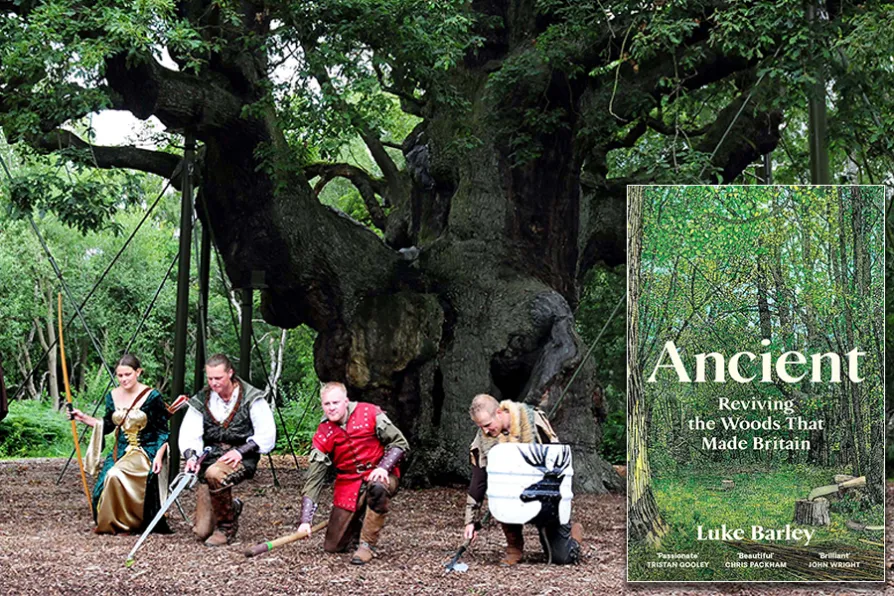 FAREWELL TO AN ANCIENT: The Major Oak during the Robin Hood Festival. In June 2026 the RSPB announced that the tree had died at the age of cca 1,200 years after failing to produce leaves. It is now a natural monument and a biodiversity hotspot.

KEITH RICHMOND relishes a superbly conceived modern version of Aeschylus’ drama of murderous family succession
MICHAL BONCZA recommends a minimalist installation that prompts intriguing connotations
FIONA O’CONNOR questions the achievement of this year’s Orwell prize winner for political fiction
LEO BOIX reviews two powerful Latin American novels in which myth and crime fiction expose the deadly consequences of patriarchy, clandestine abortion and state violence
New releases from Laura Veirs, The Waterboys, and Yard Act
Ron's rages are sincere and — according to his wife — healthily cathartic. But can these splenetic outbursts loosen the grip of capitalism at its most monstrous?



Ancient: Reviving the woods that made Britain
Luke Barley, Profile Books, £11.99
WE ARE historically and emotionally caught up with trees in ways you wooden imagine.
Not a typo, and sorry for the dad joke. But if my editor has let it through, we learn that the planting of trees in our psyches is as deep as the forests that most of us crawled out of.
Former ranger and chartered forester Luke Barley gives us an extensive history of Britain’s woodlands and how integral they are in our lives in his book Ancient.
Chapter headings read as haiku: The Pioneers. Turn, Turn and Turn Again. Being Cruel to be Kind. Common People. A Glimpse of the Wildwood. Woodbanks and Walking Trees. The New Dark Age. Darkness and Light. Inheritance. Treading Softly. Wilding the Woods. The Long Spring.
These chapters, like rings in a tree, describe the many aspects of British arboreal history and culture. Particularly interesting are the wood pastures in chapter four, Common People. Wood pastures were available to all. The intimacy of trees, plants and animals in their own systems meant survival for thousands of woodlanders sustained not just by wood but vegetation, dairy and meat, and who helped form complex, quirky landscapes. The various Enclosure Acts from 1604 right up to 1914 put an end to this.
Progress innit. But progress for who?
From the 18th century onwards the extraction of fossil fuels and industrialisation drew people from the land, with all the cruelties that entailed through our class systems. Likewise, the severance of former intimate links with the forests and woodland. All that cutting back, sawdust, seeing the possibilities in logs or branches, firewood for hearths and ovens and for smelting metals; the sweat and comfort of it all. The common rights to woodland that were protected in England, Wales and Ireland by the 1217 Charter of the Forest, like pannage (the right to graze pigs) and estovers (the right to cut wood for fuel) — had already gone.
Ancient is rich in arcane vocabulary of woodcraft — treen, coupe, cant, hagg — as well as modern terms like coppicing (cutting trees back to a base that rapidly regrows multiple stems).
We learn that between the end of the second world war and the 1980s, nearly half of Britain’s ancient woodland was cleared or replanted with commercial crops of trees; often dark, sterile plantations of conifers. The Ancients now account for only 2.5 per cent of Britain’s land area.
Despite much mysticism around trees, wood as material is integral to the lives of the masses. Under classifications drawn up in the 1970s, UK woods are considered “ancient” if already in existence by 1600 (in Scotland, by 1750). That’s a mere 426 years ago, (276 if you’re a Scot) but these are our last links to the wildwood, places where undisturbed soil still supports an intricate ecosystem, impossible for people to recreate. Think on!
It was over 10,000 years ago that trees from the warmer south began to colonise our chilly north-west corner of Europe. After the retreat of the ice sheets, sea levels were rising, Britannia was cut off from mainland Europe — et voila — trees covered the land, and squirrels could hop from one end of it to the other through the canopies of oak, elm, hazel, alder and birch. Or so the story goes, and if a squirrel lived long enough.
But much, much later, wood became wealth, with oak returning to the warmer climes via the warships of the British ruling elites. It took 1,000 oaks to build a medieval cathedral. We used to sing a song in primary school (circa 1958): Hearts of Oak, “honouring” press-ganged sailors and enforced imperial venture.
Oaks, I recently learned, originated in Azerbaijan (ruddy immigrants).
Back to the book. Ancient covers the more recent history of extraction, privatisation and disenfranchisement that coincides with climate and nature crises. In 2023, researchers found the UK to be one of the world’s most nature depleted nations. In order to hit net zero, the government has a legally binding target to achieve 16.5 per cent woodland cover in England by 2050.
I recall the mockery afforded to “tree huggers” back in the day, but the author, in a rare piece of polemic, tells us why protecting the trees we’ve treated so carelessly is not an idealistic luxury, but vital. “We must see nature recovery and the mitigation of climate change as the biggest challenge of our lifetimes… recalling that we are of nature, not just in it, and repairing our fundamental relationship with the natural world.”
Alongside this we can surely revive our broken industrial base and support our population both emotionally and materially.
Artificial Intel’ can’t do trees. Only people can grow, cultivate, conserve and love them. Who doesn’t feel their spirits lift when tree canopies thrash in the wind? Is that feeling the wind, the tree or you? Just marvel at the interconnectedness of it all.

Similar stories
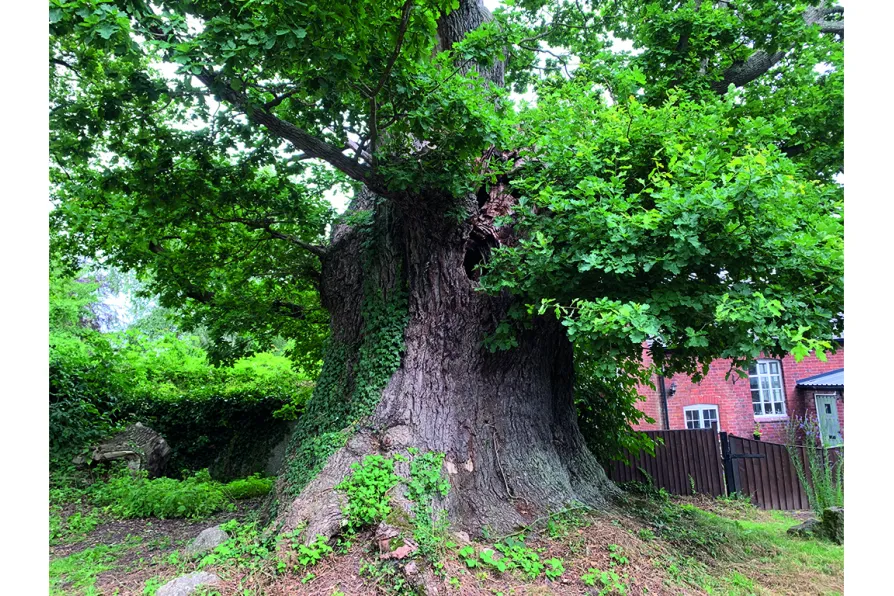
In his fortnightly column MARK SEDDON reflects on the death of Major Oak and why such ancient trees matter to us
TOMASZ PIERSCIONEK is intrigued by a the changing significance of its vast areas of forest to Russia’s history
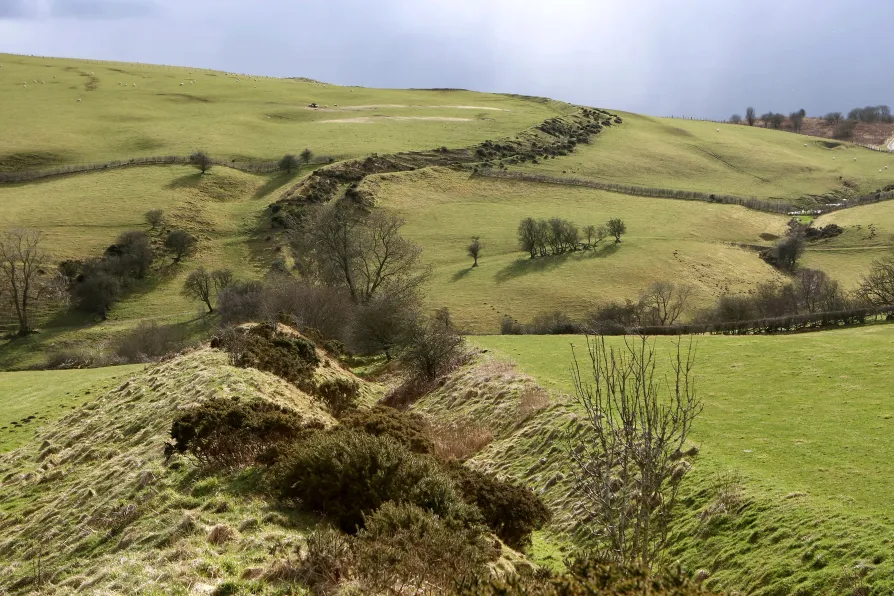
In his fortnightly Borderlands column, MARK SEDDON visits overgrown forts along Offa’s Dyke and reflects on wars past and present
One of the major criticisms of China’s breakneck development in recent decades has been the impact on nature — returning after 15 years away, BEN CHACKO assessed whether the government’s recent turn to environmentalism has yielded results