CJ ATKINS takes a closer look at Trump’s recent spate of red-baiting speeches and asks why the authoritarian president is running scared


 Latest editorial
Slavery is still a scourge of the modern world
With the centenary of the UN Slavery Convention upon us, ROGER McKENZIE argues much needs to be done to rid us of all its contemporary manifestations
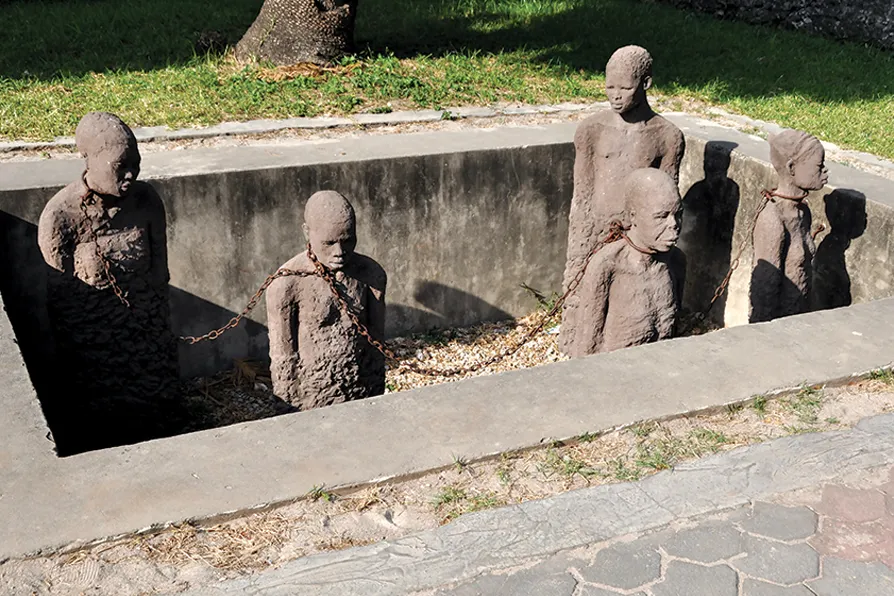 PAST INFORMS PRESENT: The Slavery Memorial in Stone Town, Zanzibar, Tanzania, at the site of the former East African slave market was designed by Swedish artist Clara Sornas in 1998 / Pic: Kevin Harber/Flickr/CC
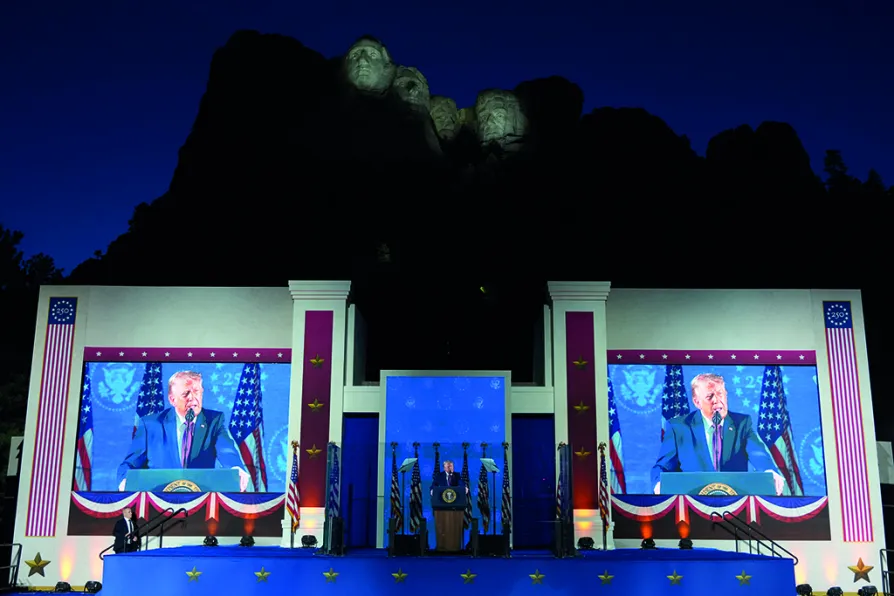
JOHN McINALLY sees little chance of change at Westminster, and calls on the left to get serious about building a real alternative
SEVIM DAGDELEN says European Nato states are escalating ever closer to direct conflict with a nuclear power, and sacrificing welfare states built up over a century to finance it
CLAUDIA WEBBE says the horrific price British patients will pay for this NHS deal is now clear — and there’s time to get out of it, if MPs will only force the issue
KENNY MacASKILL says the lines between party, government and Civil Service in Scotland have been blurred and we need a thorough investigation into how


MORE than 50 million people across the globe are estimated to be in enslavement according to 2022 reports by the International Labour Organisation (ILO) and UN.
During the horrific transatlantic trade in African people from the 16th to the 19th century more than 20 million African people were captured and enslaved by Western colonial powers.
The difference in numbers is both stark and an indictment on modern-day society as much as it was on those involved and who benefited (and whose ancestors still benefit) from the transatlantic trade in humans.
But why is enslavement still taking place and, it seems, still increasing?
Race is definitely a factor in today’s iteration of enslavement, but it’s far from being the only or even decisive issue.
Racism was not even the decisive issue with the initial transatlantic trade in African bodies. Rather, racism was a construct designed by the enslavers to justify their inhuman treatment of other human beings.
The racism that was a creation of the transatlantic trade in Africans people is something that we all still have to live with today.
For more on this, I suggest you read my book: The Rebirth of the African Phoenix — A view from Babylon (Manifesto Press). The book also goes into the far less talked about trade in Africans from the east coast of the Mother Continent.
I would never, as someone whose ancestors were captured and enslaved, do anything to minimise the importance of what they and others were forced to endure. Without their bravery and endurance, I would not be sitting here today in a position to be able to write these lines or do anything other than serve most of the people reading this.
But it is important to note that the modern version of slavery takes place in almost every country in the world, including Britain, and cuts across ethnic, cultural and religious lines.
Recent figures show that more than half (52 per cent) of all forced labour and a quarter of all forced marriages can be found in upper-middle income or high-income countries.
By far the most cases of forced labour (around 86 per cent) are found in the private sector. Forced commercial sexual exploitation represents around a quarter of all forced labour, mostly women or girls.
Something in the region of 3.5 million children across the world are in forced labour.
The mines of eastern Democratic Republic of Congo (DRC) paint a horrific picture of forced labour.
More than 70 per cent of the world’s cobalt comes from thousands of slaves extracting the mineral for the equivalent of less than £1.50 a day to line the pockets of multinational companies.
In the usual way that capitalism operates, women and children working these mines will earn less for their toil than men.
This is the stark reality of how standards of living and consumption in the West is sustained. In these mines, there are at least 40,000 enslaved children who chip away at rocks so Apple can release new iPhone models every year.
The cobalt in your (and my) phone, computer and (if you have one) an electric car is mined in conditions of enslavement.
Some 70-75 per cent of the world’s cobalt is produced in the DRC, where forced labour, working with their bare hands and basic tools, help to keep us in the manner to which we would like to remain accustomed.
So, as with the transatlantic trade in humans, profit is at the heart of the issue.
Similarly, forced marriage is an important component of the current mode of enslavement.
Estimates vary, but some say that upward of 22 million women and girls are living in a forced marriage.
The true incidence of forced marriage, particularly involving children aged 16 and younger, is likely far greater than current estimates can capture. But this is a growing rather than a reducing problem.
Although two-thirds (65 per cent) of forced marriages are found in Asia and the Pacific, when regional population size is considered, the prevalence is highest in the Arab states, with 4.8 people out of every 1,000 in the region in forced marriage.
Migrant workers are more than three times more likely to be in forced labour than non-migrant adult workers.
It is worth remembering that, according to all reputable figures, such as those provided by the United Nations, and despite the hysteria whipped up by the far right, most migration in the world takes place within national borders.
While labour migration across borders has an incredibly positive effect, the figures demonstrate the vulnerability of migrants to forced labour and trafficking.
Countries affected by conflict face some of the highest vulnerability to the use of enslavement. Examples include the DRC, Sudan, Afghanistan, Syria, Nigeria, Mali, Pakistan, Iraq, the Central African Republic and Libya.
The enslavement of other human beings thrives mostly where vulnerability meets profit — low wages, discrimination, lack of legal status, conflict, corruption, and weak labour protection.
Contemporary slavery is only harder to see because most of us choose not to look. But, nevertheless, it is widespread, often hidden in plain sight.
Today’s enslavement operates through well organised hidden networks of exploitation, where people are trapped by debt, threats, lies, and violence.
Many victims of enslavement are tied to impossible recruitment fees, or debts that they need to return at an exorbitant rate, constant fear of harm to themselves or their families, and legal protection is either very weak or non-existent.
Discrimination, caste systems, gender inequality, xenophobia and, of course, that old devil called racism, often determine who is vulnerable to enslavement.
Slavery persists not just because it is profitable, but also because it is intertwined with inequality, prejudice, and systems of power that remain unchallenged.
The truth is that contemporary systems of enslavement continue to underpin today’s global economy.
This coming September will mark the centenary of the UN Slavery Convention. The truth is we don’t have much progress to show for it.
It should also serve as a reminder that kind words did not end the older systems of enslavement. It was the resistance of the enslaved that was foremost in achieving that along with the unity and support of collaborators or allies.
That is what we must do again.
The legislative approach to tacking enslavement will, of course, be important.
We must improve and enforce laws, end state-imposed forced labour, introduce stronger measures to combat forced labour and trafficking, extend social protection, and strengthen legal protections, such as raising the legal age of marriage to 18 without exception.
We should also end the often Western-driven conflict, tackle the increased risk of trafficking and forced labour for migrant workers, promote fair and ethical recruitment, and provide greater support for women, girls and vulnerable individuals.
These are all vital steps that need to be taken to tackle enslavement.
But we must learn from our history. We must understand that it is the support we can provide to those who are enslaved to be the architects of their own freedom that will be the decisive factor.
Waiting for a saviour or attempting to assume that role ourselves hasn’t cut it so far and shows no signs of ever doing so.

Similar stories
Women’s fight against violence and legal erosion is central to building a democratic and just Iraq, says Dr SALMA SAADAWI
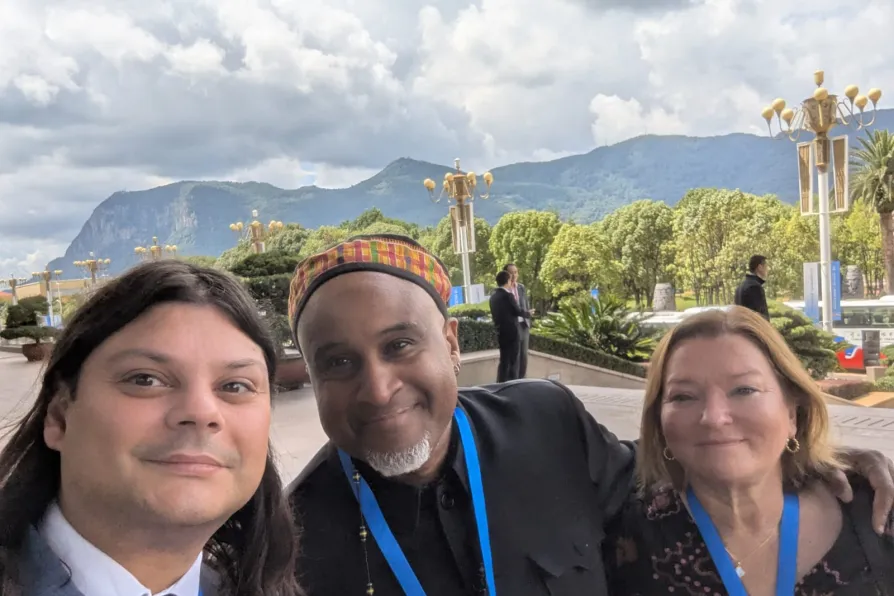
ROGER McKENZIE argues that the BRI represents a choice between treating humans as commodities or as equals — an essential project when, aside from China’s efforts, hundreds of millions worldwide are trapped in poverty
ROGER McKENZIE expounds on the motivation that drove him to write a book that anticipates a dawn of a new, fully liberated Africa – the land of his ancestors