As Unison launches its Year of Women Workers, ANNIE COGAN-THOMAS argues that stronger organisation and collective bargaining are essential to winning equality


 Latest editorial
Warfare or welfare is the trillion-dollar question
Economists estimate extreme poverty could be drastically reduced for a fraction of global defence spending, yet military budgets continue to expand year on year, says JON TRICKETT MP, ahead of the Stop the War International Conference on Saturday
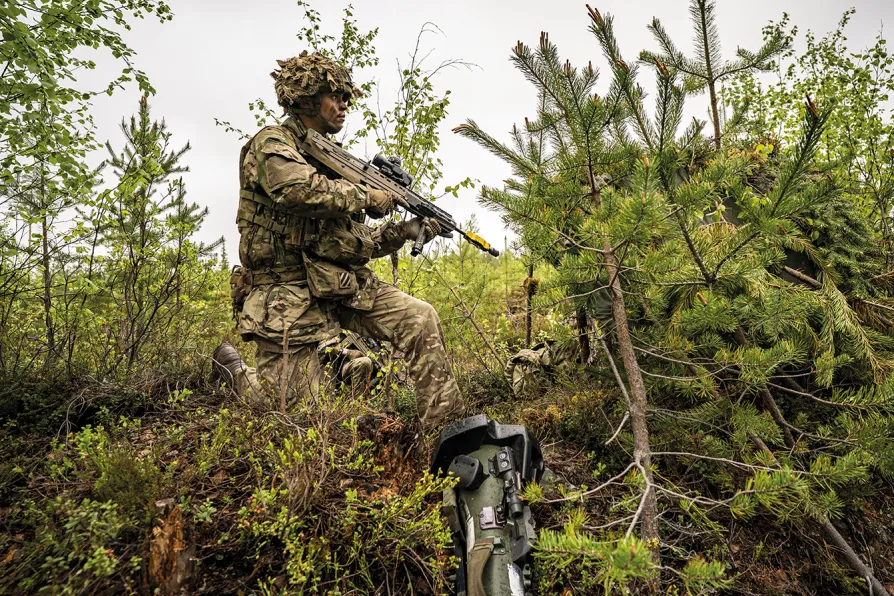 British army soldiers from 3 Rifles in an undisclosed training ground less than 50km from the Russian border in Finland where Nato troops are taking part in Exercise Northern Star
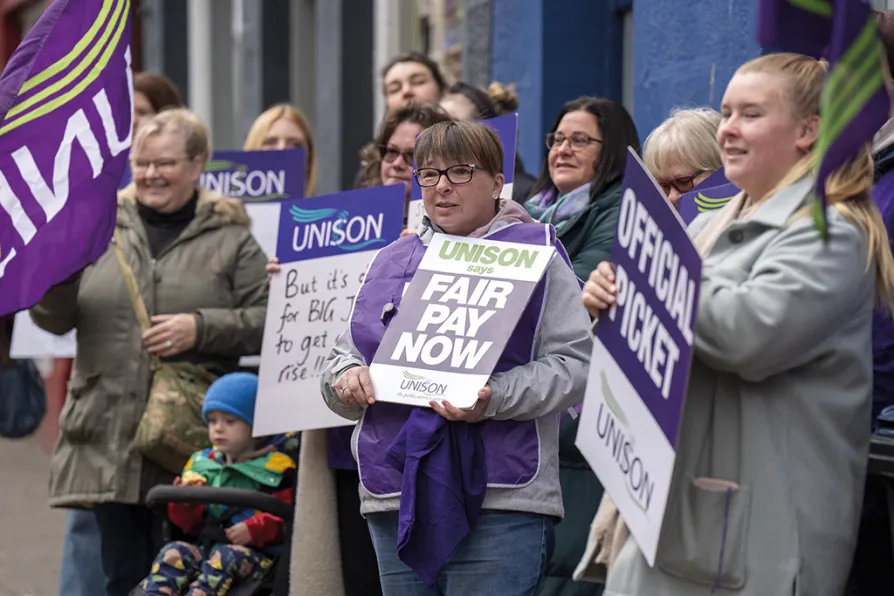
Trade unions, trades councils and community organisations must work together to build lasting solidarity and resistance to the far right, argues DREW GILCHRIST
Recent violence in Belfast was not spontaneous — it was built on years of failure and political neglect, argues STIOFAN O NUALLAIN
As delegates meet in Brighton this week, Unison faces pressing questions about pay, organising, workers’ rights and political representation, explains ANDY CHAFFER
Andy Burnham’s growing stature has fuelled hopes of a Labour revival – but ALAN SIMPSON warns that Britain’s crisis runs far deeper than just its leadership and traces its roots to decades of financialised capitalism




RIGHT now in Britain we are seeing a well-organised campaign to increase military expenditure. The argument goes that we should spend less on public services so that we can spend more on weapons. But if we take a wider look at the militarisation taking place across the world, three facts stand out.
First, we are living through a period of unprecedented growth in military expenditure across the world. In 2024 the total military expenditure across the globe had grown to $2.7 trillion. This amounts to $310 million per hour.
Second, well over half of this total is incurred in the so-called West. So, 58 per cent of all that expenditure was spent by the EU, Britain, the US, Canada and Israel.
Third, the combined populations of the above amounts to 11 per cent of humanity yet they consume the vast bulk of defence spending. Approximately one-ninth of humanity is responsible for three-fifths of global military spending. By the way it is estimated that Nato outspends China and Russia together by about $1trn per year.
So the West is an armed camp, stockpiling weapons and deploying increasing amounts of the Earth’s resources in the process.
But, wait a minute. Outside this camp, bristling with weaponry, we also know that there are millions living in poverty. The World Bank estimates that there are more than 700 million who live below their definition of extreme poverty. This amounts to about one person in 12 on our planet.
Nine hundred people die every hour from poverty while the world spends $310m on arms and defence.
Would it be possible to eliminate extreme poverty and how much would it cost? Authoritative sources have estimated that we could reduce extreme poverty to 1 per cent of the world’s population by deploying $170bn in targeted transfers. (Source 2025 working paper by the NBER). Of course this is a limited objective and we should certainly aim far higher. But it can only be achieved with a large amount of money.
On the other hand comparing the cost of poverty alleviation to defence spending, a remarkable fact arises.
The world could end extreme poverty by sequestering the equivalent of 23 days of current global defence spending. That the global governing class declines to do so is a moral abomination. And of course it must be said that Prime Minister Keir Starmer’s decision to cut foreign aid in order to spend more on defence is ethically unsustainable; a decision for which he will surely be condemned by history.
At present, our governments are making a conscious choice. They are choosing to devote trillions to preparing for war while tolerating the existence of mass poverty, hunger and preventable death. They are choosing to treat military expenditure as unavoidable while presenting social investment as unrealistic or unaffordable.
Yet the figures tell a different story. The resources exist. The wealth exists. The productive capacity exists. What is lacking is political will.
When future generations look back on this period, they may well struggle to understand how governments that could mobilise vast sums for weapons systems and military infrastructure claimed helplessness in the face of poverty and deprivation. They may ask why they spent hundreds of millions of dollars every hour on defence, but refused to find a fraction of that amount to ensure that every human being could live with dignity.
The debate over defence spending is therefore not merely an economic one. It is a moral and political question about the kind of civilisation we wish to build.
I will be attending the International Peace Conference on June 20 in London because it’s time to stand up to the warmongers and expose the military-industrial complex that is making all of our societies poorer. I hope you will join us.
Jon Trickett is Labour MP for Normanton and Hemsworth.
The Stop the War International Conference takes place at Central Hall Westminster, Storey’s Gate, London SW1H 9NH on Saturday June 20. For more information and to book tickets visit stopwar.org.uk.

Similar stories
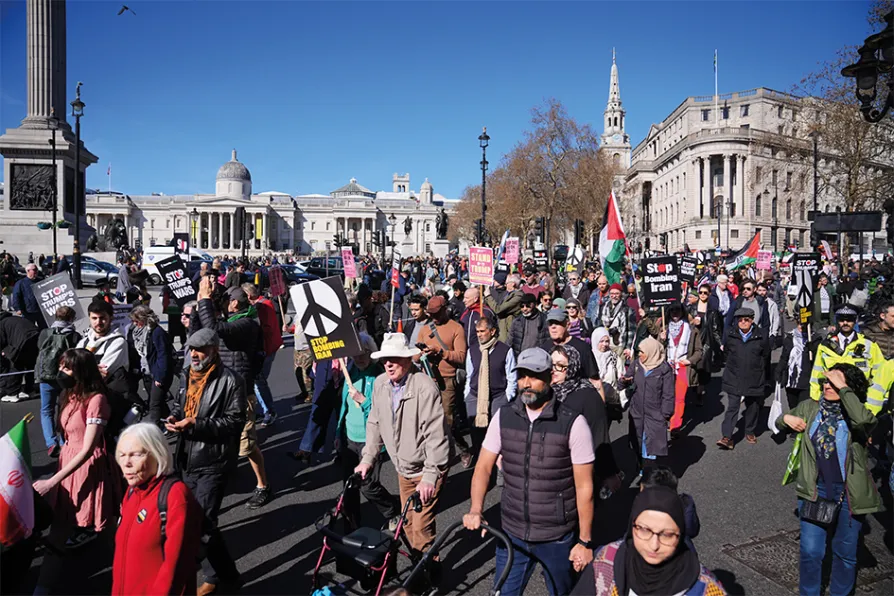
PCS general secretary FRAN HEATHCOTE explains why opposing war is inseparable from defending jobs, wages and public services – and why readers should come to the London Peace Conference on Saturday June 20
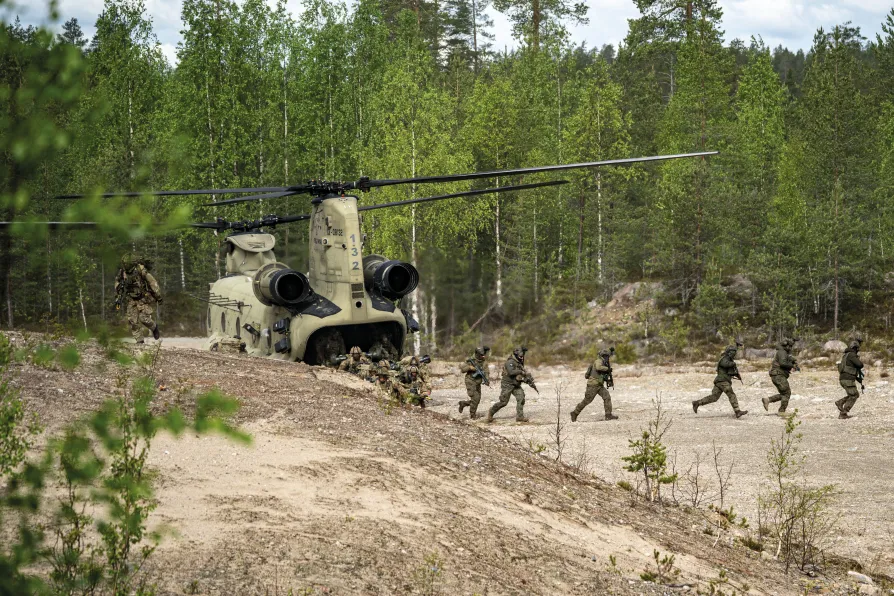
The growing argument that welfare must be sacrificed for ‘security’ is built on nothing but myth, argues MICHAEL BURKE
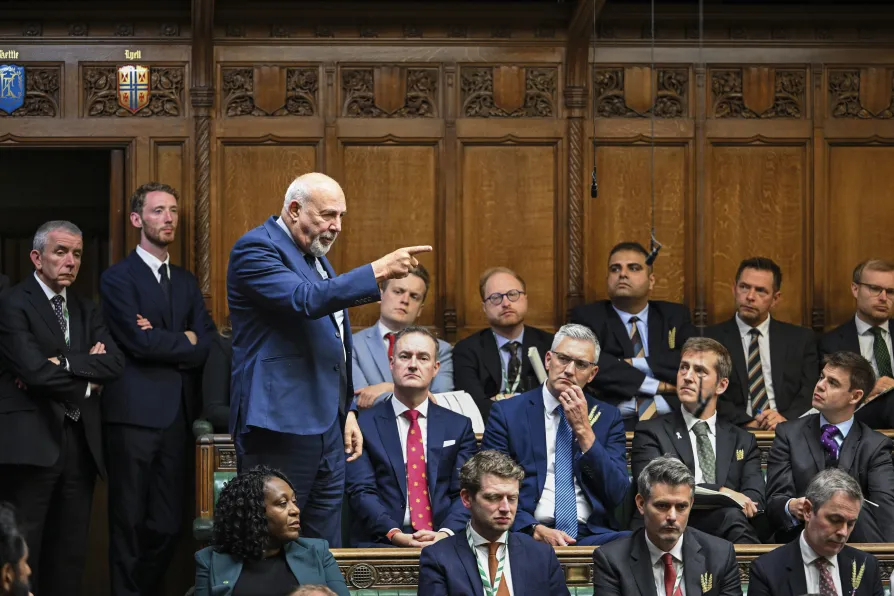
We cannot refuse to abolish the unjustifiable two-child benefit cap that pushes children into poverty while finding billions of pounds for defence spending — the membership and the public expect better from Labour, writes JON TRICKETT MP