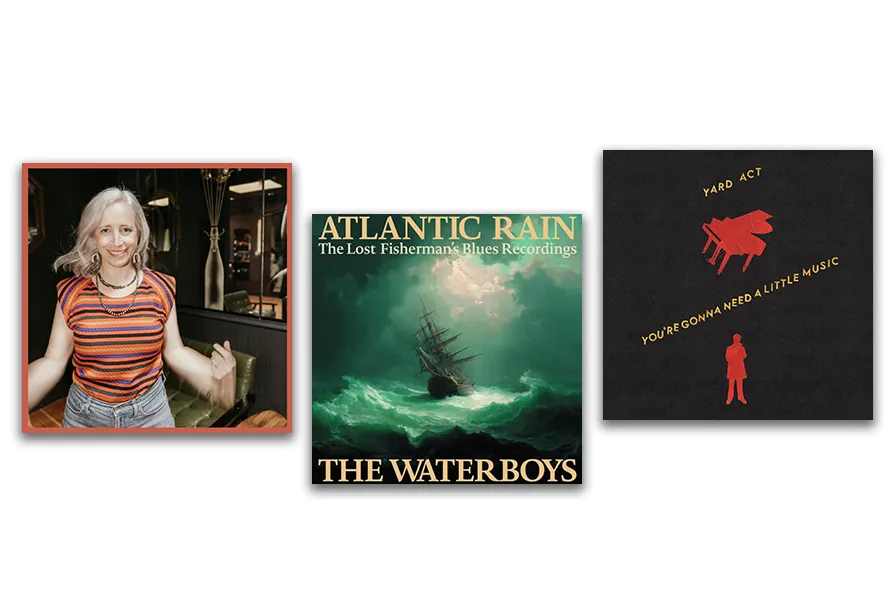
New releases from Laura Veirs, The Waterboys, and Yard Act


 Latest editorial
MacLeod’s theories about conspiracy and other marvels
Science-fiction round-up with Mat Coward
Ron's rages are sincere and — according to his wife — healthily cathartic. But can these splenetic outbursts loosen the grip of capitalism at its most monstrous?
ANGUS REID considers the power of the podcast as a vehicle for consensus building in opposition to mainstream media narratives
GLENN FOSBRAEY recommends a biography worth reading for both existing George Michael fans and those yet to be converted
FRANCIS DEVINE introduces a new collection of essays that draws on Pease McKenna’s example to indicate future paths for the movement
KEVIN DONNELLY and MARIA DUARTE review Shoot the People, The Last One For The Road, Rosebush Pruning, and Moana
JAMES WALSH recommends an exceptional documentary about the experience of Western doctors in Gaza


AS A teenager living in a near-future Scotland, Ryan has a very close encounter with an unidentified flying object in Descent by Ken MacLeod (Orbit, £19.99).
Being a scientifically minded boy, he doesn’t immediately assume that he has tangled with aliens.
He’s read deeply in the literature of ufology and knows there are many less extraordinary explanations for the things people see in the skies.
But if the authorities have nothing to cover-up, then why is he being visited by what are unmistakably Men In Black?
This isn’t a conspiracy theory story but rather a story about conspiracy theory.
MacLeod’s fiction is always — above all else — humanist and this vivacious and constantly entertaining novel strongly suggests that we would all do better learning to recognise love and friendship when they are staring us in the face, rather than getting ensnared in the ultimately barren webs of the conspiracy mongers.
Laugh-out-loud SF is a pretty rare commodity, but I often found myself guffawing at Andrew Smith’s Grasshopper Jungle (Electric Monkey, £7.99).
Austin, a teenage boy living in a small town in Iowa, has a lot of worrying to do.
His town is dying, now that its main employer has relocated to Malaysia. His brother is with the US army in Afghanistan.
And Austin is concerned that he might be gay, just like his best friend, Robby.
Not that he’s got anything against being gay, it’s just... if he is, how will he tell his girlfriend, who he’s crazy about?
The other thing is that he and Robby have played an accidental part in triggering an unstoppable army of genetically modified six-foot-tall praying mantises, who are likely to usher in the end of the human race.
But Austin’s a teenage boy, so mostly it’s the gay thing that he’s worrying about.
Smith’s a lovely writer, funny, mischievous and affectionate.
The enthusiastic way in which he orchestrates catchphrases, recurrent themes, running jokes, bathos and moments of horror will remind many readers of William Kotzwinkle and Kurt Vonnegut — and he does not suffer from the comparison.
Needing a break between a funeral and a wake, a middle-aged man drives around the country roads of Sussex, half-familiar from his 1960s childhood, in The Ocean At The End Of The Lane by Neil Gaiman (Headline, £7.99).
He finds himself in the lane where he grew up and calls in at a neighbour’s farmhouse.
Here, as he sits beside the farm’s duck pond, long-lost memories of a terrifying adventure return to him.
He remembers when the pond was an ocean from another world and the three women who lived at the farm had been there for thousands of years.
It’s a story not so much about the unreliability of memory as about the inadequacy of the whole concept of memory to explain who we are and what we know.
And for all the monsters encountered in its pages, it’s the absolute powerlessness of children that makes this richly lyrical fantasy so frightening to any reader who used to be a child.

Similar stories

MARJORIE MAYO welcomes an account of family life after Oscar Wilde, a cathartic exercise, written by his grandson
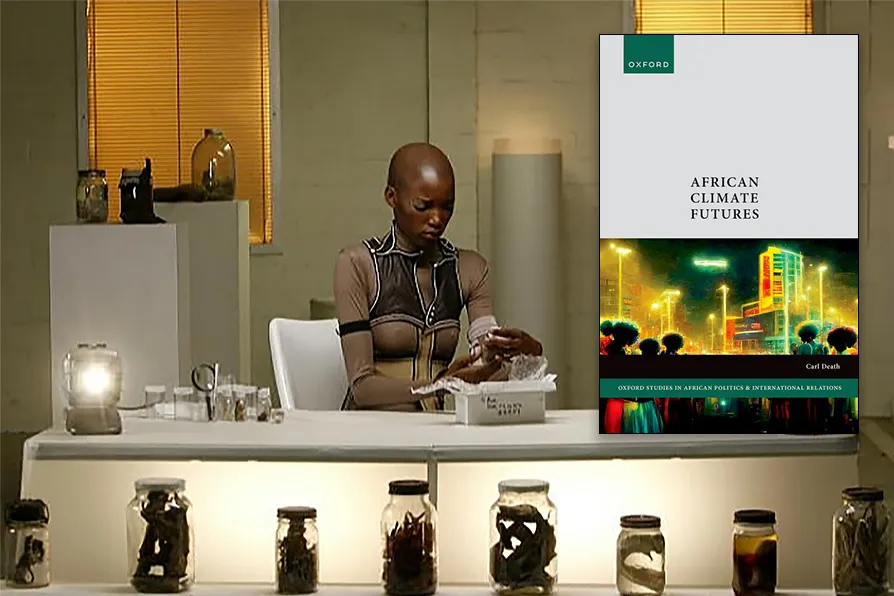
CARL DEATH introduces a new book which explores how African science fiction is addressing climate change

The creative imagination is a weapon against barbarism, writes KENNY COYLE, who is a keynote speaker at the Manifesto Press conference, Art in the Age of Degenerative Capitalism, tomorrow at the Marx Memorial Library & Workers School in London

ANDY HEDGECOCK relishes an exuberant blend of emotion and analysis that captures the politics and contrarian nature of the French composer