

 Latest editorial
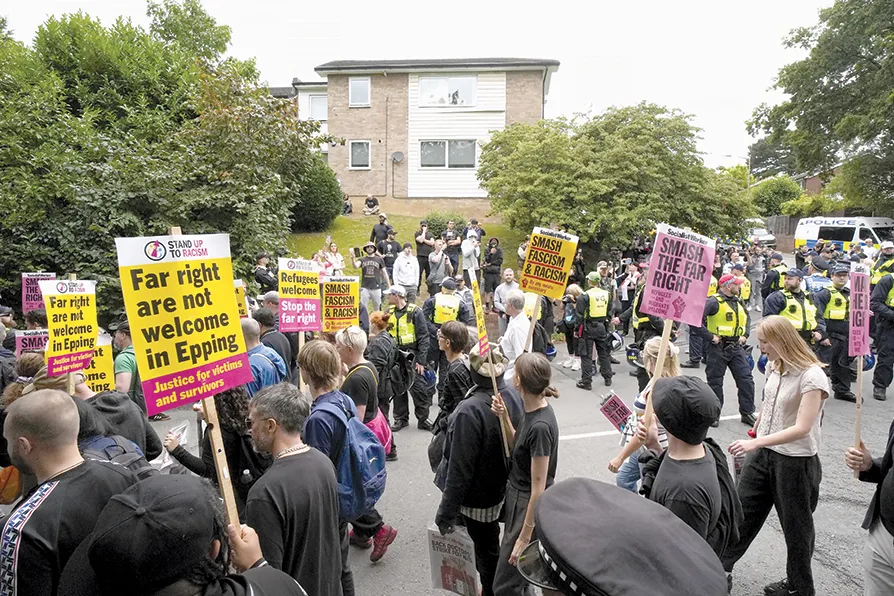
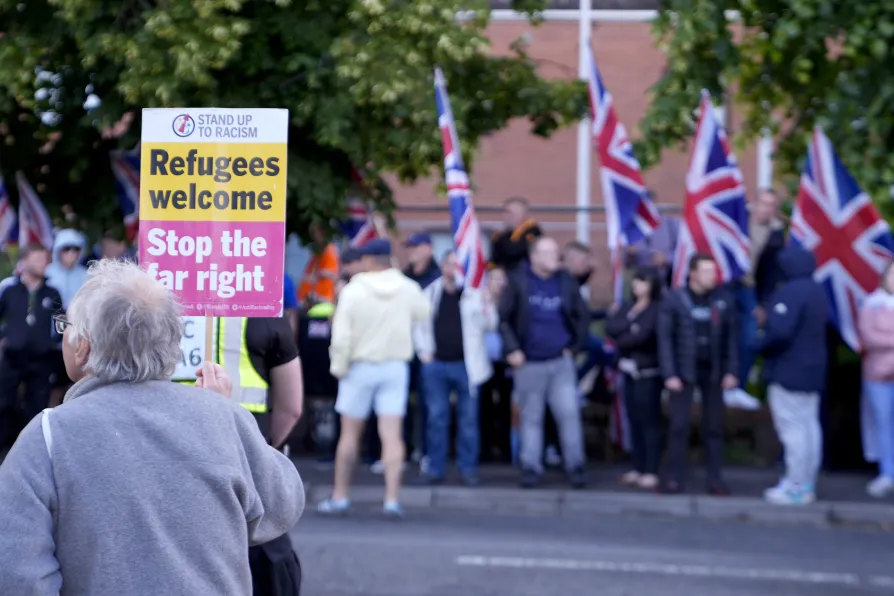 Counter protesters demonstrate against protesters during an Enough is Enough protest outside the Highfield Hotel in Southampton, June 9, 2026





FACED with a far right ever readier to terrorise the streets, the need to stand up in defence of black and immigrant communities is more urgent than ever.
Horrific scenes in Belfast, where racists went house to house smashing down doors, evicting black residents and setting properties on fire cannot be reduced to “disorder” that is “unacceptable,” as the Prime Minister puts it.
Belfast’s Social Democratic and Labour Party MP Claire Hannah is clearer: “What you’re seeing is a race-based pogrom… men going door to door asking to ‘get the foreigners out’ based exclusively on the colour of their skin.”
Belfast, with its long history of loyalist violence in collusion with British state power, may have a more networked and organised core to its racist street fighters than British cities. The violence was also concentrated in poor Protestant areas where the banned paramilitary Ulster Defence Association and Ulster Volunteer Force are still strong, as it has been in successive summers of anti-immigrant rampages in the city.
But if Northern Ireland’s history helped shape the way the terror unfolded there, we cannot pretend there is no connection to events in Britain.
The furore was whipped up online by familiar figures, street thug “Tommy Robinson” amplified by the world’s richest man, white supremacist tech tycoon — and major player in the Donald Trump administration — Elon Musk. It follows racist rioting in Southampton sparked by police mishandling of the appalling murder of Henry Nowak, seized on by those same nasties.
Again they are using an appalling act of violence by one individual to whip up claims of a clash of civilisations, terrorise entire communities — the warning from a woman in the crowd on Tuesday night, “there’s wee girls inside,” went unheeded by the masked brutes storming the house in question — and set the scene for the race war that Musk in particular loves to predict.
In this 90th anniversary of Cable Street, when communists, socialists and the Jewish community mobilised in their hundreds of thousands to bar the way to Oswald Mosley’s Blackshirts, the left needs to rebuild the solidarity and militancy that faced down fascism in 1936.
That means building within communities — with campaigns on housing, healthcare and local services that demonstrate the solidarity we preach. It means a focus on the “hows” of anti-racist work — as union leaders such as the FBU’s Steve Wright note, conversations with colleagues and neighbours cut through in a way other messaging does not. Training to enable union reps to lead those conversations, already undertaken by a number of unions, needs prioritising across the movement.
And so does celebration of the communities that make up our country. Unison’s rally and vigil at Parliament and the Home Office calling for fair visas was an outstanding example.
Defiant — “we don’t beg, we fight” the migrant care workers chanted — and dignified, speakers’ stress on the vital and responsible work done by so many immigrant workers in this country, repaid all too often with abuse and even assault, is something Labour ministers — busy “triangulating” with Reform and depicting immigration, falsely, as a burden on Britain — should be forced to heed.
Because those workers’ testimony exposes the reality that an injury to one is an injury to all.
Workers fearing deportation if they lose their job, because their visa is tied to one employer, cannot raise health and safety breaches by cost-cutting management that put patients in danger; while a two-tier workforce allows bosses to drive a race to the bottom on pay and conditions that affects us all.
What a contrast their proud assertion of their value, as workers staffing our hospitals and care homes and as human beings seeking to build their lives here, strikes to the arsonists and vandals of the racist right.
We know which side we are on. There’s a lot of work to do to ensure it wins.

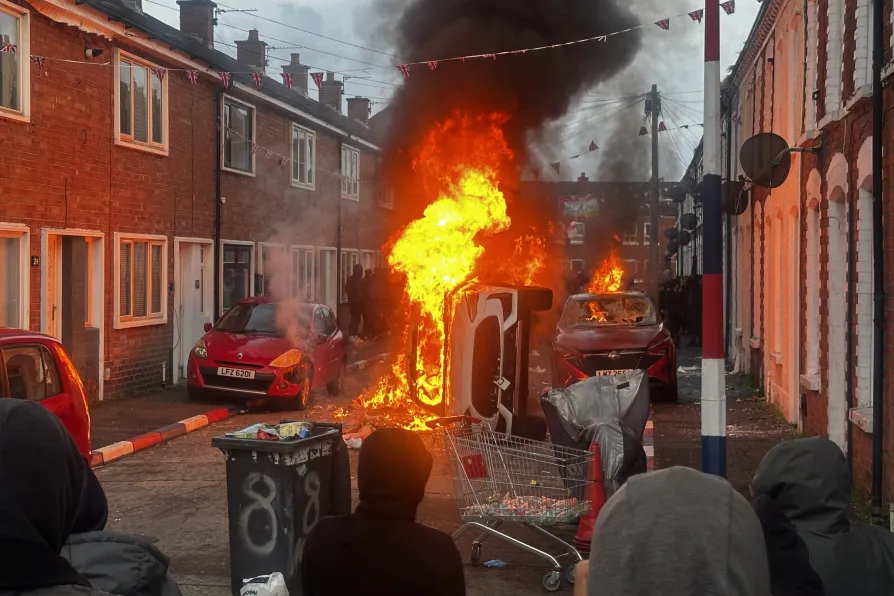
Knife victim's family calls for calm after night of racist violence
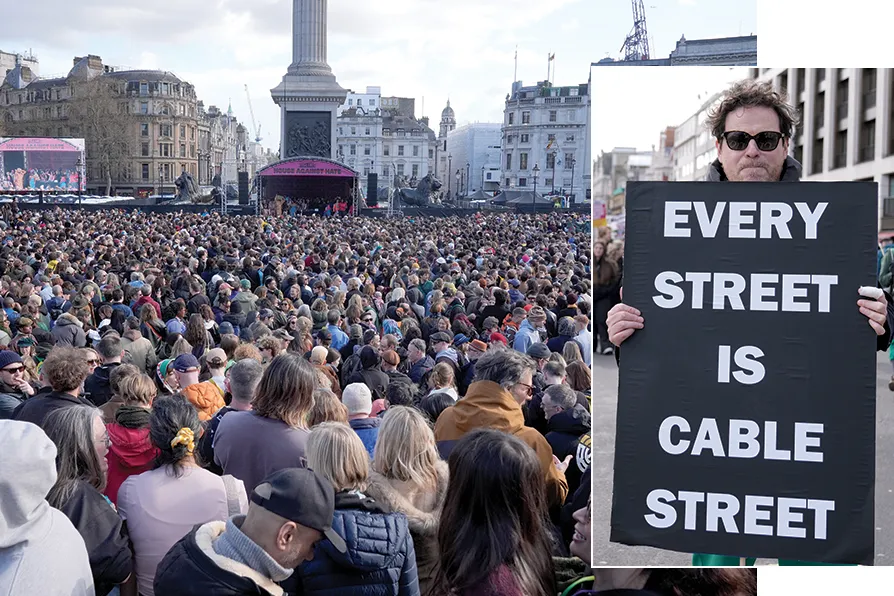
The sheer number present on the day, estimated at half a million, points to organisational acumen and bodes well for developing the movement, says DIANE ABBOTT
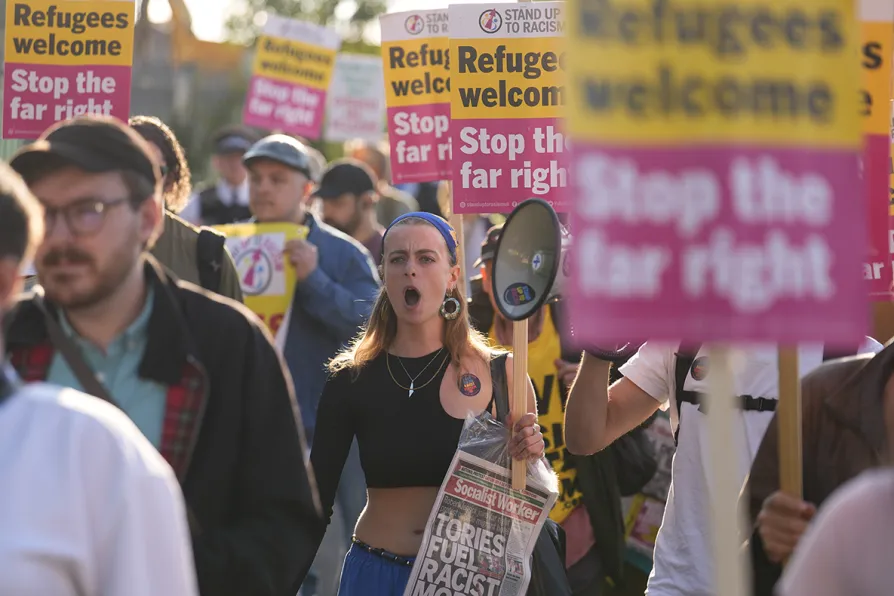
Once again Tower Hamlets is being targeted by anti-Islam campaigners, this time a revamped and radicalised version of Ukip — the far-right event is now banned by the police, but we’ll be assembling this Saturday to make sure they stay away, says JAYDEE SEAFORTH
Listening to our own communities and organising within them holds the key to stopping the advance of Reform UK and other far-right initiatives, posits TONY CONWAY