

 Latest editorial
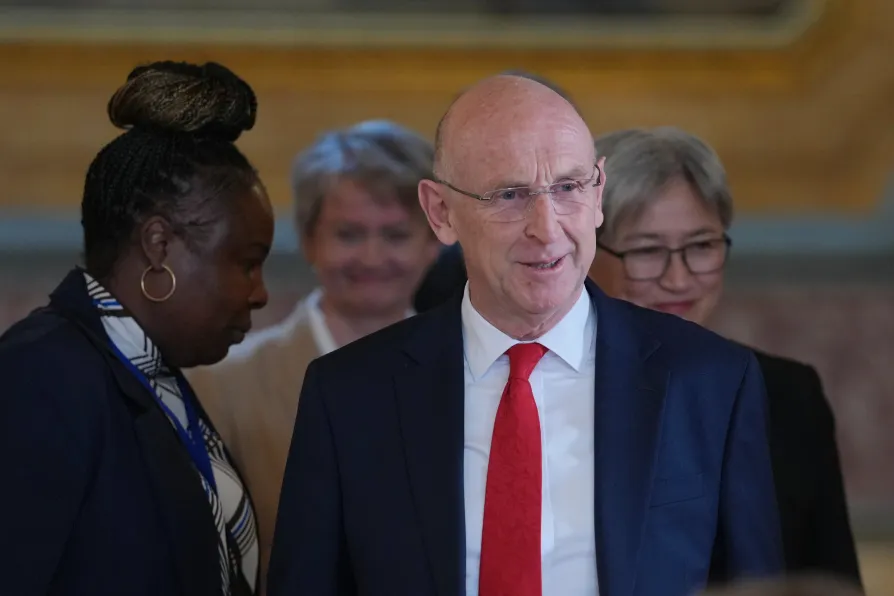 Defence Secretary John Healey walks into the press conference following the Aukmin Summit, at Lancaster House in London, June 10, 2026




SIR KEIR STARMER’S tottering authority crumbled further today as Defence Secretary John Healey quit in a row over arms spending.
Mr Healey slammed Sir Keir for not overruling Chancellor Rachel Reeves in an argument over how fast to raise the military bill.
He claimed that the £13.5 billion additional funding agreed would still leave the armed forces short in his global war-fighting plans.
His departure, to paeans of praise from the Tories, is a fresh political crisis for a premier already all but overwhelmed by them.
The Westminster consensus was that being called out for weakness by Mr Healey meant that Sir Keir could no longer realistically hope to see off a challenge to his position by Andy Burnham, if the Greater Manchester Mayor returns to the Commons in next week’s Makerfield by-election.
Leading left MP John McDonnell pointed out that “despite a huge parliamentary majority there is a remarkable instability about this administration that, if it isn’t addressed soon, could render the government paralysed by lack of leadership.”
And Green Party leader Zack Polanski said: “This is a government in chaos, unable to govern, with no leadership, under a caretaker prime minister who’s expected to be replaced within weeks. Britain deserves better.”
Mr Healey as good as accused Sir Keir of gambling with Britain’s security by not fully funding the ambitions of last year’s Strategic Defence Review.
In particular, the outgoing Defence Secretary wanted more cash for interventions in the Straits of Hormuz, to deal with the consequences of the catastrophic US-Israeli aggression against Iran, and Ukraine.
He wrote to the premier: “You have been unable, and the Treasury has been unwilling, to commit the resources that the nation needs to defend the country at this time of rising threats.
“The demands on defence have increased still further, as have the UK commitments you have rightly made to allies.
“Conflict in the Middle East, with the UK now leading the multinational Strait of Hormuz military mission; High North security, with the UK now leading Nato’s Arctic Sentry mission; increased Russian activity towards the UK and Nato nations and increased attacks in Ukraine, with the Paris agreement confirming a British deployment to Ukraine after a ceasefire.”
Mr Healey, acting on behalf of the military brasshats, has been demanding arms spending of 3 per cent of GDP by the end of the decade, rising to 3.5 per cent at least by 2035.
In his letter, he claimed that the Defence Investment Plan Sir Keir has signed off would leave the proportion only at 2.68 per cent by 2030.
Stop the War Coalition convener Lindsey German said Mr Healey’s departure should lead to a strategic rethink.
She said: “John Healey’s resignation over the PM and Chancellor not funding the insatiable military-industrial complex to the level that would satisfy his hunger for more and endless wars should surely create a serious debate in government about doing things differently.
“How about working for peace, and security at home based on proper investment in housing, education, health and the environment, and therefore the creation of decent, well-paid jobs through the funding of infrastructure projects rather than the militarisation of our economy?
“We are already one of the top defence spenders in the world.”
She added that “Healey’s sickening lust for war is shared by many in government and across Europe and the West. There could be no more critical time for the International Anti-War conference in London on June 20 to be taking place.”
Unite general secretary Sharon Graham said the defence plan “is fast becoming a national disgrace. Make no mistake jobs and skills are at risk.
“John Healey’s resignation letter has laid bare the utter chaos at the heart of government on this issue. Defending the UK and investing in our defence industry simply can’t be done on the cheap.
“Failure to protect UK defence jobs would be a national betrayal.”
The Campaign for Nuclear Disarmament said: “Healey argues that Britain’s military is under-funded. Yet according to analysis from the Institute for Fiscal Studies, British military spending in real terms is now actually higher than during the Cold War.
“The deadlock over the Defence Investment Plan and Healey’s resignation provides the government with an opportunity to change course and tackle the real security issues that we face: investing in climate action, healthcare, education, and food security.”
Labour’s right will likely intensify their agitation to cut welfare to fund the military, as Tony Blair and former defence secretary George Robertson have recently urged.
Today Geoff Hoon, defence secretary at the time of the Iraq War, said: “The money has to come from somewhere.
“I don’t think this is the right time for significant tax increases; I don’t think the public would support that. Therefore, we have to look at some other aspect of government spending.
“It does seem to me that another look at welfare reform might not be such a bad thing.”
