

 Latest editorial
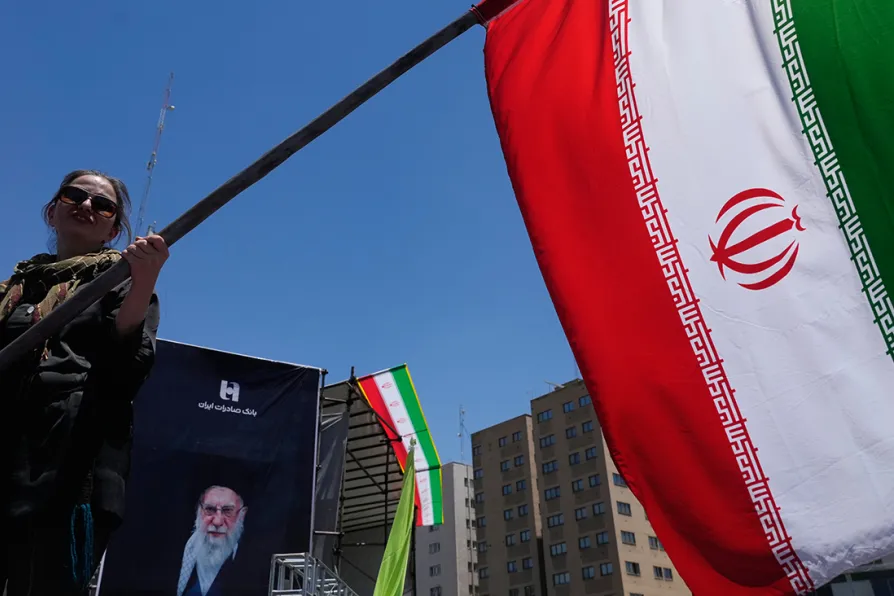 A woman waves an Iranian flag during a pro-government campaign as a portrait of the slain Supreme Leader Ayatollah Ali Khamenei, who was killed in US and Israeli strikes on February 28, is displayed behind her, Tehran, Iran, June 15, 2026





IRAN and the United States have agreed a tentative deal to end more than 100 days of conflict, paving the way for negotiations on Tehran’s nuclear programme and possible sanctions relief.
Iran confirmed today that the agreement would halt fighting across all fronts, including in Lebanon.
However, Israeli strikes continued, with attacks reported in Beirut on the day the deal was announced.
Israel claimed it had targeted Hezbollah infrastructure in response to cross-border fire.
Blue and White party leader Benny Gantz criticised the agreement as a “strategic failure” and opposed any restrictions on Israel’s military operations in Lebanon.
The Israeli military said that it intended to maintain its presence in Lebanon, Gaza and Syria without any time limits.
Defence Minister Israel Katz said the military would continue destroying “all terrorist infrastructures” to protect the country’s borders, though Lebanese Prime Minister Nawaf Salam expressed hope that the deal would “put an end to this war” and secure a complete Israeli withdrawal from Lebanese territory.
US President Donald Trump announced an end to the US blockade of Iranian ports and said the Strait of Hormuz would reopen when the agreement was formally signed in Switzerland.
He said “ships are starting to move,” with “many loaded up with oil.”
Iran indicated that commercial vessels using the strait would be charged “fees for full services,” while US Vice-President JD Vance said operational details remain under discussion.
Maritime organisations cautiously welcomed the breakthrough.
International Chamber of Shipping secretary-general Thomas Kazakos said seafarers had been “caught in the middle of this war,” while the International Maritime Organisation (IMO) confirmed preparations were under way to evacuate stranded crews.
Around 500 ships are waiting to transit the strait, according to shipping industry estimates.
The IMO said attacks linked to the war had killed at least 14 seafarers and disrupted international trade routes.
World leaders welcomed the agreement as oil prices fell and stock markets rose.
French President Emmanuel Macron said efforts would continue to ensure freedom of navigation through Hormuz.
European Commission president Ursula von der Leyen said sanctions would only be lifted if Iran’s “behaviour” changes “credibly and verifiably.”
However, EU foreign ministers have failed to agree on sanctions against Israel’s far-right National Security Minister Itamar Ben-Gvir, the bloc’s foreign policy chief Kaja Kallas said, following condemnation of his taunting of flotilla activists delivering humanitarian aid to Gaza.
Meanwhile, Israel continued its attacks on Gaza.
Two Palestinians, including a child, were reported killed in a strike on a home in Gaza City’s Sheikh Radwan neighbourhood.
Several other Palestinians were wounded in the attack, some seriously.
The number of people killed in the Israeli genocide has now reached 73,003.
