

 Latest editorial
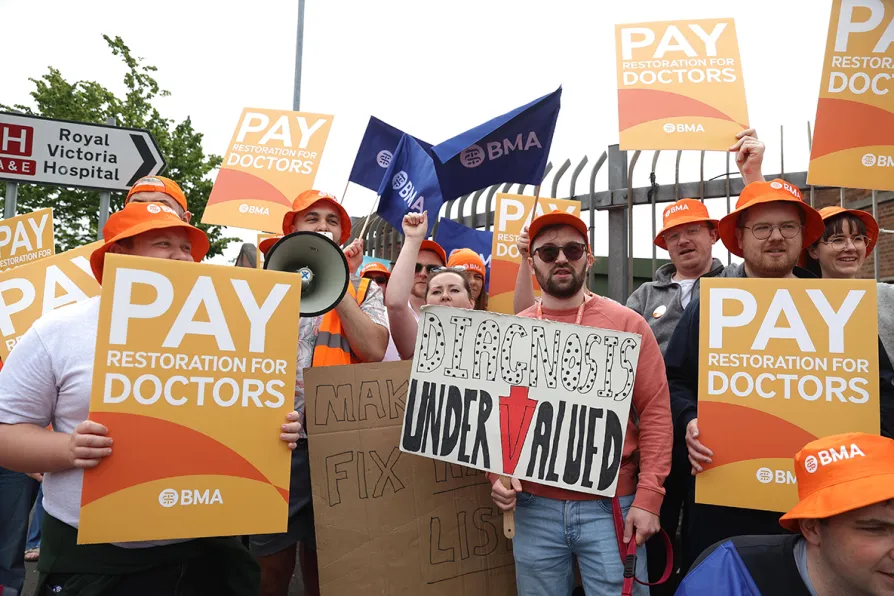 Resident doctors on the picket line outside Royal Victoria Hospital in Belfast, June 29, 2026
![Pregnant: [Pic: freestocks / Creative Commons]](https://www.morningstaronline.co.uk/sites/default/files/styles/desktop/public/2026-06/freestocks-ux53SGpRAHU-unsplash.jpg.webp?itok=4FVGVcVv)




THE long-running resident doctors’ strike in England was settled at a cost less than a single week of walkouts, Health Secretary James Murray said today.
An average 6.6 per cent uplift agreed by ministers and the British Medical Association (BMA) will cost £200 million and is “less than the cost of one more week’s worth of strikes,” Mr Murray told BBC Radio 4’s Today programme.
“Strikes cost about £50m a day.
“This [deal] is good for taxpayers, it’s good for resident doctors, it’s good for other NHS staff, because other NHS staff have been doing an amazing job stepping up to keep services running when strikes have been happening.
“But most of all, this is good for patients, this is good for the NHS, because it means we can now work with resident doctors to strengthen the NHS and make sure it’s providing patients with the service they deserve.”
Since July last year, there have been 21 days of strikes by resident doctors in England.
Mr Murray told broadcasters that the years-long “cycle of strikes” have had a “really big impact” on patients and staff.
“This is an opportunity for a new, better relationship working with resident doctors and building on trust so that we can work together for the benefit of the NHS over the months and years ahead,” he added.
The government said that the deal means resident doctor pay will be 35.2 per cent higher on average compared with four years ago.
Just over half of resident doctors who voted on the deal voted in favour of accepting the offer.
The deal means the most senior resident doctors will be on a basic wage of £80,730 in 2027/28, which will increase once additional hours are factored in.
On average, the deal offers resident doctors a 6.6 per cent pay uplift.
By 2027/28, first-year doctors in training will get a basic wage of £41,226.
Speaking on Monday night after the deal was accepted, BMA resident doctors’ committee chair Dr Jack Fletcher said: “Resident doctors have spoken.
“They have decided that the current offer is sufficient to continue on the road to pay restoration, and sufficient to address the absurd lack of jobs in the NHS. The strikes will now end.”
