Extreme heat is now one of the defining public health challenges of a warming world, explains Prof IAN WILLIAMS


 Latest editorial
The heat is on
The recent heatwaves revealed how ill-prepared Britain remains for a hotter future – and how unequal the ability to cope with it has become, write ROX MIDDLETON, LIAM SHAW and MIRIAM GAUNTLETT
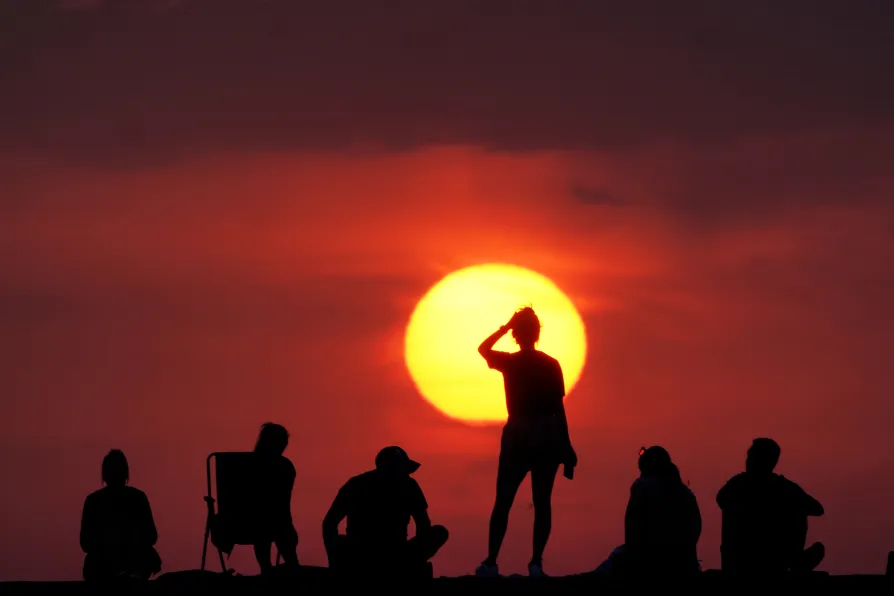
 People enjoy the hot weather in Battersea Park, London, June 24, 2026

The US-Israeli conflict with Iran has had far-reaching consequences, including a boost to Pakistan’s regional standing, argues ROGER McKENZIE
19.01.1930-23.04.2026
Kate Clark pays tribute to Ricardo, whose life spanned the hopes of Allende’s Chile, the horrors of military dictatorship and decades of campaigning for justice in exile
Keir Starmer's early political life suggests a very different future from the one he ultimately embraced, says KEITH FLETT
After the dismissal of union representatives and years of precarious working conditions, Kimpton Clocktower workers are drawing a line, writes THOMAS BELL



AFTER experiencing the recent intense heatwave that swept Europe, many people will have a feeling that summers are hotter than they used to be. A recent study published in Nature Climate Change confirmed this with an analysis of heat stresses globally since 1950, finding that extreme temperatures have become more common on every continent.
Daily maximum temperatures have increased most in Europe. The hottest nights of the year are warming faster than the hottest days. And population growth means that “more people are exposed, for more days, and to more intense heat stress.”
Heatwave is a relative term, not an absolute one. Four years ago, we wrote about how temperature increases had already led to the Met Office changing its definition of heatwaves (April 12 2022), since with higher average temperatures, the temperature needed for a heatwave also goes up. The heatwave back in June of that year reached a peak temperature of 32.7°C in Suffolk.
The past two months have seen two heatwaves hit Britain. May’s heatwave saw a maximum temperature of 35.1°C at Kew Gardens, while June’s heatwave reached 37.7°C in Norfolk, approaching the highest ever temperature recorded in Britain: 40.3°C on July 19 2022. The usual response from rightwing politicians of downplaying climate change rings increasingly hollow.
“The hysteria, we’re being told that if we leave our houses we’ll all be dead, is just nonsense. Be sensible and enjoy the lovely weather,” was the best Nigel Farage could do. But during the heatwave, anybody who walked the streets of southern England in the middle of the day will have noticed the strange quiet. Most people, unsurprisingly, were not out and about “enjoying” the “lovely weather,” but were sheltering inside if they could.
The feeling of the extreme heat, combined with high humidity, is obviously unpleasant for most people, and dangerous for many: last Wednesday London saw the busiest day for cardiac arrest callouts ever, and the record was broken again on Friday.
It’s not that this kind of heat is incompatible with a functioning society. For example, Aboriginal people, such as the Arrernte people, lived and thrived in the central Australian desert for 60,000 years, moving nomadically so as not to exhaust water or food resources, and becoming active in the cooler mornings and evenings.
The issue is that most people in Britain are unable to adapt their lifestyles to these rising temperatures, because they are not free. There is no resting during the hottest part of the day for those who have to get up and go to work.
Work in temperatures above 30°C is extremely challenging. Many councils last week shifted to earlier start times for refuse collectors due to the extreme heat. But because these temperatures are historically so rare in Britain, all that the current law says is that the temperature of workplaces inside buildings should be “reasonable.”
The TUC is now calling for a specific legal maximum temperature for indoor work of 30°C (or 27°C for strenuous work).
It’s not just legal frameworks. MPs have warned that Britain’s infrastructure was “built for a climate that no longer exists.” There is therefore an urgent need for climate-proofing. Clearly architects and builders have a vested interest in the business opportunity that such climate-proofing represents, but it’s interesting to read their trade publications to see how they’re highlighting the future problems.
For example, Building Design reports that many schools built in the past 70 years have thin walls, low ceilings and lots of window glazing, making them acutely vulnerable to overheating. Many windows can only open to an angle of just 10 degrees for health and safety reasons, making the problem even worse.
Unable to keep kids cool, 2,400 schools in England and Wales were closed during the recent heatwave. Meaningful climate response would mean large-scale investment in hospital and school buildings.
Fitting air conditioning to inefficient buildings has high running costs that are likely unaffordable over the long-term. But that isn’t stopping people doing it if they can afford it, particularly in large cities like London, where the high-density built environment traps more heat creating a “heat island” effect.
As London Centric reported in May, “London’s air con era is here.” Air-to-air heat pumps for residential properties — essentially two-way air conditioning units — are currently being subsidised by the government with a £2,500 grant (only for homeowners). The grant is motivated by the fact that they save energy when heating homes, but a heat pump is two-way and so is also able to cool houses down as well as heat them up. Homeowners who might not have seen the point of these heat pumps in London before are increasingly getting them now.
For many, the expense of a heat pump is prohibitive, so those who can afford it are instead buying cheap mobile air-conditioning units. Although the reduced initial cost makes this option attractive, these units encapsulate the worst path of response to climate change: they are “expensive to run, operate very inefficiently, and put substantial strain on the electricity grid.”
However, we are now at the stage where some buildings do need air conditioning as a matter of urgency, such as hospitals and care homes. The delicate balance will be doing this kind of urgent sticking-plaster solution while also investing in better buildings for the future.
By hook or by crook, adaptation to climate change is inevitable. It’s already happening in all sorts of ways: when workers demand the right to stay at home, when people hide inside away from “lovely weather,” and when everyone shares their hacks for keeping their home cool. What will make societal adaptation better is co-ordinated action to keep all of us safe from extreme heat. What will make it easier is reducing our reliance on fossil fuels.

Similar stories
Extreme heat is now one of the defining public health challenges of a warming world, explains Prof IAN WILLIAMS
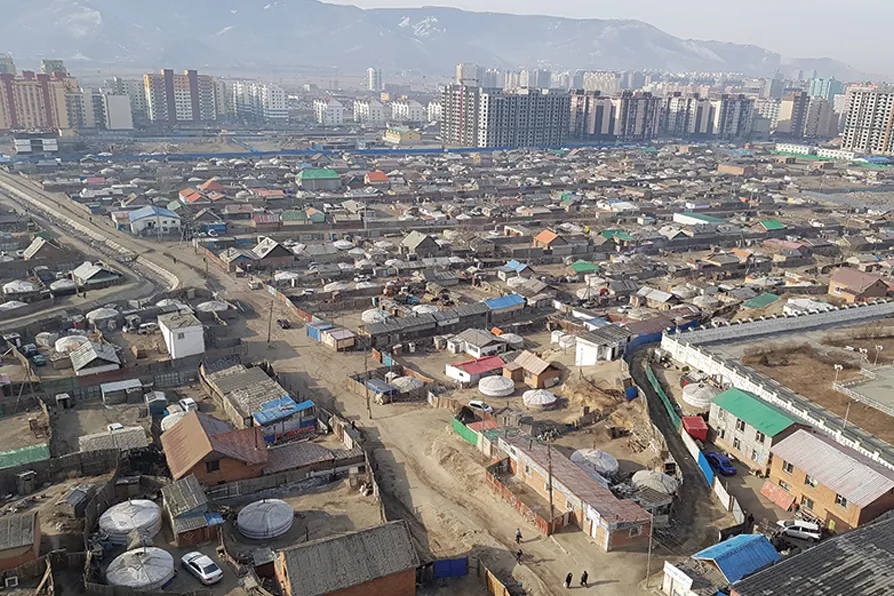
Coal-fired stoves in traditional homes are the primary source of extreme levels of air pollution in over-crowded Ulaanbaatar. As more people become climate-displaced, the situation is likely to worsen, write SCIENCE AND SOCIETY
