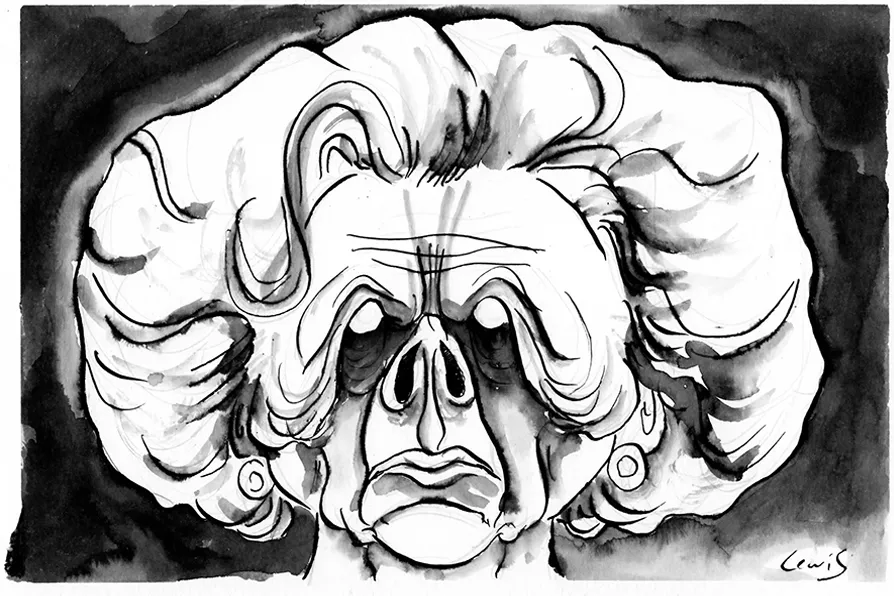
Ron's rages are sincere and — according to his wife — healthily cathartic. But can these splenetic outbursts loosen the grip of capitalism at its most monstrous?


The enablers of genocide
ALEX HALL treasures a meticulous examination of international institutions that have given in to Israeli pressure during their still unfolding campaign of genocide
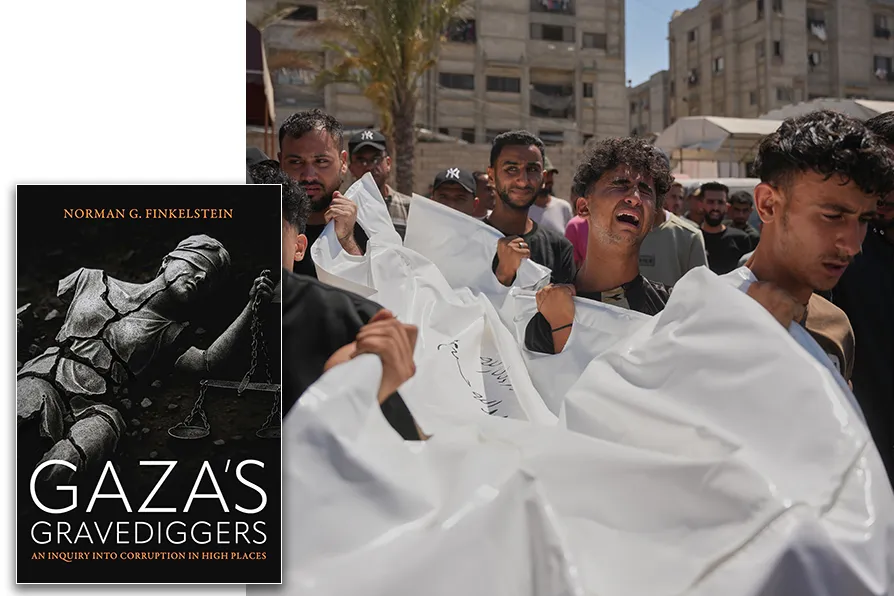
 Mourners carry the body of Palestinian Abdullah Moussa, 30, who was killed in an Israeli airstrike, during his funeral in Khan Younis, southern Gaza Strip, June 27, 2026. [Pic: AP Photo/Abdel Kareem Hana]
ANGUS REID considers the power of the podcast as a vehicle for consensus building in opposition to mainstream media narratives
GLENN FOSBRAEY recommends a biography worth reading for both existing George Michael fans and those yet to be converted
FRANCIS DEVINE introduces a new collection of essays that draws on Pease McKenna’s example to indicate future paths for the movement
KEVIN DONNELLY and MARIA DUARTE review Shoot the People, The Last One For The Road, Rosebush Pruning, and Moana
JAMES WALSH recommends an exceptional documentary about the experience of Western doctors in Gaza


Gaza’s Gravediggers: An Inquiry into Corruption in High Places
Norman G Finkelstein, OR Books, £24.99
MORE than 20 years ago, Archbishop Desmond Tutu remarked that Israel would never achieve safety through oppression: “A true peace can ultimately be built only on justice.” For justice to be done, there must be prosecutions.
Norman G Finkelstein’s latest work joins a growing shelf of recent books — Peter Oborne’s Complicit, Adam H Johnson’s How to Sell a Genocide — that one hopes will be well-thumbed and cross-referenced on the prosecution benches when the time comes.
In Gaza’s Gravediggers, Finkelstein details those who betrayed justice: individuals with power and influence who, if not able to stop the genocide, could at least have refrained from becoming its enablers and apologists.
The epigraph references the fifth labour of Hercules: cleaning the Augean stables. It is worth recalling that Hercules accomplished this by diverting two rivers, washing away the accumulated filth in a single day. Perhaps this expresses hope for a future torrent of truth sweeping aside accumulated lies.
The prologue recounts recent history familiar to Finkelstein-watchers from the many podcasts he has joined since October 2023. He details Gaza’s blockade and Hamas’s political programme since its 2006 election victory, which included diplomacy with the zionist regime, appeals to international law and non-violent civil resistance — all rebuffed, often with extreme violence from Israeli forces. No option remained for the besieged and blockaded Palestinian population.
Finkelstein compares the situation to the 1831 Nat Turner revolt. Destined forever to be slaves, Turner and his confederates put 55 whites to the sword in Southampton County, Virginia, attempting to exact revenge and force a reckoning over slavery’s horrors.
But in Gaza, the crisis also became an opportunity, opening the gates to extermination, ethnic cleansing and the reduction of Gaza to an uninhabitable obliterated hellscape.
With this context established, Finkelstein turns his attention to international institutions that folded to Israeli propaganda and pressure during the carnage. This includes the United Nations, judges at the International Court of Justice, and prosecutors at the International Criminal Court.
The October 7 Hamas attack was instantly mobilised by Israeli propagandists as an atrocity, with claims of mass rape as a weapon of war. Denial (or indeed, asking for evidence) was rapidly weaponised as a blood libel. Yet, as many opinion-formers should be forewarned: “Do not presume precisely what needs to be proved.” Alas, the UN’s Pramila Patten report leaned to the presumption rather than the proof.
Finkelstein meticulously sifts the evidence. Despite full Israeli government co-operation, Patten failed to interview any survivor of sexual violence from October 7, yet concluded there were “reasonable grounds” to assume it had happened. The report effectively undermines itself. Multiple other reports similarly found no evidence of sexual violence — unless it was Israeli sexual violence against Palestinians.
The Independent International Commission of Inquiry, chaired by Navi Pillay, is similarly eviscerated. Through a category error that minimises Israeli crimes, Finkelstein argues: “The Commission overwhelmingly framed Gaza as a ‘war’ in which Israel occasionally committed crimes, whereas in reality a ‘genocide’ was unfolding in Gaza in which Israel occasionally engaged in combat.”
Both the Patten report and the Pillay Commission — from the United Nations, one of the world’s highest authorities — served as justifications for Israel’s ongoing genocide.
Two ICJ judges stand out as particular betrayers of truth and justice. Only one of 17 judges who determined that Israel was plausibly committing genocide submitted a dissenting opinion. Julia Sebutinde, the Ugandan judge, disagreed with nearly everything her colleagues determined, including the Israeli judge, producing an opinion that took everything Israel claimed at face value and devalued everything submitted by the South African legal team.
Finkelstein devotes many pages to dismantling her opinion in law and examining her affiliations. A 50-page appendix further details that Sebutinde was also lazy: most of her opinion was plagiarised.
Judge Joan Donahue, president of the ICJ, delivered the judgement that Israel was plausibly committing genocide and must stop. Yet in a 2024 BBC interview, she claimed, in a fairly incoherent statement, that the judgement did not really mean the claim was plausible. A verbal subterfuge (and legal nonsense) thus undermined the judgement she herself had delivered.
This bears similarity to the Goldstone report, which Finkelstein examined in his Gaza: An Inquest into its Martyrdom (University of California Press, 2021). Richard Goldstone, a respected South African jurist and self-confessed zionist, produced a report detailing Israeli crimes during 2008-9’s Operation Cast Lead. After a torrent of personal abuse and threats, he recanted in a murky newspaper op-ed.
An appendix details pre-genocide malfeasance. ICC prosecutor Fatou Bensouda has recently suggested she was the first prosecutor to open ICC investigations into Israeli war crimes in Palestine, subjected thereafter to threats and intimidation.
Finkelstein correctly recalls, however, that Bensouda was also the prosecutor for complaints over the Mavi Marmara incident, when an aid flotilla to Gaza was boarded by Israeli forces and ten activists murdered. Like Sebutinde, Bensouda stuck to the Israeli version of events and refused to prosecute. Numerous complaints followed as the prosecutor’s view defied the facts.
Finkelstein can only guess whether bribery or blackmail was at play. And only in the last three months of her term did she open the Palestinian investigation, knowing she would shortly leave office.
Finally, the UN security council’s endorsement of Trump’s Board of Peace plan for Gaza was simply an abandonment of international law, making the UN both complicit and irrelevant. “The council didn’t just issue Gaza a death warrant; it also issued its own.”
Finkelstein’s work provides voluminous detail, fastidious cross-referencing of sources, exhaustive footnoting, and precision which is at times excruciating. It benefits from stark moral clarity: human life hangs in the balance. But it is precisely this exacting approach that demonstrates the contradictions, gives the scholarship its authority, and firmly plants its intention: a draft of history, and the outlines — and much of the detail — of a concerted drive to justice.
One day, the truth will wash through the stables. These are the floodgates.
Gaza’s Gravediggers is released on September 3 2026 and is available for pre-order.

Similar stories
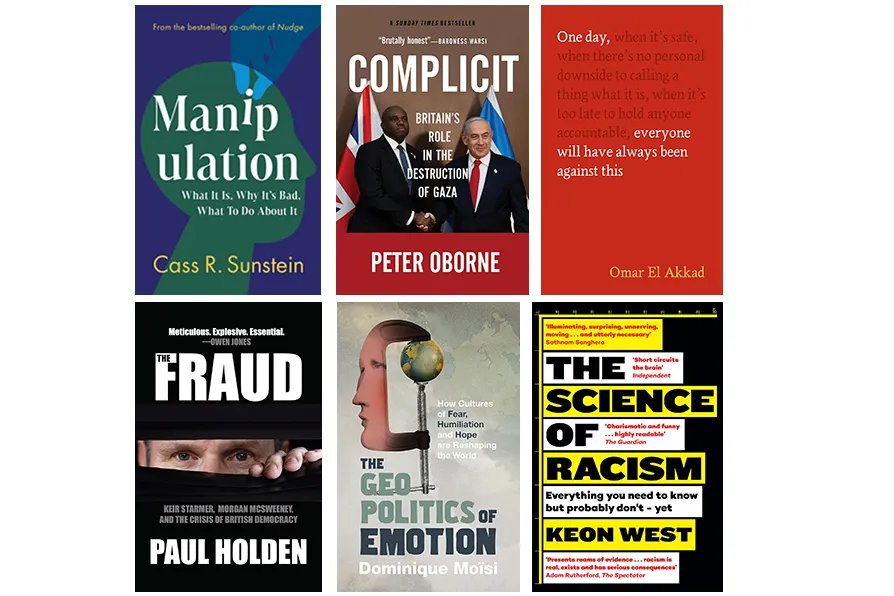
Looking for moral co-ordinates after a tough year for rational political thinking and shared human morality
Looking for moral co-ordinates after a tough year for rational political thinking and shared human morality
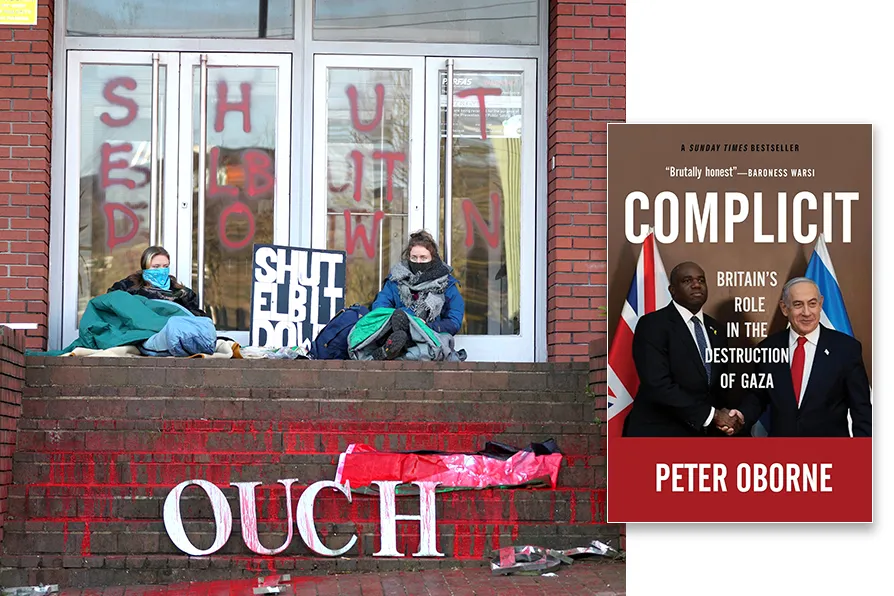
GAVIN O’TOOLE welcomes, and recommends a a candid, evidence-based record of Britain’s role in the slaughter visited by Israel upon the Palestinians