All the evidence shows voters want Labour to shift to the left — but initial signs from Andy Burnham are worrying on that front, cautions DIANE ABBOTT


 Latest editorial
‘To block the death machine, we need the unions’
France Insoumise MP JEROME LEGAVRE speaks to Christophe Domec on building the Europe-wide peace movement that came together in the International Conference Against War last weekend
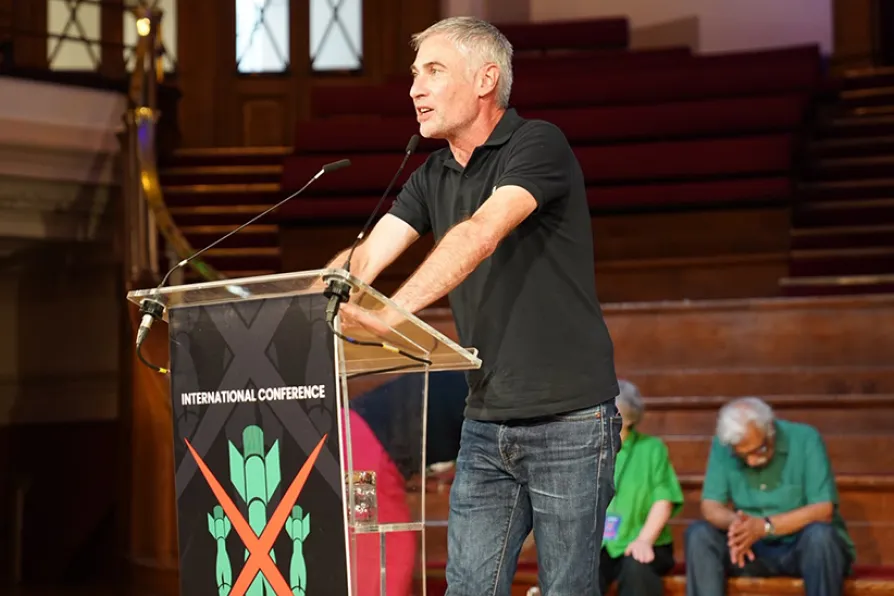 Jerome Legavre addresses the International Conference Against War. Pic: Matthew Marion
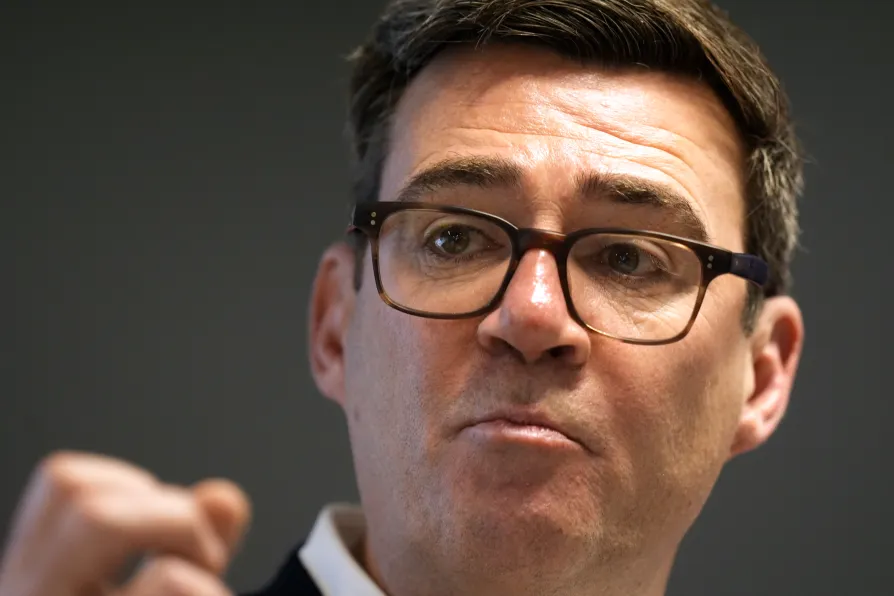
ANDY McDONALD MP says Labour must show it is capable of delivering real improvements in people’s lives — bold action is required
ANGUS REID and ANDREW JOHNSTONE report on an initiative that we must take this summer
ALLISON FEWTRELL on what Plaid Cymru's historic election victory means for the communities being failed by Wales’s housing crisis, and four things the new government can do right now
At last weekend’s International Conference Against War, LINDA PENTZ GUNTER talks to the Palestinian physician and politician about the struggles ahead to achieve a truly free Palestine




IF WE are to believe our political leaders, the biggest threat to Europeans today is, of course, the prospect of a military confrontation with Russia.
In preparation for this supposed imminent war, Nato countries have been asked to commit to increasing their defence budgets to 5 per cent of GDP by 2035, with Britain so far having pledged a £13 billion annual raise.
Meanwhile, workers in Western Europe’s major economies have been told to brace for austerity, and that their increasingly beleaguered public and essential services will either continue on a slow path of decline or have their budgets slashed even further.
But for Jerome Legavre, a French National Assembly member with the left-wing France Insoumise (France Unbowed) party, a war with Russia is not the real threat.
“In France, but also in Britain and in Germany, there is a massive propaganda effort on this issue,” Legavre explains.
“What we are witnessing today is a march to war. European governments — perhaps with the exception of the Sanchez government in Spain — are engaged in an arms race, under the orders of the United States.
“We are told: ‘Russia is the primary threat. We must prepare for conflict on the European continent.’
“But I’m of the mind that our primary enemy is within our countries. And it is our own governments.”
A trade unionist and Independent Workers’ Party (POI) activist, Legavre sat down with the Morning Star at the International Conference Against War in London, organised by Stop The War.
For Legavre, fears of foreign intervention pale in comparison to the real consequences of cuts to social services.
European governments, which have so far bowed to US and Nato pressure to rearm to the hilt, have so far only “prepared a path for the far right,” he said.
This is because “catastrophic” policies, destroying public services and “ever-increasing racist measures,” play into the hands of hard-right parties such as Reform UK or the French National Rally.
At the start of the month, France saw mass demonstrations against systemic failures in the justice system, following the rape and murder of an 11-year-old girl, known only as Lyhanna.
Protests were sparked by revelations that her attacker had been reported to the police on multiple occasions.
One complaint made nine months before Lyhanna’s abduction, accused the main suspect in the case, Jerome Barella, of at least 50 instances of rape.
The failure of investigators to take any preventative action, Legavre explained, was due to a lack of funds to the Ministry of Justice.
“Specialised investigators and the justice system lack the necessary means to deal [with this issue],” he said.
“Within a few hours, the Place Vendome [where the Ministry of Justice is headquartered] filled up with a crowd who came to voice their anger and demand the justice system be given proper funding.”
This amounted to about €3bn (£2.5bn), he explained. “And when we asked for this three billion, the government responded with: ‘We have no more money.’
“But parliament just voted for an extra €36bn (£31bn) increase in the military budget.
“For the army, finding the money is never an issue.”
A crucial point in the fight against militarism, Legavre said, is to pair arms expenditure with the cuts in other departments.
“We must keep linking these two facts. It’s crucial. Too few of us are still saying it, but we must hammer home this point.”
This was a core argument heard last week during the International Conference Against War in London, where activists, trade unionists and politicians met to build international strategies to halt the “march to war.”
Legavre joined the event, following a successful first iteration last year in Paris.
“Between the last gathering in Paris and this one: we’re on a new level here.
“There are more and more trade unions among us,” he said. “It was in [Paris] that we started to build our coalition on a European level, but also on an international level, because there are American activists who have joined.”
Unions are essential to this movement, he said: “We know that in order to block the death machine, we will need to block the machine in its entirety.”
He welcomed the participation of the Piraeus port workers at the conference, as well as the Genoa dockers, who led their respective strikes to block arms shipments to Israel.
“What they did last October [the general strike], started with the dockers in the port of Genoa. Their general strike had an impact on [Italian PM Giorgia] Meloni.”
In France, the leaders of “the General Confederation of Labour (CGT) and those of Force Ouvriere (Workers’ Force),” for example, have only made grand declarations about “peace” in the face of Israel’s genocide in Gaza.
“But [these statements] do nothing. For [these leaders] everything is fine. Or in any case, they are looking away. That has been their attitude towards the genocide of the Palestinian people.
“But other than a rare press release, nothing has happened.”
Legavre explained that despite a number of obstacles at the leadership level, “there is an increasing will in the workers’ movement to block this event everyone is witnessing.
“For the moment, it’s mostly rank-and-file members,” he said, “but there are some examples, including multiple federations within the CGT or Force Ouvriere which have supported this meeting in London and called on members to take part.
“And in Britain, there are many unions which are active members of this conference, including some powerful unions.”
Legavre said Germany and Spain were experiencing similar processes too, where a higher and higher number of workers had gained consciousness of their power to block certain key industries since the start of the genocide in Gaza.
“For an entire generation, and specifically the youngest generation, the genocide of the Palestinian people represents what the Vietnam war did 50 years ago.
“We must continue the work we have been doing for years now. I think we will succeed eventually: if you look at the number of unions which were active on this issue only a few months ago, they were present in far fewer numbers.”
However hopeful Legavre seemed at the anti-war meeting, he warned not to be “naive” when it comes to the US’s interests in Europe.
“As for US imperialism, it is clear that this power is in decline,” he said, pointing to a recent [agreement] between Iran and the US to put an end to fighting, which was widely seen as a win for Iranian negotiators.
“[US President] Donald Trump has objectives and he will not give up on them so easily. [His] secretary of defence Pete Hegseth said the United States must ‘re-examine their presence in Europe.’
“We all know what this means. It means there will be further pressure on European states to increase military spending.”
