STEPHANIE BROWN draws attention to the hidden labour of the female embroiderers, and how a 19th century replica made no such error


 Latest editorial
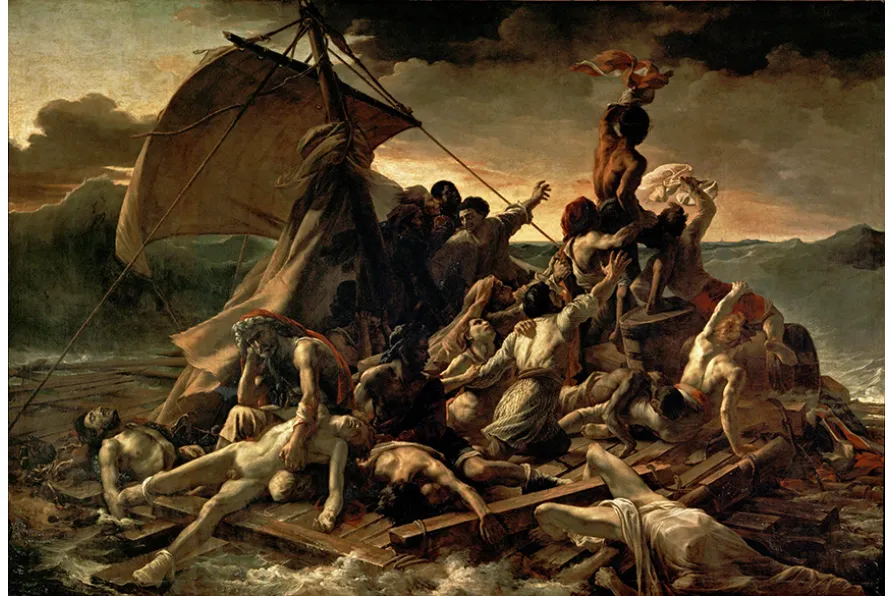
Theodore Gericault's The Raft of the Medusa
 The Raft of the Medusa
MIK SABIERS revels in a band that ploughs an idiosyncratic furrow of expletive laden, guitar-driven alt rock
ANDY HEDGECOCK, MARIA DUARTE and ANGUS REID review Synthetic Sincerity, Our Hero, Balthazar, Heartstopper Forever, and A Year In London
The bard invites readers to a gig, raps for Clacton, and lays out the Burnham-Hurzeler conundrum
RON JACOBS recommends an important book that enhances the oppositional theories put forth by Fanon and, in doing so, remakes psychology itself
JAN WOOLF relishes an extensive history of our long relationship to trees in Britain that underlines the current emergency
DIANE WATT argues that while evidence of sex is not there, a 16th‑century lesbian poet could be Scotland’s answer to Gentleman Jack




ON JULY 2, 1816, the French navy frigate Meduse ran aground 100 miles off the coast of Mauretania in Africa due to the navigational incompetence of its master Viscount Hugues Duroy de Chaumareys, a protege of the French foreign minister.
Some 147 people — for whom there was no room in the lifeboats — were put on an improvised raft to be towed. But, in a callous act of wilful and criminal negligence of duty, it was cut adrift on the orders of de Chaumareys.
Only 15 were to survive the two-week ordeal at sea before they were rescued. Immediately, stories of dehydration, starvation, brutality, murder and cannibalism emerged, when a report by the ship’s surgeon, Henri Savigny, was leaked to the newspaper Journal des Debats and published on September 13 1816.

Similar stories

STEPHEN ARNELL looks at some of the notorious political corruption cases from British history

NICK MATTHEWS recalls how the ideals of socialism and the holding of goods in common have an older provenance than you might think

JAN WOOLF examines work that aims to give viewers a material experience of the environments in the polar north and Britain equally affected by the climate crisis