

 Latest editorial
 BLOODSHED: The mother (centre) and the wife (left) of the Lebanese Brig. Gen. Wissam Sabra, who was killed Saturday in south Lebanon along with a captain and a soldier in an Israeli air strike, mourn during his funeral procession in Beirut on Sunday
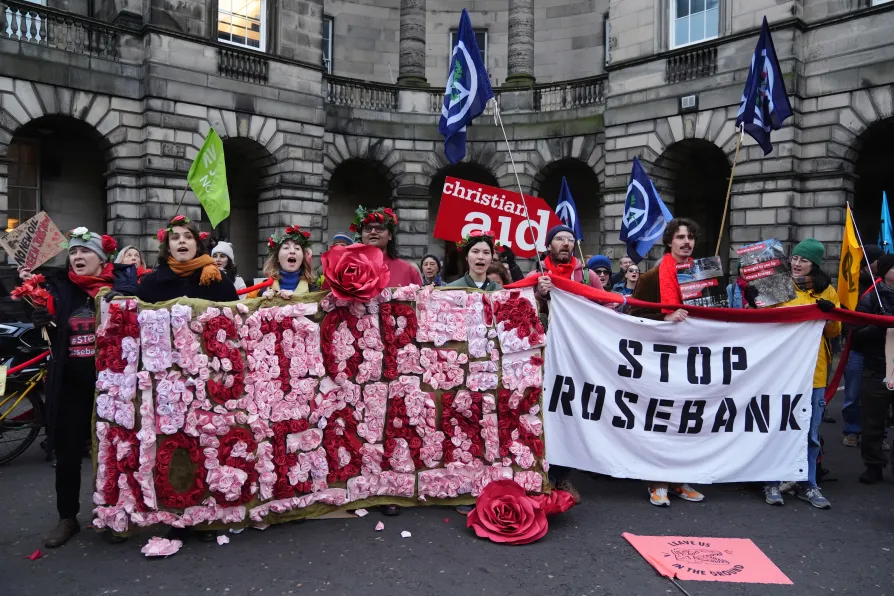


ANTI-WAR campaigners marked 100 days of the US war on Iran on Sunday, demanding the government invest in “welfare, not warfare” as households brace for an average 13.5 per cent price cap increase on their energy bills next month.
The joint US-Israel war on Iran launched on February 28 has since triggered Britain’s second major energy price crisis since the star of the decade, the End Fuel Poverty Coalition (EFPC) said.
Analysing the economic effects over the past 100 days, the EFPC called on PM Sir Keir Starmer’s government to implement a “credible long-term plan” to deal with the effects of price shocks on British households.
The price of natural gas has risen to around 38 per cent higher year on year, while heating oil has risen by 80 per cent, EFPC said.
Since the winter of 2020-2021, the typical household bill will be up 79 per cent, meaning their cumulative energy costs since that year would have totalled £4,800.
As fossil fuel prices have soared to fresh highs and households prepare for the rise in Ofgem direct debits, energy companies have raked in profits of £26.2 billion in the first three months of 2026 alone.
The EFPC found the increase in the stock market value of 15 leading energy firms between the days leading up to the war in Iran and May 29 was £53.4bn, while the combined increase of energy company shares owned by 10 CEOs over the same period was £6.6 million.
EFPC co-ordinator Simon Francis said: “Behind every percentage point on the Ofgem price cap is a household whose direct debit is about to go up and an energy firm whose profits already have.
“One hundred days on from the start of the Iran conflict, the bill for Britain’s dependence on fossil fuels is landing on doormats across the country.
“The only people who benefit are the drill-more and bill-more brigade who would keep us hooked on gas to heat our homes, even after the North Sea industry has finished extracting the last drop of gas from the UK basin.
“Households need to know what support is coming, and they need a credible long-term plan that means the next foreign conflict or market shock does not send their bills even higher.”
Fuel Poverty Action spokesperson Jonathan Bean added: “Their billions come from our bills. This obscene profiteering from oil wars needs to stop, and our government needs to focus on moving to renewables to give us greater independence and security.
“The benefits of cheap-to-produce wind and solar energy aren’t being harnessed to bring down our bills.”
Mr Bean demanded the government “take action to fix the rigged electricity market, cut excess grid and network profits, rapidly expand access to solar power and batteries, and give everyone access to the cheapest tariffs and free excess energy that is being wasted on sunny and windy days.”
Coinciding with the 100 days of US war on Iran, the public accounts committee published a report claiming that delays in publishing a report laying out government defence spending have undermined Britain’s credibility abroad.
The Defence Investment Plan (DIP), which was supposed to be published in the autumn, is now due to be released ahead of a Nato summit early next month.
The PAC says the delay was “hindering the government’s attempt to modernise the armed forces.”
It also took aim at the Ministry of Defence, claiming it had not provided “sufficient transparency” over spending on military weapons.
Nuclear weapons account for roughly a fifth of Britain’s total defence budget.
“The nation has now in fact gone years without a credible plan for UK military capability,” the PAC said, going on to criticise the secrecy surrounding nuclear spending.
It said the Defence Nuclear Enterprise “lacked accounting records to support more than £6bn of its assets” in its 2024/25 annual report.
The committee also raised questions about the £6.3bn Ajax armoured vehicle programme, after soldiers experienced hearing loss and vomiting after a training exercise.
A spokesperson for the Stop the War Coalition told the Morning Star: “All of this confirms why the International Anti-War conference in London on June 20 couldn’t be happening at a more critical time and why what comes out of it is a strong and united international movement against the global drive to war, for welfare not warfare, wages not weapons.”
