IAN SINCLAIR examines the curious memory lapses across liberal media when it comes to British government crimes


 Latest editorial
Colombia: External interference and manipulation of the electoral process
ENRIQUE SANTIAGO ROMERO says the Colombian far-right’s election victory is deeply suspect — and the United States has its fingerprints all over it
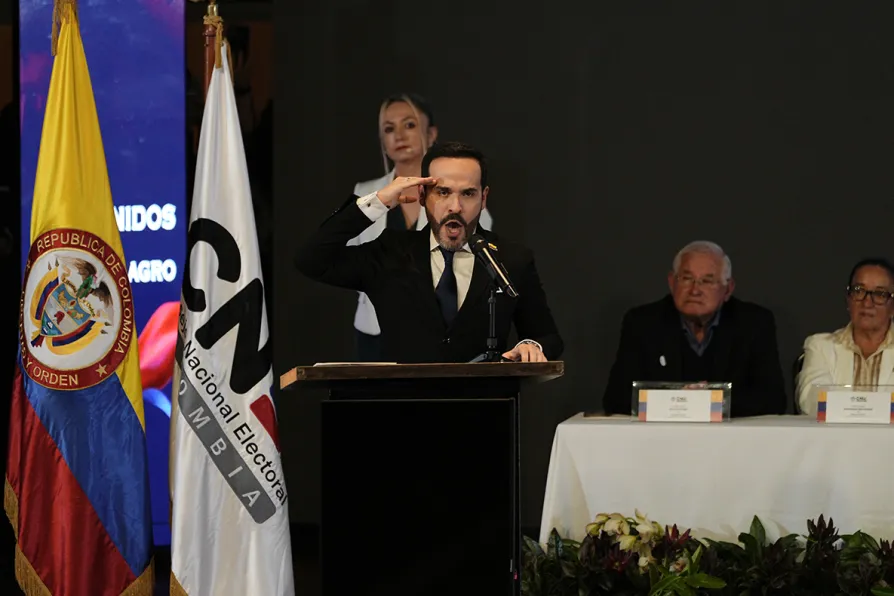 Colombia's far-right president-elect Abelardo de la Espriella

STEPHEN ARNELL looks at some of the notorious political corruption cases from British history
History suggests apartheid ends not through appeals to conscience alone but through sustained economic and political pressure, says HUGH LANNING
ARTHUR WEST surveys the achievements of the Scottish campaign against South African apartheid and how we can draw on them to fight a rising far right
As the US marks 250 years since the Declaration of Independence, the People’s World Editorial Collective argues that the real legacy of 1776 lies not in official celebrations but in centuries of popular struggles to make democracy a reality for all




THE essential components of any election observation process are four: on-the-ground observation, identification of structural problems, recording of institutional responses to the problems detected, and context analysis or correct interpretation of what was observed.
There is legitimate concern about the context in which the recent presidential and legislative elections have been held in various countries around the world, and especially in Latin America, which the Trump administration considers an extension of the United States, as indicated in its 2025 National Security Strategy.
This concern was confirmed in the 2026 Colombian presidential elections, both in the first round held on May 31, and in the second and final round held on June 21.
External interference in electoral processes has become commonplace in recent years. Interventions by foreign powers, particularly the United States through President Trump, are frequent in Latin America. In the 2026 Colombian presidential elections, there were also explicit interventions by the presidents of Ecuador and Argentina, both urging voters to support the far-right candidate and threatening reprisals should he not win.
Another important tool for electoral interference is artificial intelligence (AI), used to create and distribute videos with fabricated images that do not correspond to reality, disseminating specific narratives. Electoral processes are also interfered with through the creation of thousands of fake accounts operating on social media, spreading ideas aimed at discrediting the candidate they want to defeat. Both techniques clearly violate electoral legislation regarding campaign spending controls.
On December 6, 2024, the Constitutional Court of Romania made a serious decision, annulling the presidential elections held in that country. The court cited the following reasons: manipulation of the electorate through social media; illegal campaign financing, also using social media; the proliferation of cyberattacks from abroad; and the alleged interference of a foreign power, in this case Russia. These factors, the court argued, resulted in an illegitimate election outcome, which was therefore not recognised by the Constitutional Court. The entire international community, beginning with the European Union, accepted this controversial measure.
It is striking that what countries governed by conservative forces or subservient to the United States apply in the case of Romania, they do not allege or defend equally when it comes to Latin American countries, as has happened in the recent case of the presidential elections in Colombia.
Following the start of Donald Trump’s second term and the approval of the new US National Security Strategy, direct White House intervention in electoral processes has become commonplace, especially in Latin America.
In April 2025, President Trump openly commented on the presidential elections in Ecuador, threatening the Ecuadorian people should Daniel Noboa not win. In October 2025, during the midterm elections in Argentina, Trump’s explicit intervention overturned the polls and ended with a victory for Javier Milei’s party.
In December 2025, during the recount of the presidential election results by the Honduran National Electoral Council, Trump declared the winner to be Nasry Asfura, the candidate of the Honduran National Party. The National Electoral Council immediately proclaimed Asfura the winner, without even completing the recount.
And in May 2026, President Trump kicked off the campaign for Brazil’s upcoming presidential elections, to be held later this year, by posting a photo of himself with Flavio Bolsonaro, the right-wing presidential candidate, at the Oval Office desk in the White House.
The National Security Strategy approved by Trump in 2025 considers Latin America as a territory under the exclusive strategic competence of the United States. This strategic subordination of the entire continent to Washington’s decisions is a manifestation of contempt for the sovereignty of Latin American nations.
This year’s presidential elections in Colombia have been marked by numerous reports of interference, both in the first round held on May 31 and the second round on June 21.
These reports include the mass publication of AI-generated videos with manipulated messages and images targeting candidate Ivan Cepeda; and the proliferation of fake accounts across all social media platforms dedicated to discrediting Cepeda and campaigning for Abelardo de la Espriella, a populist and authoritarian candidate created by Washington, a Colombian lawyer residing in Miami and an acquaintance of Marco Rubio. These fake accounts represent massive digital campaigns that were not reported as campaign expenditures, violating Colombian law on campaign finance.
Washington’s techno-oligarchs have long placed their companies at the service of Donald Trump’s foreign policy, so that large-scale digital manipulation has become a model of specific US intervention in the electoral processes of other countries — a technique used extensively in Colombia during these elections. In Colombia, patterns of interference in electoral processes through the use of artificial intelligence, frequently employed in Latin America in recent years, have been repeated abundantly.
Furthermore, during this presidential campaign, explicit statements by Trump have been documented on three separate occasions — June 3, 11 and 19— in which he called for votes for Abelardo de la Espriella, and threatened Colombia should the latter not win.
During both the first and second rounds of the election, the United States sent a delegation of Republican politicians to Colombia, led by Senator Bernie Moreno of Ohio, who is of Colombian descent. Moreno asked for votes for de la Espriella and warned that Washington would not recognise any election result in which de la Espriella was not declared the winner.
Ecuador’s president, Daniel Noboa, also engaged in acts of explicit interference, offering in the first round of the presidential election to lift the customs tariffs previously imposed on Colombia if the left-wing candidate, Ivan Cepeda, was defeated.
Finally, one week before the elections, Beto Coral — a Colombian influencer living as a refugee in the United States — was detained, held in an immigration detention centre, and placed at the disposal of the justice system. His detention was ordered directly by US Secretary of State Marco Rubio, who, as we have already indicated, maintains personal and professional ties with candidate De la Espriella.
But the Colombian election campaign has also seen classic electoral interference and manipulation in favour of the candidate, de la Espriella.
The habitual practice of political forces — supported by Colombian economic groups involved in both legal and illegal economies — buying votes in various departments of the country has been documented. There has also been fraud of varying degrees committed in overseas voting, as well as a widespread pattern of transporting dependent elderly people to polling stations, with the accompanying persons casting their votes.
In this presidential election process, at least three of the elements of electoral interference that the Constitutional Court of Romania used to annul the results of the presidential elections held in that country in 2024 are easily observed. First, manipulation through social media; second, illegal campaign financing through the mass sending of messages on social media; and third, interference in the electoral process by a foreign power, in this case the United States.
This electoral manipulation that further elevates the stature of the left-wing candidate Ivan Cepeda, who, in order to avoid a wave of violence in the country has recognised the victory of his opponent by a margin of only 250,000 votes, the closest result ever seen in the world history of presidential second-round or “runoff” elections.
The institutional authorities responsible for the electoral process should have had a specific plan to dismantle these interferences, at least for the second round, given what happened in the first round of the elections last May.
President-elect de la Espriella has said that if Colombia’s problems remain unresolved, or if there is a reluctance to address them, he will request that President Trump come to Colombia to resolve them.
This is a clear declaration of intent regarding his presidency: an assumption of a dependent role, at the beck and call of the White House. Representatives of the extreme right, linked to drug trafficking and organised crime and organically connected to the extreme right in the United States, have returned to the Colombian presidency.
The reality is that Colombia’s problems regarding justice, drug trafficking, economic and social development, and violence are complex, and demand concerted action from the two presidential candidates, since each represents exactly half the country.
However, the president-elect has burst into the post-election political debate with threats, failing to recognise that the left-wing Historic Pact is a political force built by millions of people, drawing upon an accumulated history of resistance to violence, massacres, and even political genocide.
Indeed, immediately after Ivan Cepeda acknowledged the victory of the far-right candidate, violent acts against working-class communities began. Peasant farmers who benefited from land distribution under the 2016 peace agreement have been attacked and threatened by paramilitaries to force them to abandon their communities. Security forces have used violence against ethnic groups on suspicion of having voted for Cepeda.
A smear campaign is spreading the slanderous claim that the Historic Pact obtained the largest vote for the left in Colombian history due to threats from armed groups against voters. Far-right political leaders have called on the military to bomb communities that voted overwhelmingly for Ivan Cepeda.
The Historic Pact now faces the task of preventing a wave of attacks against progressive left-wing voters. Those who encourage this coercive and violent policy against the half of Colombia that voted for Ivan Cepeda must bear in mind that threats are ineffective against the Colombian people; rather, it could provoke an unwanted reaction that unleashes a new era of violence.
It would be repeating the historical error of denying a second opportunity on earth to those lineages condemned to a hundred years of solitude.
Enrique Santiago Romero is United Left spokesman in the Spanish Congress and general secretary of the Communist Party of Spain (PCE). This is a slightly abridged translation of an article appearing in the PCE journal Mundo Obrero.

Similar stories

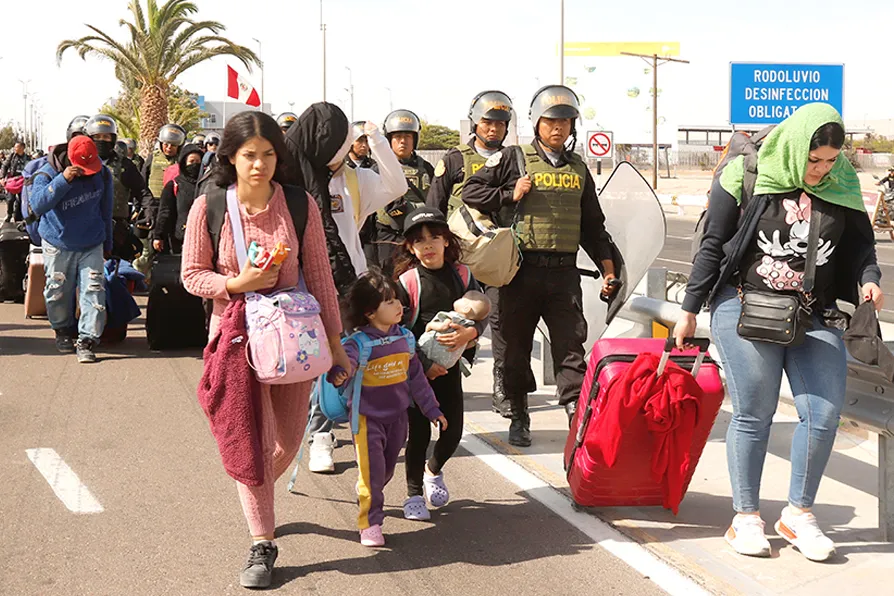
Far-right forces are rising across Latin America and the Caribbean, armed with a common agenda of anti-communism, the culture war, and neoliberal economics, writes VIJAY PRASHAD
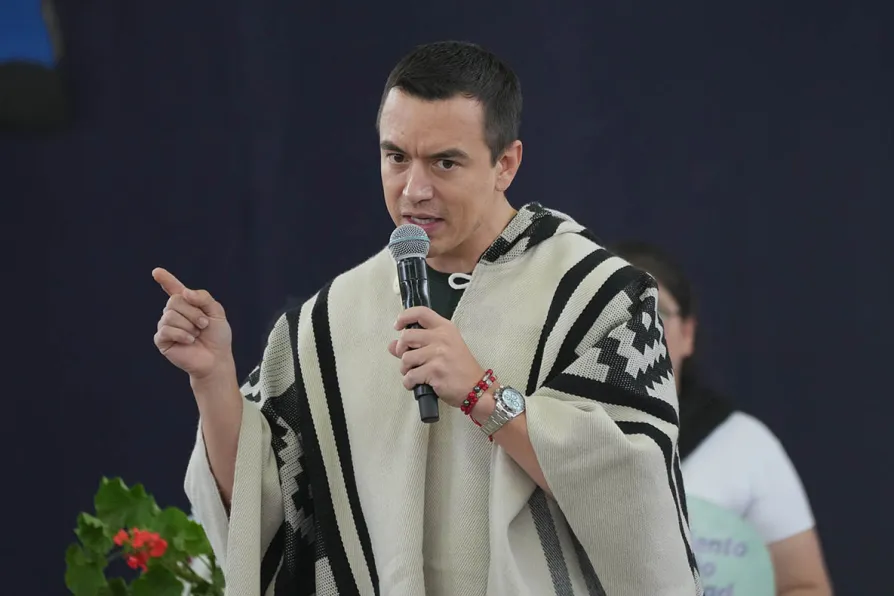
LEE BROWN highlights the latest attempts to undo progressive reforms instated during the presidency of Rafael Correa
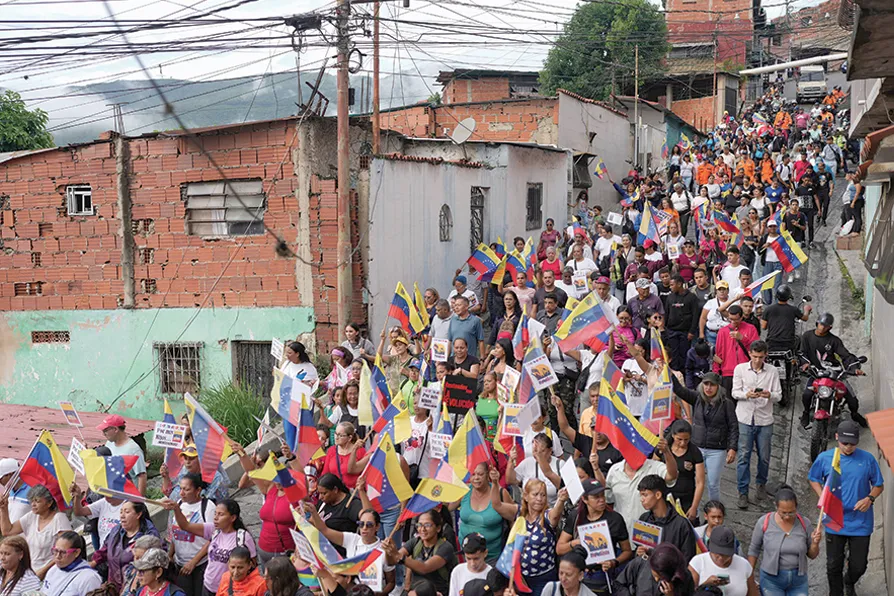
US baseless accusations of drug trafficking and the outrageous putting of a bounty on a president of a sovereign country do not bode well, reports PABLO MERIGUET