STEPHANIE BROWN draws attention to the hidden labour of the female embroiderers, and how a 19th century replica made no such error


 Latest editorial
Genesis of a jazz masterpiece
ANGUS REID is bowled over by an exuberant film about the making of Keith Jarrett’s legendary concert
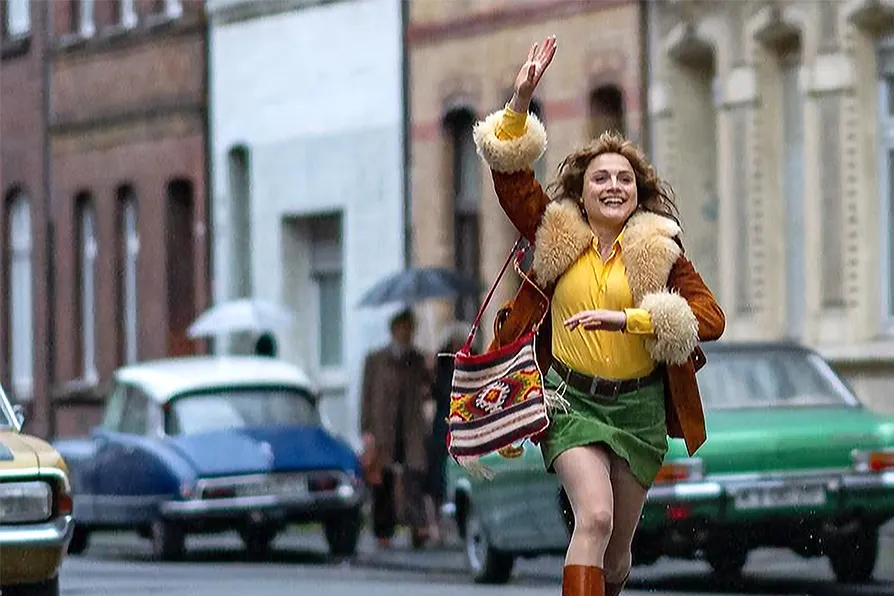 SHEER CHUTZPAH: Mala Emde as precocious jazz promoter Vera Brandes in Koln 75 [Pic: IMDb]

MIK SABIERS revels in a band that ploughs an idiosyncratic furrow of expletive laden, guitar-driven alt rock
ANDY HEDGECOCK, MARIA DUARTE and ANGUS REID review Synthetic Sincerity, Our Hero, Balthazar, Heartstopper Forever, and A Year In London
The bard invites readers to a gig, raps for Clacton, and lays out the Burnham-Hurzeler conundrum
RON JACOBS recommends an important book that enhances the oppositional theories put forth by Fanon and, in doing so, remakes psychology itself
JAN WOOLF relishes an extensive history of our long relationship to trees in Britain that underlines the current emergency
DIANE WATT argues that while evidence of sex is not there, a 16th‑century lesbian poet could be Scotland’s answer to Gentleman Jack


Koln 75 (15)
Directed by Ido Fluk
★★★★★
TO play a jazz solo, Keith Jarrett didn’t rehearse and didn’t plan. Instead he emptied his mind, and allowed any small sound to prompt him. The Koln concert famously begins with his imitation of the auditorium chimes, announcing that the concert would soon begin. And then, out of nothing came the music, powered by delicacy, passion and panache. This fizzing gem of a film is itself an exuberant riff around that concert that seems to borrow Jarret’s improvising genius and translate it into breathless storytelling.
We dont hear the concert itself, but we don’t need to. You can hear the whole thing on youtube and, after watching the film, I guarantee you will want to do that.
Jarrett himself is superbly portrayed by John Magaro as a taciturn and pain-wracked devotee of his self-appointed religion, total musical freedom, and writer director Ido Fluk allows that ideal to draw in all the heady rebellion of the 1970s.
The concert is avant-garde, risky and almost impossible to promote, and the film concerns itself with the near-unbelievable true story of the promoter Vera Brandes, an 18-year-old chancer who risks everything to make it happen.
Fluk sets her spinning and her heady idealism drags everything into the mix, from the rebellion of the RAF generation against their parents’ Nazi past to the evolution of jazz improv from big band to free solo, and rarely have I witnessed a film that runs through the gears with such joyous ease.
The characters, from Mala Emde’s hyperactive Vera — a stunning performance — to Michael Chernus’s bewildered freelance journalist, jump from superbly rendered period scenes to narrators, addressing the camera and rearranging the storyline, with an ebullient sleight of hand. The story skips gleefully from a dental clinic re-purposed at night into a makeshift promoter’s office, to the tiny Renault 4 that Jarrett stupidly used to save money for the all-night road trip to Koln, to the cavernous opera house where the late night gig might not happen at all because they can’t be bothered to permit use of anything other than the wrong piano, hopelessly out of tune. And finally, to the hotel corridor where Brandes must overcome Jarrett’s decision not to play.
How come she succeeds? As she says, she has to fight sexism, patriarchy and narcissistic men at every stage, and she channels the anarchist spirit of the age toward the creative end of a performance — miraculously recorded — that is still, today, a liberating masterpiece.
Don’t miss this. It’s life-enhancing. It’s wonderful.
In cinemas June 5
