MIK SABIERS revels in a band that ploughs an idiosyncratic furrow of expletive laden, guitar-driven alt rock


 Latest editorial
Mark brothers
JOHN GREEN recommends a German comedy that celebrates the old GDR values of solidarity, community and a society not dominated by consumerism
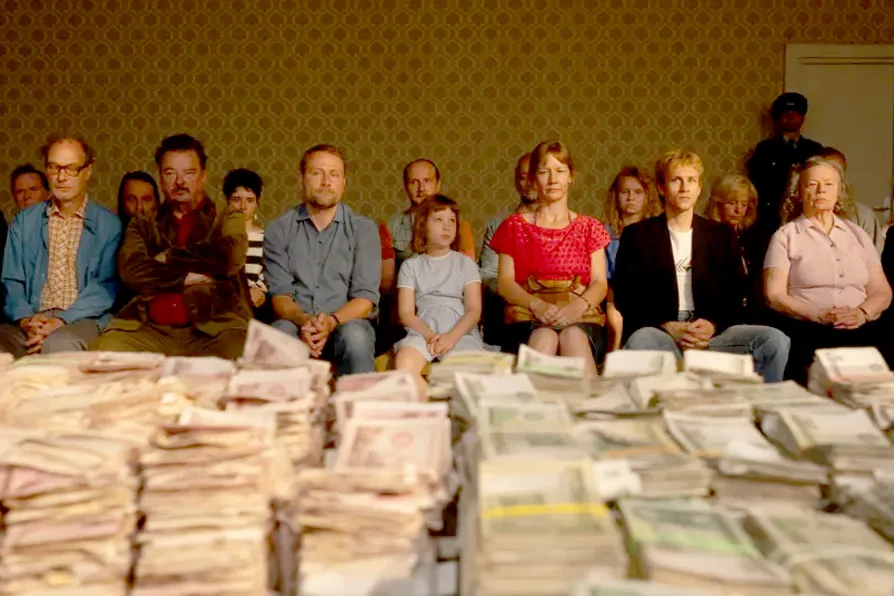 OLD MONEY: Two to One, Directed by Natja Brunckhorst / Pic: IMDb

ANDY HEDGECOCK, MARIA DUARTE and ANGUS REID review Synthetic Sincerity, Our Hero, Balthazar, Heartstopper Forever, and A Year In London
The bard invites readers to a gig, raps for Clacton, and lays out the Burnham-Hurzeler conundrum
RON JACOBS recommends an important book that enhances the oppositional theories put forth by Fanon and, in doing so, remakes psychology itself
JAN WOOLF relishes an extensive history of our long relationship to trees in Britain that underlines the current emergency
DIANE WATT argues that while evidence of sex is not there, a 16th‑century lesbian poet could be Scotland’s answer to Gentleman Jack
KEITH RICHMOND relishes a superbly conceived modern version of Aeschylus’ drama of murderous family succession


Two to One (12A)
Directed by Natja Brunckhorst
★★★★
THIS German film reminds me of the Ealing comedies, Passport to Pimlico and Whisky Galore! The latter, made in 1949 was, like this film, based on a true event and both explore the actions of a small insular group facing and overcoming a more powerful opponent. A palpable sense of community runs through both of them.
Directed by Natja Brunckhorst, this film plays out in the limbo period, before unification but after the GDR had opened its borders, at the time of the sudden currency reform, introduced within a single week. As one of the characters in the film puts it: “This isn’t unification, it’s simply a takeover!”
The film opens with recently sacked workers queueing up at the new job centre. GDR citizens’ lives were turned upside down at a dizzying speed. A whole way of life came to an end, factories and institutions were closed, there was mass unemployment and confusion.
Robert, Volker and Maren have been best friends since childhood and live in Halberstadt in the GDR. One day in July 1990, they accidentally discover millions of GDR marks that are being stored in a bunker nearby.
They decide to steal some of the money and smuggle out sacks of notes, setting in motion a clever ruse to exchange them for West German marks. There is a short window of opportunity within which to exchange the Ostmark at a rate of Two to One (thus the title), so they rally friends and neighbours to use the old money to buy West German electronic goods, and then sell them back to the West Germans for the new hard currency. The old GDR ideas of solidarity and community cohesion come into play: everyone gets an equal share of the proceeds, and they work together as a team.
For sure it is well-acted and realistically shot, but, for all its cheeriness, the film strikes a melancholy note. It is a gratifying, if belated, attempt by a West German director to capture the traumatic realities of that time, albeit in tragicomic form.
It concludes in fairy-tale mode: the West German government can’t afford a public scandal, so agrees to the people’s terms to cover up the “crime.” They are given ownership of an island in the Baltic Sea where they dream of establishing a new state.
As such, it celebrates the old GDR values of solidarity, community and the idea of a society not dominated by consumerism and the rat race. Recommended.
In cinemas tomorrow.

Similar stories

ANDY HEDGECOCK, MARIA DUARTE and ANGUS REID review Synthetic Sincerity, Our Hero, Balthazar, Heartstopper Forever, and A Year In London

KEVIN DONNELLY and MARIA DUARTE review Shoot the People, The Last One For The Road, Rosebush Pruning, and Moana
MARIA DUARTE, JAMES WALSH and ANDY HEDGECOCK review The Invite, My Father’s Island, Nirvanna: the Band, the Show, the Movie, and Oh My Goodness!
ANDY HEDGECOCK, MARIA DUARTE and ANGUS REID review The Six Billion Dollar Man, Avatar: Fire and Ash, Goodbye June, and Super Elfkins