Charles Windsor challenged to declare full income as he becomes first monarch to release tax payments


 Latest editorial
NHS staff collapsing as workplaces reach shocking 43°C
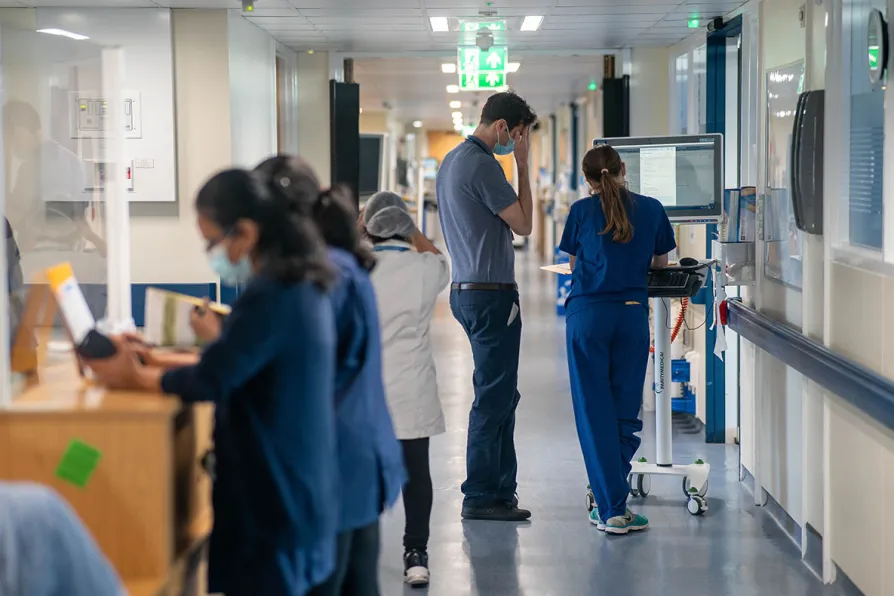 UNSAFE CONDITIONS: Staff working at hospitals are having to deal with boiling hot temperatures




NHS staff revealed their workplaces have reached 43°C as a new record temperature for June was set for the third day in a row today.
Front-line staff reported colleagues collapsing in the heat in a survey by the Doctors’ Association UK (DAUK).
Health chiefs have warned the heatwave is straining the NHS with significantly more life-threatening emergency calls.
A worrying 95 per cent of respondents described their workplace as uncomfortably warm, very hot or dangerously hot.
Their average reported temperature was 32°C while nearly one in four submitted readings of 35°C or above.
The survey also found 94 per cent of respondents reported no or only partial working air conditioning in their main clinical area and that nearly nine in 10 medics said they or colleagues had felt unwell because of the heat.
DAUK sustainability lead Dr Matt Lee said: “Our survey confirms a worrying pattern across the NHS.
“Doctors and other NHS staff are describing wards, clinics and emergency departments that are simply too hot to work in safely.
“Staff are feeling faint, patients are dehydrated and people are being expected to deliver complex clinical care in conditions that would not be tolerated in almost all other workplaces.
“It’s shocking that colleagues and patients are having to endure these conditions, but sadly not surprising.”
The DAUK is calling for legal maximum safe working temperatures in hospitals and GP surgeries alongside urgent investment in air conditioning and cooling mechanisms in hospitals.
Yesterday the Met Office warned temperatures were still rising as a provisional temperature of 36.9°C recorded in Wattisham, Suffolk, set a new June hottest day record.
Schools and nurseries have been forced to close and several hospitals have declared critical incidents due to the extreme heat.
Keep Our NHS Public co-chair Dr John Puntis said: “The sudden additional demands placed on the NHS by the severe hot weather demonstrate its fragility when faced with any sort of stressor.
“While there are many factors at play here, chronic under-resourcing leading to staff vacancies and lack of investment in upgrading estate are high on the list.”
The London Ambulance Service reported its highest number of life-threatening emergencies ever on Wednesday.
England fans were urged to keep hydrated during tonight’s World Cup game.
