A new generation of right-wing politicians have shifted from promoting deregulation to championing anti-migrant politics warns SOLOMON HUGHES


 Latest editorial

From speedway star to International Brigader
A champion motorcyclist, trade union organiser and communist, Clem Beckett went from Britain’s speedway tracks to the battlefields of Spain, where he gave his life resisting Franco’s forces at Jarama. GEOFF BOTTOMS pays tribute to this remarkable anti-fascist
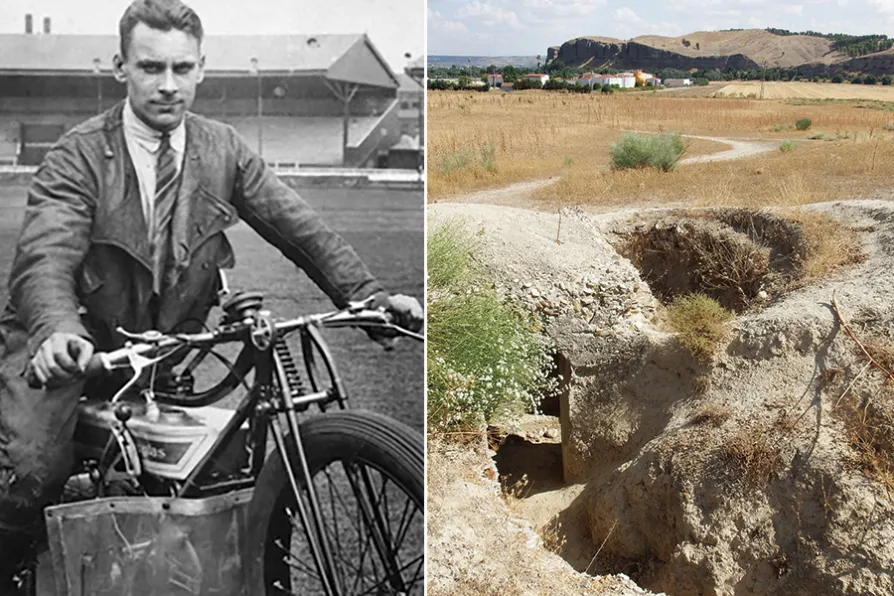 (L to R) Clem Beckett; remnants of the Republican trenches Jarama, the hill in front was in Nationalist hands the Madrid-Valencia is to the left of the picture / Pics (L to R): Unknown; 19Tarrestnom65
by the Greater Manchester Workers’ and Tenants’ Association
The US relationship with Israel has evolved into a strategic liability, argues RAMZY BAROUD
The greatest threat to democracy may no longer come from political parties but from unelected tech oligarchs like Peter Thiel and his powerful Silicon Valley network, argues JOHN GREEN
Claiming to ease a fertiliser shortage, the Trump administration has suspended tariffs on Moroccan phosphate imports – deepening US support for the Morocco’s control over Sahrawi territory, writes LUKE ROTELLO



MY DAD was a speedway rider after returning from war-time service with the RAF in north Africa and Iraq where he had volunteered for dangerous special operations behind enemy lines. He rode for the Hull Angels and the Fleetwood Knights and I remember going with my mum to watch him race and even win a few prizes.
Which is why I took an interest in speedway champion Clem Beckett when the South Yorkshire branch of the Communist Party of Britain decided to commemorate the 90th anniversary of the outbreak of the Spanish civil war by making some podcasts about volunteers with a local connection who went to fight against fascism.
As well as placing an ad in the Sheffield Star appealing for contributors, we contacted Karen Mulcahey who wrote and directed The Lions of Rotherham, which is a historical play that tells the true story of four men from Rotherham (Tommy James, Chris Smith, Geoff Allsopp, and Joseph Maiden) who had rallied to the cause.
She had used extensive research, personal diaries and audio recordings to bring the men’s stories, epic battles and beliefs to life.
We also contacted Neil Gore who had written Dare Devil Rides to Jarama, which is a compelling and humorous political play that was commissioned by the International Brigade Memorial Trust.
He had been deeply moved when visiting Jarama on an IBMT tour of the major battlefields of the Spanish civil war while researching and writing the play. It tells the true story of the daring speedway champion Clem “Dare Devil” Beckett and his friend, the Marxist writer Christopher Caudwell, both of whom had also volunteered to join the International Brigade.
Clem’s motor-sport career started in 1928 in Audenshaw when motor racing sports was in its infancy. He managed to find employment thanks to his unique skills as a rider on the Wall of Death, where he soon became known as “Dare Devil Beckett,” and worked as a speedway racer for the London-based team White City.
By the end of his first year as a speedway racer, he became one of Britain’s leading race drivers. His fame quickly spread across Europe, and in the year 1929 alone, he performed at racing events and displays in Germany, Yugoslavia, Turkey, Denmark and France.
Although born in Oldham in 1906, Clem’s association with South Yorkshire began with his purchase of Owlerton Meadows (now Owlerton Stadium), together with Jimmy Hindle and Spencer “Smoky” Stratton, where he built a speedway track in 1929, as he was crazy about dirt-track motor-cycle racing.
The Sheffield Tigers team was born but a lot of young riders were having to run unnecessary risks. Clem fought for health and safety measures to be introduced to protect them as far as possible and started a union for riders known as the Dirt Track Riders Association.
He even wrote an article for the Daily Worker titled “Bleeding the men who risk their lives on the dirt track.” He was eventually banned from racing in Britain because of his militancy.
There are still some around at Owlerton Stadium with tales to tell about Clem that have been passed down from generation to generation yet the memory is fading. While it beggars belief a niece tells of him riding with a monkey and a lion in his sidecar while a violin and an accordion have been found at his home. So maybe it’s time to campaign for a blue plaque to be erected in his honour?
Clem joined the Young Communist League in 1926 after hearing Tom Mann speak, and went on to become vice-president of the Communist Party’s British Workers Sports Federation, joining a delegation visiting the Soviet Union in 1932 to promote motor-cycle racing.
He was blacklisted on his return, but managed to return to the Ford factory in Dagenham from which he had been previously sacked, where he lasted two weeks after attempting to unionise the workers and publicising the dangerous working conditions.
Clem was acutely aware of the rise of fascism, having been in Germany in 1931. Back in Manchester, Oswald Mosley’s Blackshirts were trying to drum up support in 1933-34 so he soon became active in anti-fascist action.
Then came the Battle of Cable Street on October 4 1936, which was a monumental victory against the rise of domestic fascism and antisemitism, when local Jewish communities, Irish dockers and trade unionists, communists and socialists, and even sympathetic tram drivers came together to block a march by Mosley’s British Union of Fascists.
In 1936, after Franco launched a coup against the Republican government, Clem heard Harry Pollitt asking for volunteers to drive ambulances to Spain to join the resistance. When he decided to go to Spain in November of that year, he was in demand as a mechanic. But Clem was adamant. He wanted to fight.
After training in Albacete along with other members of the International Brigade, he responded to the call for troops to go to Jarama, in order to prevent the fascists taking command of the hugely important road between Valencia and Madrid which was the supply lifeline to Madrid.
Clem Beckett was killed on the February 12 1937, covering the retreat of the British Battalion near Arganda Bridge during the Battle of Jarama. Together with his close friend and comrade Christopher Caudwell, he took control of a Chauchat light machine gun and set up position on a location which would later become known as “suicide hill.”
Beckett’s machine-gun jammed, allowing his position to be overrun by the fascist forces, resulting in his death and that of Caudwell and many of the other comrades.
In commemorating these giants of our movement, such as Clem, who volunteered to join the International Brigade to fight fascism in the Spanish civil war 90 years ago, we are inspired to face the challenge of the far right and the threat of fascism in our own times.
The need to build a united front of the organised working class together with other progressive forces and movements against racism, neofascism, austerity, imperialism and the drive to war has never been greater but our rallying cry remains the same, “No pasaran!” They shall not pass!

Similar stories
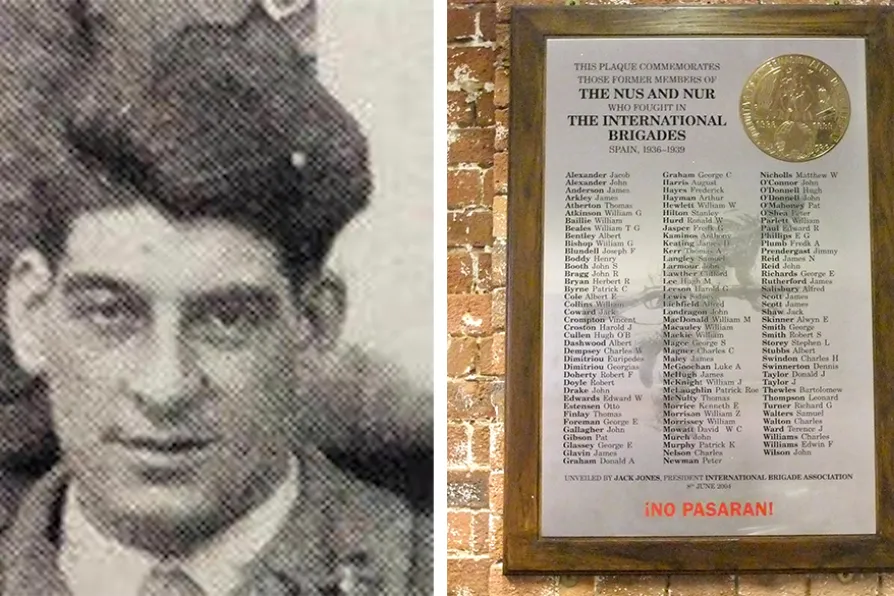
RMT general secretary Eddie Dempsey explains why his union is proud of its members who fought in Spain
![Harry Pollitt (right) with International Brigade volunteer David Guest, who was killed at the Ebro in July 1938 [Pic: Marx Memorial Library]](https://www.morningstaronline.co.uk/sites/default/files/styles/desktop/public/2026-07/a-2_a_50b_Harry%20Pollitt_David_Guest.jpg.webp?itok=Ag0u-8n5)
ALEX GORDON applauds the leading role played by Harry Pollitt and the Communist Party in the fight against fascism in Spain and salutes the memory of the International Brigades
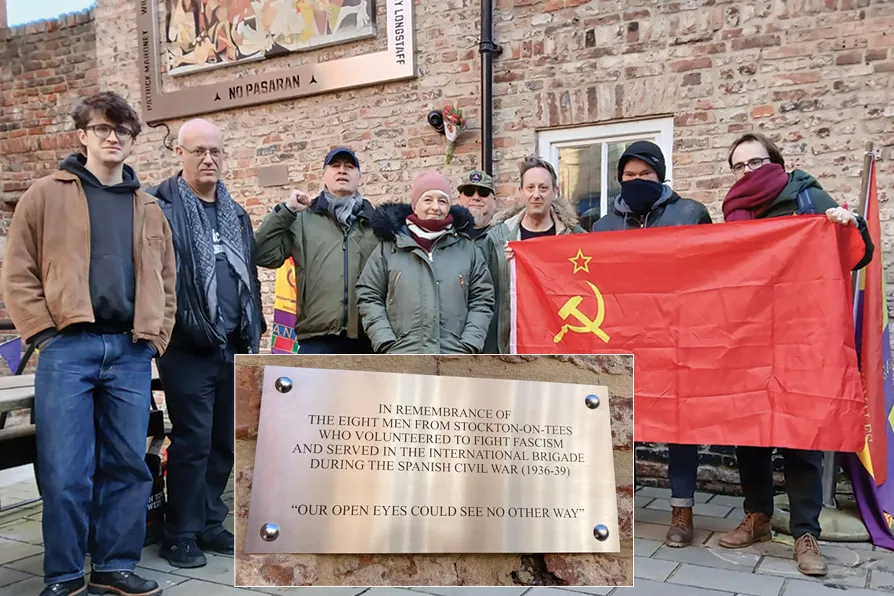
TONY FOX reports from a commemoration of the legendary Battle of Jarama in which four Stockton-on-Tees volunteers fell
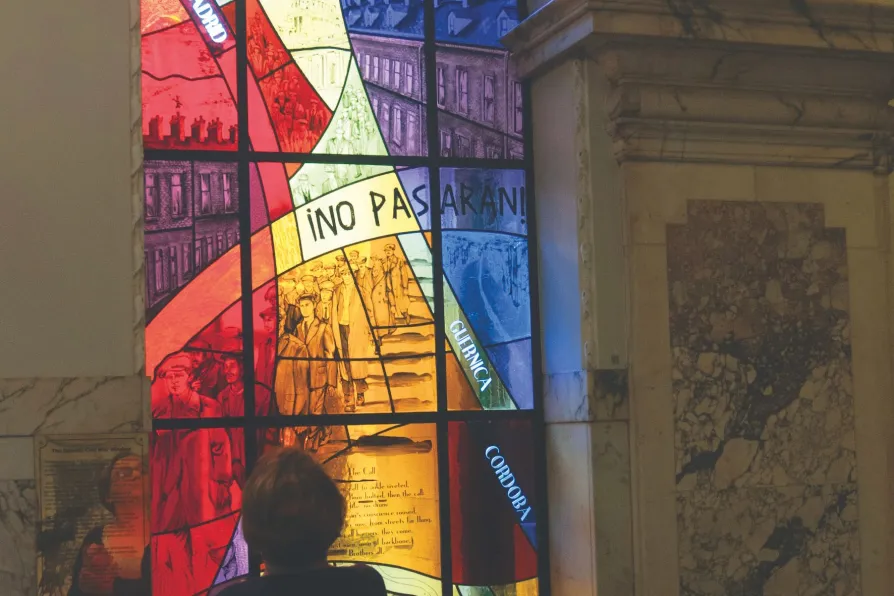
JIM JUMP looks forward to the International Brigade Memorial Trust AGM taking place in Belfast later this week where the spirit of solidarity will be rekindled