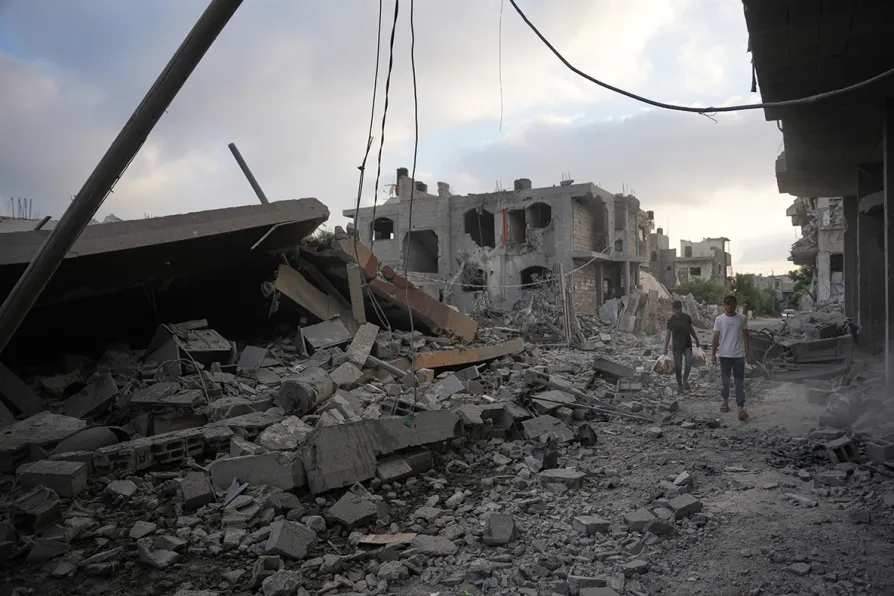
While international actors discuss governance and reconstruction, Netanyahu has made it clear that Israel has no intention of ending its military occupation, says RAMZY BAROUD


 Latest editorial
Trump’s clash with Meloni exposes the widening US-Europe rift
NICK WRIGHT continues his series analysing the trends in European politics
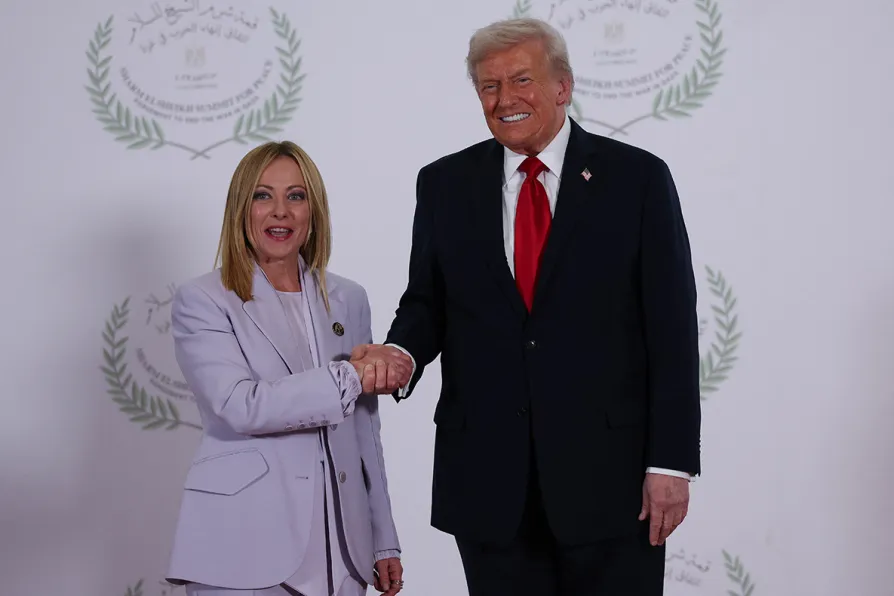 US President Donald Trump and Italian Prime Minister Giorgia Meloni shake hands as they pose for a photo at the Sharm El Sheikh Peace Summit in Egypt, October 13, 2025
We have the alternative economics, histories of our struggles and the confidence to change the world
General Federation of Trade Unions assistant general secretary HENRY FOWLER reports on the final day from the GFTU’s residential Summer School at the Workers’ Retreat, Quorn Grange Hotel
Capitalism has exploited — and polluted — our natural resources for too long, it’s time we treated our rivers as living beings, writes MIRIUM GAUNTLETT, LIAM SHAW and ROX MIDDLETON
Treating the Clacton by-election as a joke risks reinforcing the Reform leader’s claim to be the victim of an out-of-touch Establishment, argues JOHN McINALLY
MPs and others called for the urgent release of tortured Palestinian doctor, Hussam Abu Safiya, held hostage by Israel and reportedly near death, reports LINDA PENTZ GUNTER




DONALD TRUMP is having serious woman troubles. Not, as far as this account goes, at home, but in Europe.
Last week the US president posted a photograph of Italy’s Prime Minister Giorgia Meloni quipping that he might need a restraining order taken out against her.
This was the latest exchange in a mounting spat between the two that followed the June G7 summit in Evian when Trump said Meloni had “begged” him for a photo.
“I wouldn’t have taken it, but I felt sorry for her,” Trump said, and an angry Meloni stood on her dignity to say the story was “completely made up.”
“Italy and I never beg!”
Now Marine Le Pen has publicly backed Meloni, saying: “He was very insulting, so I fully understand Giorgia Meloni’s reaction, which is one of national pride.”
Asked if this was a definite break with break with the US she said: “Certainly not. Is this a severe cool-down of the relationship between the two individuals? Most certainly.”
Meloni’s Foreign Minister Antonio Tajani, from the traditionally US-aligned Forza Italia party, tried to paper over the cracks claiming that there were no problems between the two governments and that they were “continuing to build on these very important political relations, regardless of a few statements.”
Tajani was compelled to dismiss Trump’s remarks as “grave and offensive” but his overall position looked a bit shaky when Meloni reiterated her country’s ban on US military operational flights from US bases in Italy.
“For the bases, it’s not as though we’ve been changing course from one day to the next — we’ve had a very clear line since the beginning of the conflict in Iran, and we are maintaining that,” she said.
And when Trump resumed bombing attacks she made the point again: “We are not participating in attacks against Iran, and we will not participate in attacks on Iran.”
With Trump making support for his war on Iran a loyalty test for his European allies, he now has to accept he fact that Le Pen, possibly France’s next president, has come out in support of Meloni.
It is tempting to see these exchanges as simply the fallout from Trump’s crass personality, his deeply ingrained misogyny and lack of manners.
And if there is any utility in the Trumpian performance in international relations it is to render transparent the overt goals of the imperial entity unadorned by the hypocrisy and cant which usually accompanies the actions of the neoliberal elite and their liberal outriders.
But both Meloni and Le Pen are compelled to respond both to defend their perceived national interests — and those of the European imperial bloc which is increasingly at variance with those of the US under its present leadership — and they both have elections to face.
Both the French and Italian electorates that are increasingly out of sympathy with the US in general and Trump in particular.
Le Pen put it bluntly: “One doesn’t have friends when it comes to foreign relations, one has interests, which can be common interests or conflicting ones.”
The stress lines in the relationship between the US and the states of the EU/Nato military alliance were brought out in late June when Trump’s craven acolyte Mark Rutte, former Dutch prime minister and now Nato secretary-general, described Meloni as giving “massive” support for the US attacks on Iran.
In an echo of Keir Starmer’s dissembling over the use of US military bases in Britain to launch attacks on Iran, Meloni was compelled to double down on her rhetorical opposition to Italian participation in the war.
“In his, let’s call it enthusiastic, account, the secretary-general has lumped together things that are actually quite different from one another, confusing the types of authorised flights,” Meloni told reporters during the Franco-Italian summit.
“We did not participate in the conflict with Iran. By the way, if we had participated in the Iran conflict, there would be no explanation for this disappointment that the US president, very often, keeps reiterating.”
Il Fatto Quotidiano, perhaps the most reliable of Italian dailies, reporting on Rutte’s defensive stance headlined: “Giorgia did what she had to do” and put it sharply: “Now Meloni dumps Rutte, but he doesn’t want to go to the class room.”
To further make Italy’s position clear it was Tajani who spoke with the Iranian foreign minister to reiterate that Italy has never taken part in any military initiative nor authorised the use of its bases for acts of war against Iran.
Calling for the reopening of the Straits of Hormuz, he said: “The reopening of the Italian embassy in Tehran sends a strong signal of dialogue, paving the way for the resumption of economic and cultural ties.”
Compelled on one hand to assert a sense of Italian national interests against Trump, which accords with the predominate trend in Italian public opinion, Meloni is now compelled to meet a new challenge from the right.
A far-right former paratroop army general Roberto Vannacci has launched National Future. This outfit already is challenging Meloni’s coalition ally Lega, led by her deputy prime minister Matteo Salvini.
Vannacci has trumped Salvini’s migration-critical stance with an overt call for remigration — the codeword for pogroms and deportation. He combines this with a sharp opposition to the European Union, something Meloni has backed off from.
“Italy must be for the Italians, and I am not ashamed to say so,” he said. “Either you are with us from National Future, guardians of nationalism and citizenship, or with von der Leyen, Draghi, multinationals and globalism.”
For Meloni this is dangerous stuff. Her long-term project — to recalibrate her rebadged post-fascist party Fratelli d Italia and bring it closer to the mainstream European right — depends on maintaining the cohesiveness of her right coalition.
Vannacci threatens this by forcing her to make an unpalatable choice between accommodating this new formation with its divisive remigration demands, manifest misogyny and appeal to the marginalised or continuing her bid to homogenise the right.
Vannacci’s rise illustrates the volatility of Italian public opinion, much of which combines hostility to the neoliberal austerity economics of former ECB chief and EU enthusiast Mario Draghi with uncertainty about the EU/Nato confrontation with Russia.
Draghi, as Italian prime minister, sought to anchor Italy in the now eroding EU consensus.
The centre-right bloc in the European Union which, in de facto alliance with the “Socialist” and Democrats group, made up the political majority in the EU may not survive and the new kid on the block is a very much enlarged further-right formation committed to an emigration control regime even more draconian and inhumane than that favoured by the present majority.
But not just that, it contains rather stronger voices raised from the right in critical opposition to the federal project as a whole and in defence of a right-wing articulation of sovereignty and nationhood shot through with an atavistic racism that is unpalatable to liberal defenders of the EU orthodoxy who prefer to mask their essentially racist migration policies in platitudes.
For British politics, this trend needs to be recognised for what it is in reality — a pole of attraction for many workers throughout the EU who project onto the operations of the EU Establishment responsibility for precisely the same problems the liberal trend in British politics and in the labour and trade union movement blame on Brexit.
That the problem is capitalism — both in its neoliberal austerity model favoured by the European elites and the variant favoured by the British ruling class which is more tied to the connection with the US — is barely brought out.
Where Meloni and Le Pen see opportunities that more precisely define their national and pan-European interest as distinct, so do trends in Germany, and even Spain and Portugal, with echoes in the newer members of the EU further east.
As liberal illusions about the European Union erode, it becomes more important to define an alternative to the neoliberal economic model, break with an austerity-financed drive to war, impose limits on the power of capital and the rent-seekers who accumulate wealth at the expense of the people and set out an alternative economic and political strategy.
The bones of such a thing exist, and found partial expression in Labour’s 2017 and 2019 manifestos, elements of which exist in the political aims of many of Britain’s trade unions.
One task is to put pressure on Labour presently in government to make a sharp break with the past and put people before profiteers. Whether such a project — essentially a united front of popular power directed at profound policy changes — has a chance of success depends on shifting the balance of class forces in our country. That requires a measure of political maturity to accept differences, extensive organisation, practical unity and the elan that arises when united action produces results.
Nick Wright’s next column in a fortnight’s time will focus on the state of the European left.

Similar stories
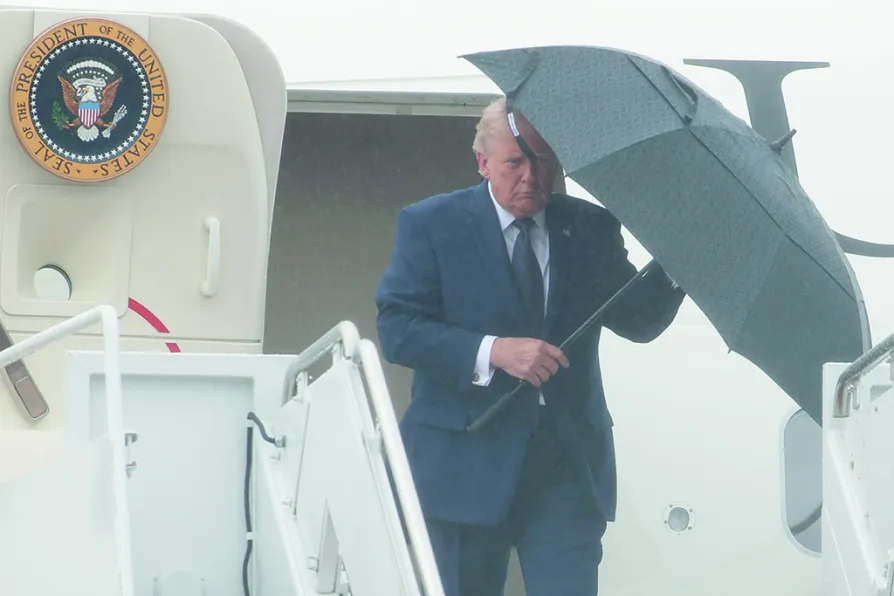
The US president’s adventurism in Iran began as a display of overwhelming force but has swiftly become a lesson in over-reach, says ANDREW MURRAY
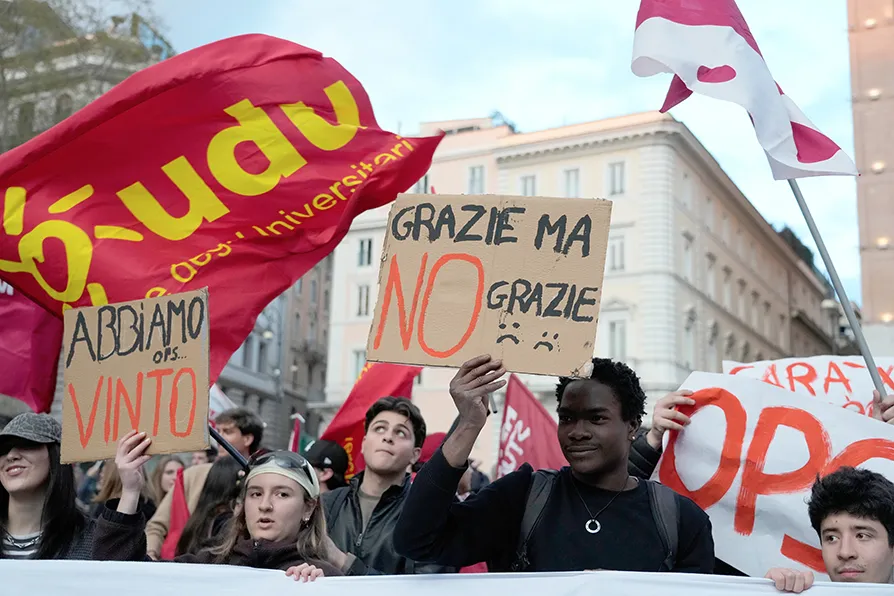
Italians reject controversial judiciary reforms in a referendum that boosts the left, reports NICK WRIGHT
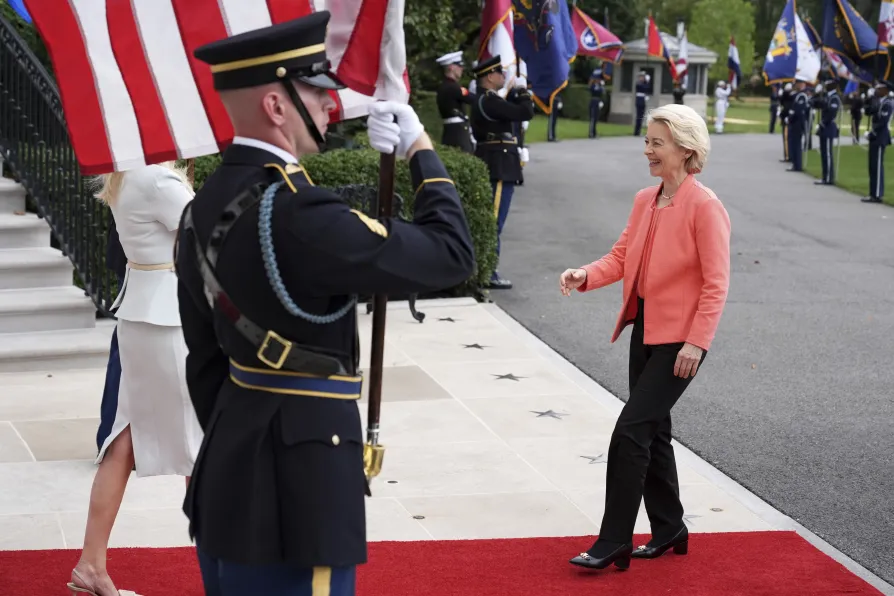
US tariffs have had Von der Leyen bowing in submission, while comments from the former European Central Bank leader call for more European political integration and less individual state sovereignty. All this adds up to more pain and austerity ahead, argues NICK WRIGHT
Starmer sabotaged Labour with his second referendum campaign, mobilising a liberal backlash that sincerely felt progressive ideals were at stake — but the EU was then and is now an entity Britain should have nothing to do with, explains NICK WRIGHT