In the wake of Ann Widdecombe’s murder, JOHN GREEN wonders whether the government will really get to grips with the root cause of these attacks on our MPs


 Latest editorial
Why Burnham replacing Starmer opens opportunities for the left
Despite the screeching from the right-wing media, Burnham’s speech chimed with the public mood - and socialists should take advantage, says Morning Star editor BEN CHACKO
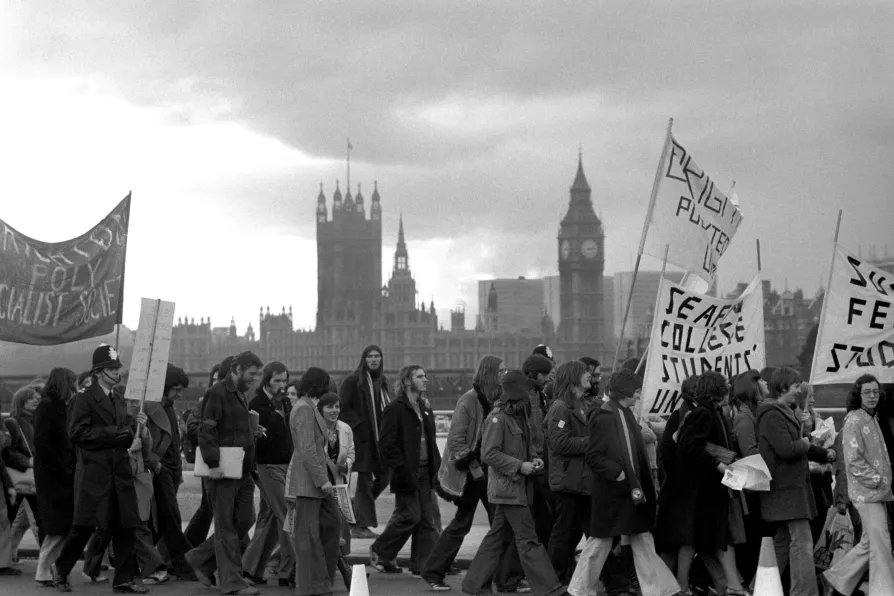 BACK TO THE ’70S: Students demonstration in London in 1976

Nature as well as society works dialectically, asserts the Marx Memorial Library and Workers’ School
Rising temperatures and human activity are making life far harder for these vital pollinators. ALEX DITTRICH explains
Lesbians and Gays Support the Miners co-founder MIKE JACKSON talks to Matt Kerr about the enduring power of Pride, protest and trade unionism
Behind the language of military strategy is a confrontation that risks drawing the wider Middle East into war, says STEVE BISHOP


MEDIA attacks on Andy Burnham as a ticket back to the 1970s followed hot on his Labour leadership acceptance speech on Friday.
“Burnham to drag us back to the 1970s” made the Mail front page, while over at the Independent Blairite holdover John Rentoul lamented “the most backward-looking speech I have heard from a front-rank politician … an explicit call to return to the 1970s.”
Attacks of this sort show it is the pundits who are stuck in the past, in an era when unregulated markets were championed as the key to a brighter future.
Beyond a small political and media circle, nobody believes that any more. “Back to the ’70s” is only a threat if people think the 1970s were worse than today, and they don’t.
A major Ipsos Is Life Getting Better? poll of November last year (conducted across Europe) showed 52 per cent of British respondents would rather have been born in 1975 than 2025; 63 per cent said Britain was happier then too. The 1970s were also preferred to the 2020s on quality of the environment, safe streets and — significantly — a lower risk of war.
The 1970s were the most equal decade in British history in terms of income, a fact directly related to its also marking the high water mark for trade union membership and strength.
Such details are not widely recognised. More likely much of the public share a sentiment Burnham expressed on Friday that Rentoul sneers at: “He talked nostalgically of steel works and iron works, the coal fields, the shipyards… the docklands…”
The Blair generation saw deindustrialisation as inevitable if not positive, part of a globalisation process impossible to resist and positive for the corporate elites they fawned on. It is a different world now — of tariffs and trade shocks and widespread resentment of an unanswerable “market” dictating what our lives cost. The notion that we’ve gone wrong for five decades and should try to right things is uncontroversial for millions.
Handling the “back to the ’70s” question is important because it is a feeling which animates a big majority of the population — much of the angry and “anti-Establishment” vote on both the right and the left.
Many liberals blamed the Brexit vote on nostalgia for empire, though nostalgia for Britain as it was before it joined the European Economic Community could have rested as much on better jobs, better social security and more affordable housing as on imperial pride, particularly since the heyday of empire would not have been in living memory for many 2016 voters. (This is not to attribute everything that has changed since the 1970s to EU membership, just to highlight that nostalgia for the past was not necessarily right-wing).
It is clear that a “back to the ’70s” sentiment as exploited on the Reform UK right includes different elements, from anti-immigrant feeling to outright racism as well as other reactionary ideologies including sexism and homophobia. Anti-immigrant attitudes are often linked to racism, but can also be interrogated.
Powerful narratives, amplified by the monopoly media and most mainstream politicians, assert that the country is “full” and that numbers are the reasons for high house prices or the difficulty of getting a GP appointment or a nursery place.
If the Reform vote is to be disassembled, and some currently planning to vote Reform won to the left, the real reasons for these (very serious) social problems — familiar to most Morning Star readers in Thatcher’s Right to Buy and the commodification of housing, chronic underinvestment in and parasitical profiteering on public services — need to be raised in debate, in workplaces, at street stalls and in public meetings on local issues.
But people also need to feel that something can be done. Burnham’s “old Labour” speech made a lot of good points, but huge scepticism is justified over whether he meant it, if so what he meant by it (the vagueness of “public control” as opposed to “public ownership” has been flagged by the We Own It campaign) and how he intends to deliver it without going to war with the bond markets or even most of the Parliamentary Labour Party.
Burnham — if he does mean it — may gamble that the fear of Reform will spur Labour MPs and parts of the Establishment to allow concessions to a working class so obviously and dangerously alienated from politics as usual. Especially since the aspect of Jeremy Corbyn’s politics that most enraged that Establishment — opposition to war and British imperialism — is entirely absent from Burnham’s reset.
Two points.
One: if so it’s a big gamble. The British ruling class have reacted with fury to any attempt to question the neoliberal consensus, however mild, from the bankers’ crash onwards: Ed Miliband’s “responsible capitalism” spelt the end of civilisation, Keir Starmer threatening to lift strike ballot thresholds introduced less than a decade ago is a mortal threat to the economy.
And two, imperialist aggression abroad cannot be separated from the ruling-class onslaught at home. Trump’s war drive — and it is on Trump’s instructions that European Nato states including Britain are funnelling untold billions into more armaments — is about maintaining US supremacy (and in the eyes of his allies, though less certainly his own, a privileged position for its junior partners) in a world where economic power is shifting east and south.
It is about preventing the democratisation of international relations and denying social justice to the majority of the world population, in order to prop up the same system of exploitation that has done so much damage to British workers. That’s without mentioning the fact that, barring tax rises on a scale that nobody in government is considering, the war drive will consume all the funds that might go to deliver a proper social care system or more nursery places or the council house-building programme Burnham promises.
Where does this leave socialists, as Burnham enters No 10?
A Labour Party that backs the drive to war in the era of Trump is not of the left. War is now central to everything, an existential threat greater than it was in the cold war, as respondents to the aforementioned Ipsos poll recognised.
A Burnham leadership may open up space in Labour for anti-war voices again: Starmer, in threatening to withdraw the whip from MPs who signed a Stop the War Coalition statement on the Ukraine war in 2022, showed greater intolerance for the peace movement than any previous Labour leader. It may be easier to get Labour MPs on demonstrations and engaged in anti-war campaigning, and this should help build pressure to reverse the extreme repression of the peace and Palestine movements of recent years. That’s positive.
Any progress at all on the public ownership and ending outsourcing fronts will rest on the movement’s ability both to overcome bitter opposition (certainly including from within Burnham’s Cabinet, even if the PM himself proves sincere) to the project itself, and to confront the war drive which will otherwise consume everything.
A Burnham government that does manage to deliver some of this would make the election of a far-right government less likely, which is also important.
The crisis of capitalism is global and severe. It threatens world war and climate breakdown. Socialists who say we have no time for reheated social democracy that doesn’t challenge the fundamentals have a very good point.
But we can’t conjure a socialist mass movement from our heads, and no such movement exists in Britain now. Recent experiences do not suggest projects to build a “mass party of the left” from existing groups will move us forward much.
What we need to do is win the battle of ideas through mobilisation for concrete goals — from reversing the Palestine Action ban to nationalising water or lowering rents. It is through such campaigns that we can turn the “angry” vote we began with in its “back to the ’70s” variant into a left vote.
A Labour left that can breathe more freely has an important part to play in those campaigns — though it is crucial now that it does not see the absence of persecution as a win in itself, or confuse being allowed an opinion with having influence.
Whether things get better from here on in is not down to Burnham. Opportunities have opened up that we need to grasp.

Similar stories


JOHN McINALLY sees little chance of change at Westminster, and calls on the left to get serious about building a real alternative
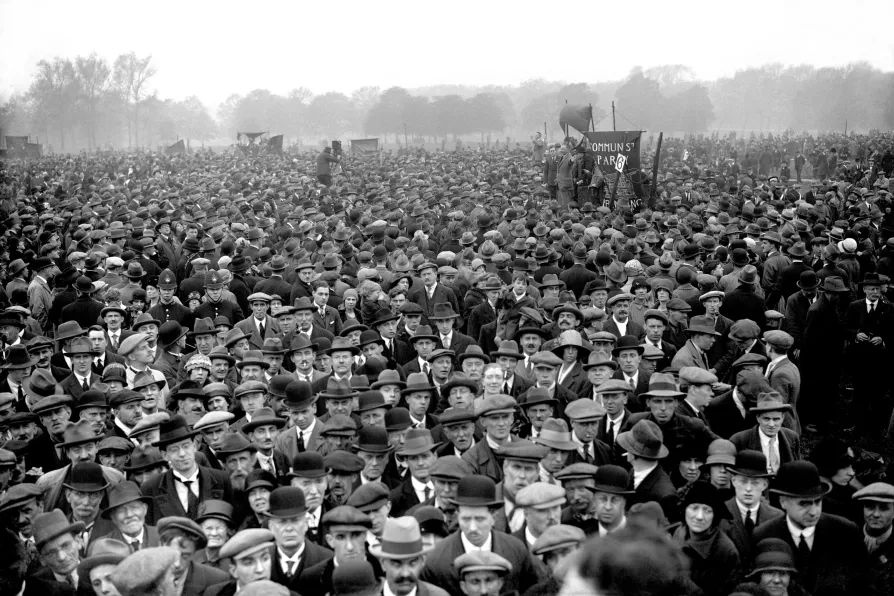
BEN CHACKO says in different ways, the centenary of the General Strike and that of Fidel Castro’s birth point to priority tasks for the British left in the coming year

Deep disillusionment with the Westminster cross-party consensus means rupture with the status quo is on the cards – bringing not only opportunities but also dangers, says NICK WRIGHT