IAN LAVERY MP says an immediate focus on raising wages and reducing costs must be part of a strategy to show Labour can deliver for workers again


Why the Chinese working class won’t pay for Western neoliberalism
Friedrich Merz’s call for a new Plaza Accord ignores how Washington’s 1985 currency ambush destroyed Japan without fixing US deficits — China, a sovereign socialist state with 1.4 billion consumers, cannot be bullied the same way, writes CARLOS MARTINEZ

 WRONG DIRECTION: Friedrich Merz
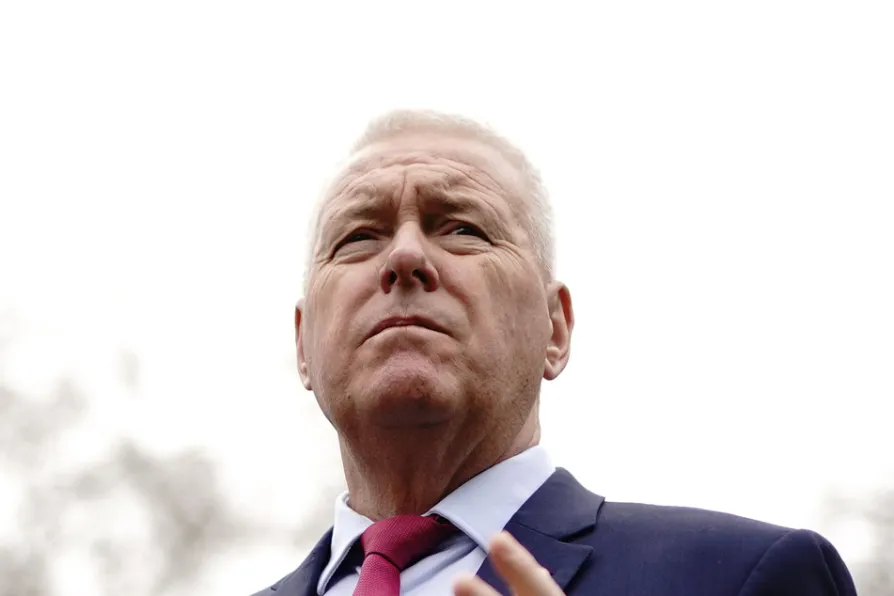
World Peace Council president PALLAB SENGUPTA assesses the challenges facing the international peace movement and sends greetings to the Liberation AGM
KIERA MARSHALL says there is a gulf between the privileged circles in which most politicians move and the lives of working-class youth in left-behind estates – and as a newly elected Senedd member she’s determined to do something about it
ANGUS REID and ANDREW JOHNSTONE report on an initiative that we must take this summer
At last weekend’s International Conference Against War, LINDA PENTZ GUNTER talks to the Palestinian physician and politician about the struggles ahead to achieve a truly free Palestine


AT THE recent EU summit, German Chancellor Friedrich Merz declared the Chinese renminbi to be undervalued by as much as 30 per cent and floated the idea of a new Plaza Accord — a co-ordinated effort to force up the value of the currency, just as Washington did to Japan in 1985.
It is worth remembering how that story ended, because the history Merz is reaching for is not the cautionary tale he imagines it to be.
The Plaza Accord was not a neutral exercise in rebalancing trade. It was the deliberate kneecapping of an economic competitor. Meeting at New York’s Plaza Hotel in September 1985, the United States strong-armed Japan, West Germany, France and Britain into driving down the dollar.
Within two years, the dollar–yen rate had fallen by half. Japanese exports were hammered, capital fled into frenzied property and stock-market speculation, and when that bubble burst at the end of the decade, Japan was plunged into a “lost decade” of stagnation that stretched into a lost generation.
Tokyo’s tormentors, meanwhile, failed to reap much from this harvest: the US goods trade deficit with Japan stood at around $46 billion in 1985 and, instead of shrinking, climbed past $55bn in both 1986 and 1987. The currency had been clobbered, but the imbalance remained.
The reason is that the imbalance never originated in the exchange rate in the first place. It grew out of the US’s own domestic economic model of high consumption and low savings, and out of the dollar’s role as the world’s reserve currency, which compels the US to run deficits in order to supply the world with dollars. No amount of bullying Tokyo could fix a problem made in Washington.
Why could Japan be treated this way at all? Because it was never a sovereign equal but a subordinate ally — a Western outpost in East Asia, permitted to grow rich as part of the cold war project of containing communism, but never permitted to seriously challenge its benefactors. When push came to shove, hosting tens of thousands of American troops and sheltering under the US security umbrella, Tokyo had no choice but to fold. The Plaza Accord is now near-universally regarded, even by mainstream economists, as an act of economic sabotage dressed up as co-operation.
China is in a wholly different position, and, crucially, it has studied this history closely. When Washington tried similar pressure two decades ago, Beijing allowed the renminbi to rise by a modest 20 per cent or so between 2005 and 2008 – enough to take the heat out of the dispute, but managed on its own terms and at its own pace, completely avoiding Japan’s fate.
Two decades on, China is incomparably stronger. A sovereign country with an increasingly prosperous domestic market of 1.4 billion people, an independent financial policy, a comprehensive industrial base and a central bank that answers to no one in the West simply cannot be “Plaza’d.”
As Beijing has made plain, it will not return to an era in which a handful of great powers gather in a hotel to decide the fate of others. The premise of Merz’s proposal is therefore pure fantasy. China has become the leading trading partner of more than 160 countries; it does not need to buy access to the European market by sabotaging its own.
The deeper dishonesty lies in the word being used to justify all this: “overcapacity.” What is branded Chinese overcapacity is in reality European and North American industry failing to compete — the predictable result of nearly half a century of financialisation, privatisation, deregulation and the steady dismantling of any meaningful industrial strategy.
The pressures bearing down on European manufacturing are real, but they are largely self-inflicted or made in Washington: sky-high energy prices following the wars on Russia and Iran, chronic under-investment in innovation, sluggish industrial policy, and the “siphoning” effect of US subsidies luring firms across the Atlantic.
None of this is China’s doing. The enhanced competitiveness of Chinese firms in electric vehicles, batteries, solar panels and machinery flows from a complete industrial system, sustained investment in technology and, in certain sectors, a sometimes ferocious domestic competition – not from some sleight of hand at the central bank. So why on earth should the Chinese working class pay for the failures of the Western bourgeoisie?
For European workers and consumers, the whole framing is perverse. China supplies Europe with high-quality, affordable goods that lower household costs and stabilise supply chains, and it is increasingly the green products – the cheap solar panels, the affordable electric cars – that Europe needs if it is serious about the energy transition. Slapping tariffs of up to 35 per cent on Chinese electric vehicles, as the EU did last year, is an act of self-harm disguised as self-defence.
In reality, the relationship is symbiotic: in 2025, trade between China and Germany alone topped €250 billion; some 5,200 German companies operate in China; and around 61 per cent of them, according to the German chamber of commerce, plan to increase their investment in China over the next two years.
Credit, then, to Spanish Prime Minister Pedro Sanchez, who emerged as the clearest voice of reason at the summit, describing China as a potential ally and warning against being stampeded into a self-defeating trade war. He is right. Europe’s interests lie in co-operation with the world’s leading manufacturing economy and in the genuine “strategic autonomy” its leaders so often invoke but so rarely exercise — not in a grovelling and futile rerun of the 1985 ambush of Japan.
The world does not need a new Plaza Accord. What it needs is a new consensus based on mutual respect and shared development. An ambush that worked once on a subordinate ally will not work on a sovereign, socialist China.

Similar stories

The new plan sets out an uncompromising bid for global dominance, casting even allies as obstacles to be subdued, writes DIANE ABBOTT

The cancelled China trip of the German Foreign Minister marks a break with Helmut Schmidt’s China policy and drives Germany further into Washington’s confrontation course, warns SEVIM DAGDELEN
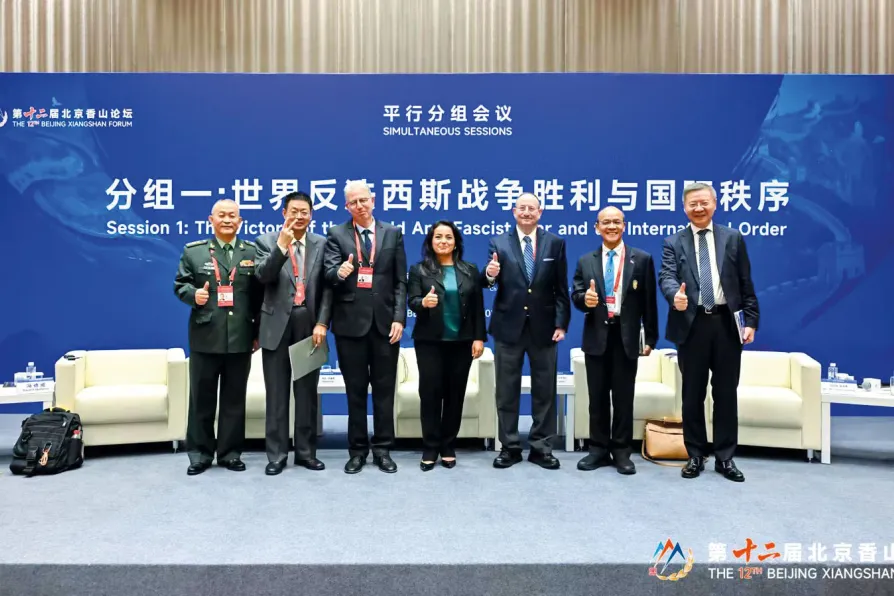
In a speech to the 12th Xiangshan Forum in Beijing, SEVIM DAGDELEN warns of a growing historical revisionism to whitewash Germany and Japan’s role in WWII as part of a return to a cold war strategy from the West — but multipolarity will win out
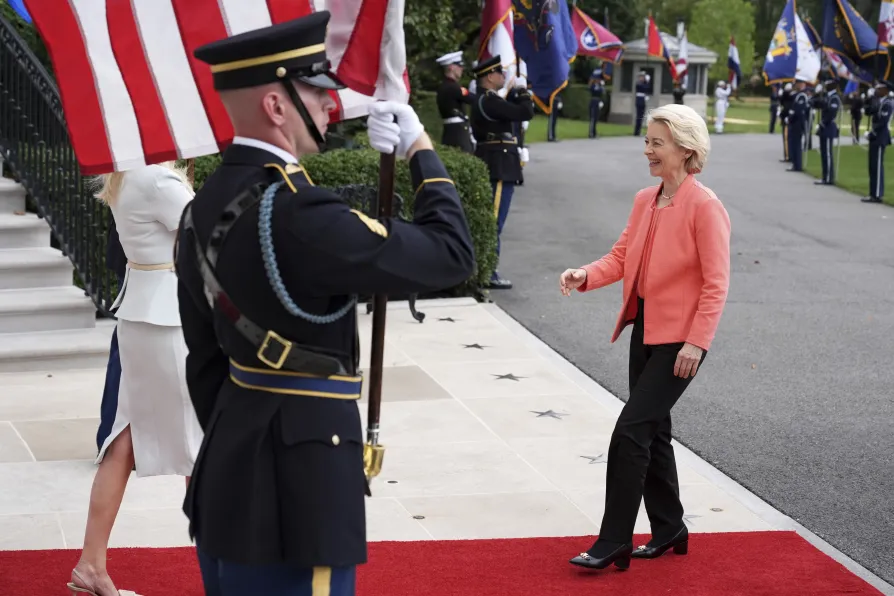
US tariffs have had Von der Leyen bowing in submission, while comments from the former European Central Bank leader call for more European political integration and less individual state sovereignty. All this adds up to more pain and austerity ahead, argues NICK WRIGHT