STEPHANIE BROWN draws attention to the hidden labour of the female embroiderers, and how a 19th century replica made no such error


 Latest editorial
Brace yourselves for the deluge
IAN SINCLAIR draws attention to the powerful role that literature plays in foreseeing the way humanity will deal with climate crisis
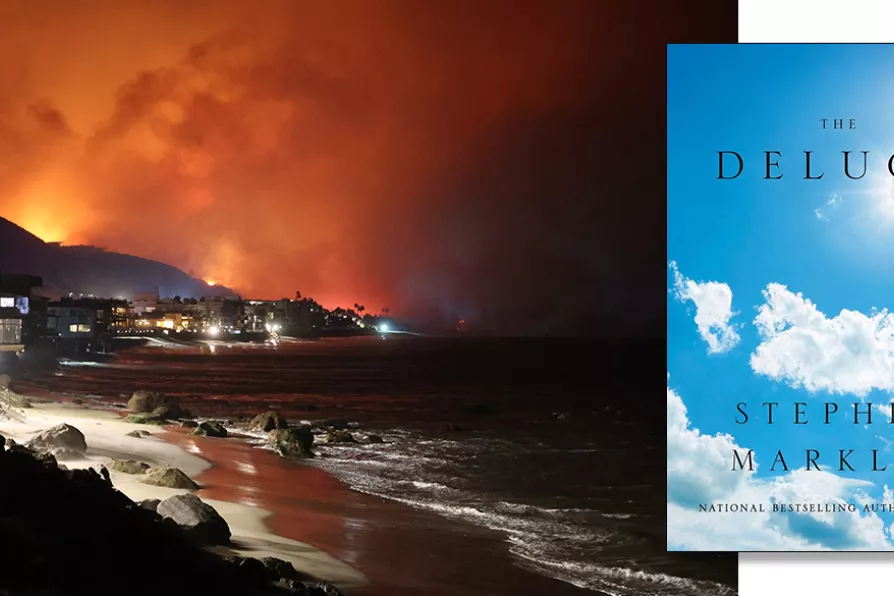 The Palisades Fire that started in the City of Los Angeles, January 2025
[CAL FIRE_Official/CC]
The Palisades Fire that started in the City of Los Angeles, January 2025
[CAL FIRE_Official/CC]
MIK SABIERS revels in a band that ploughs an idiosyncratic furrow of expletive laden, guitar-driven alt rock
ANDY HEDGECOCK, MARIA DUARTE and ANGUS REID review Synthetic Sincerity, Our Hero, Balthazar, Heartstopper Forever, and A Year In London
The bard invites readers to a gig, raps for Clacton, and lays out the Burnham-Hurzeler conundrum
RON JACOBS recommends an important book that enhances the oppositional theories put forth by Fanon and, in doing so, remakes psychology itself
JAN WOOLF relishes an extensive history of our long relationship to trees in Britain that underlines the current emergency
DIANE WATT argues that while evidence of sex is not there, a 16th‑century lesbian poet could be Scotland’s answer to Gentleman Jack




“THE Los Angeles megafire... began life as four separate fires... hydrants went dry, and the fire leaped from unprotected home to unprotected home until entire neighbourhoods went up, and the firefighters were forced to retreat.” The evacuation of the city was ordered. “The sound was deafening, a freight train roar. Trees candling, grasses smouldering,” noted one eyewitness.
This isn’t a news report about the fires that ravaged Los Angeles in January but a terrifyingly prescient passage from Stephen Markley’s astonishing 2023 novel The Deluge (Simon & Schuster, £17.99). Nearly 900 Bible-thin pages long, it’s a beast of a book. As well as being a blisteringly brilliant read, I can confidently say it’s one of the most important books I’ve ever read.
With the action stretching from 2013 to the late 2030s – Los Angeles burns to the ground in 2031 – Markley’s magnum opus follows a cast of characters as the United States and the wider world confronts the ever worsening climate and ecological crisis. There is Tony Pietrus, a curmudgeonly scientist trying to raise the alarm, charismatic climate activist Kate Morris, and Ashrin, a neurodivergent mathematician/government adviser, along with a radicalised eco-saboteur, an advertising executive, and an actor turned power-hungry religious zealot.

Similar stories

From post-human revolution in Puerto Rico to trans poetics and queer mythmaking, these three books that imagine new ways of being together
Looking for moral co-ordinates after a tough year for rational political thinking and shared human morality
Looking for moral co-ordinates after a tough year for rational political thinking and shared human morality
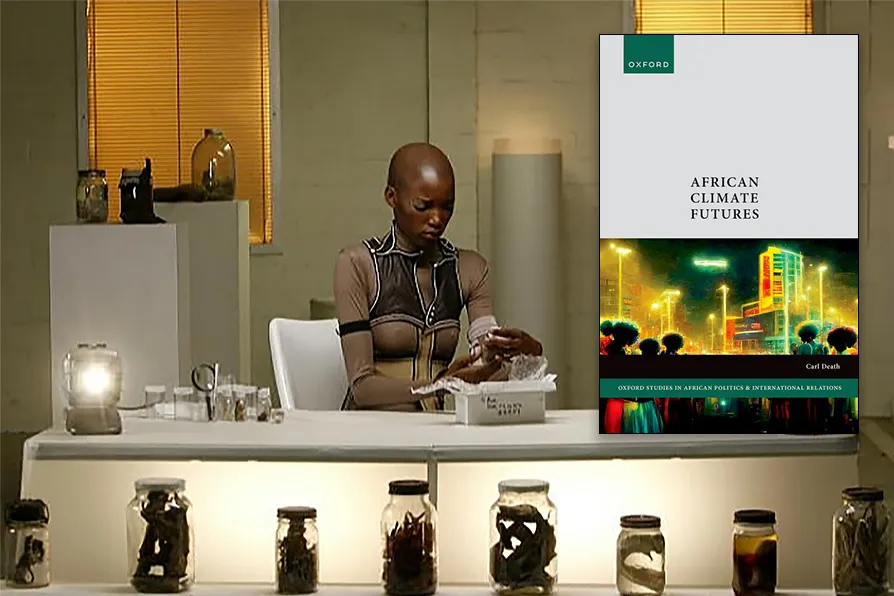
CARL DEATH introduces a new book which explores how African science fiction is addressing climate change