

 Latest editorial
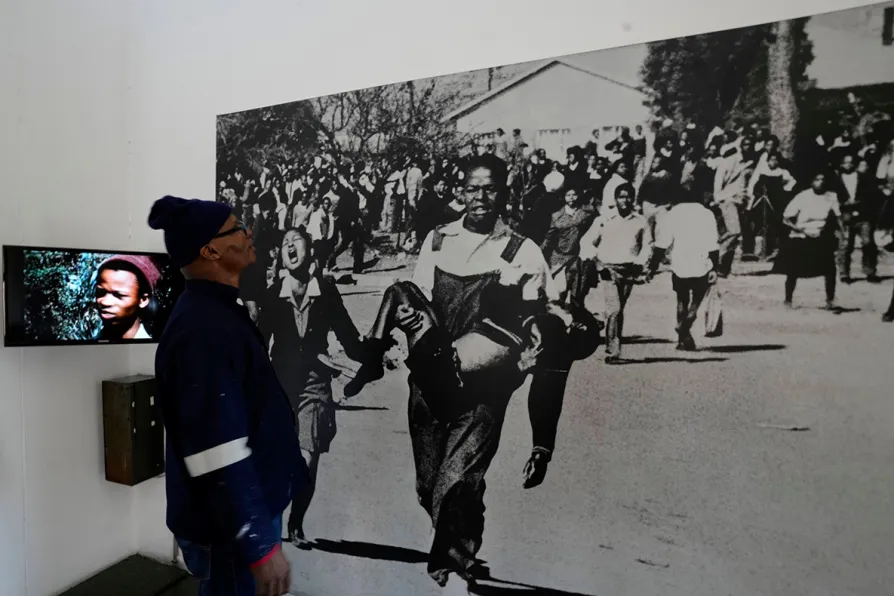 A man looks at June 16 iconic image taken by the late Sam Nzima displayed at The Hector Pieterson Memorial and Museum, in Soweto, South Africa, June 15, 2026




SOUTH AFRICA marked the 50th anniversary today of the Soweto uprising, in which over 200 young people protesting against the apartheid education system were shot dead by police.
The events of June 16 1976 — now commemorated annually as Youth Day — are considered a turning point in South Africa’s liberation struggle against white minority rule.
They ignited more demonstrations in various parts of the country, fuelled greater resistance to apartheid and brought international attention to the racial oppression faced by black people in South Africa.
Protest participant Seth Mazibuko remembers vividly how students fought back against police who were firing tear gas to try to disperse the defiant demonstrators.
“They struggled with the tear gas because when they threw it our way, the wind would blow the gas back to them, so it was also affecting them,” said Mr Mazibuko. “They then started sending the police dogs to us. We used stones to chase the dogs back to them.”
Mr Mazibuko was detained for 18 months after his arrest and later imprisoned on Robben Island, where he served seven years alongside other political prisoners.
Fifty years after the uprising, South Africa has undergone significant changes, but inequality, unemployment and poverty are among the most pressing challenges facing the generation born after the end of apartheid.
“I would say the issues of poverty and crime are the most pressing ones,” said Sima Poto, a teenager visiting Soweto’s June 16 Memorial.
“It is poverty that is leading many of them into crime.”
Zola Mguli, who works with the Southern African Alcohol Policy Alliance, an organisation campaigning against alcohol and substance abuse, said: “Things are not going as well as our forefathers hoped. There is still racism, alcoholism and other things we are battling with.
“But if we, the youth, rise up, we can do better.”
