Unison director of organising KEVIN LUCAS explains the Organising to Win strategy, its successes to date and key tests on the union’s horizon


 Latest editorial
Healey’s exit exposes a rearmament consensus that doesn’t reflect British realities
The defence secretary’s resignation reveals not a split over principle but a dispute over pace of military spending, as Britain’s political Establishment unites behind deeper Nato commitments, argues NICK WRIGHT
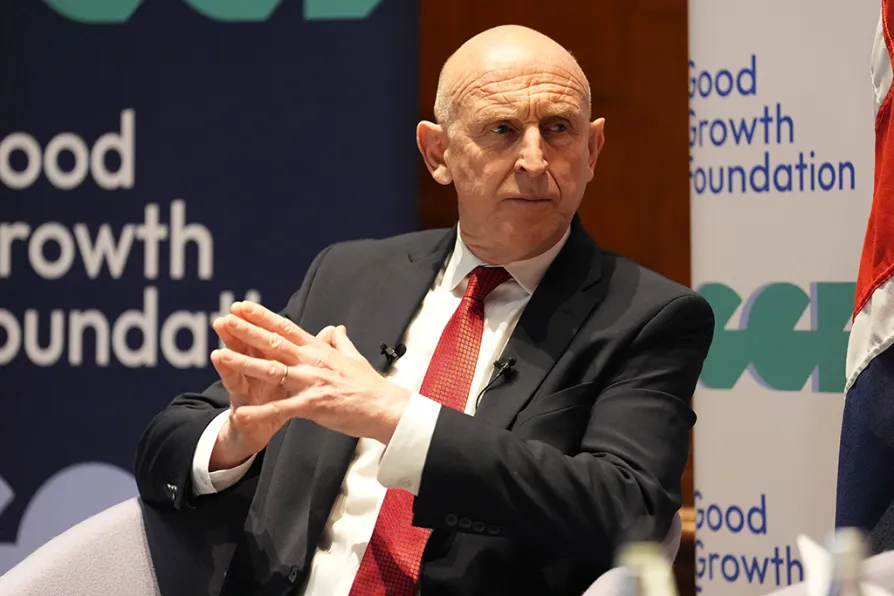 John Healey, who has resigned as defence secretary demanding staggering increases in military spending
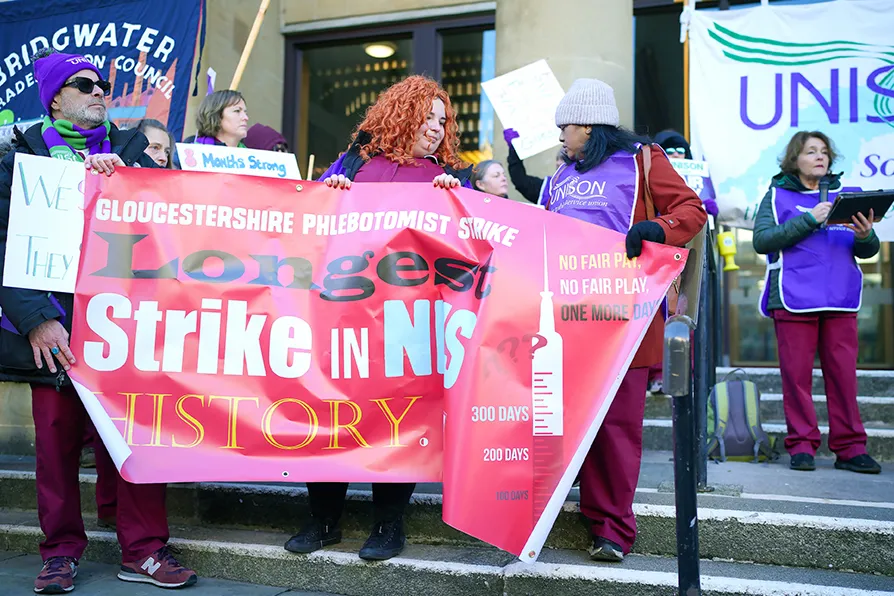
Young workers do want to get involved in Unison, and where that is enabled we see growth in workplace power, argue Unison North West Young Members co-chairs ZAIHERA CHAUDHRY and IAN CAULFIELD
British military spending is among the highest in the world, diverts scarce resources from far better causes and fuels international conflict. It’s time we made different choices, argues LIZ PAYNE
Trade unions, trades councils and community organisations must work together to build lasting solidarity and resistance to the far right, argues DREW GILCHRIST
Animal metaphors are testament to delight in the non-human world and what we hope and wish for human freedom, argue ROX MIDDLETON, LIAM SHAW and MIRIAM GAUNTLETT"
Economists estimate extreme poverty could be drastically reduced for a fraction of global defence spending, yet military budgets continue to expand year on year, says JON TRICKETT MP, ahead of the Stop the War International Conference on Saturday




IT SEEMS improbable that very much divides the Prime Minister from his now former defence minister John Healey in the realm of ideology.
Healey, despite his former role as the media chief of the Trades Union Congress, has proved himself to be a disciplined member of Keir Starmer’s neoliberal administration, as wedded to the holy verities of fiscal discipline and Nato expansion as any of the carefully chosen cohort of new Labour MPs elected in Labour’s windfall election.
Healey’s criticism of Starmer is presented as a disagreement over Chancellor Rachel Reeves’s reservations about the speed with which Britain’s military spending should arise.
This is one of those areas of policy where the Tories are struggling to open up clear blue water between themselves and the government and Healey has gratuitously added credibility to the less than convincing Tory spokesperson on this most bipartisan of subjects.
In raising the speed at which Britain raises its military spending to the levels demanded by Donald Trump and now adopted by the European Union, Healey and his posse of resigning understrappers (which include a former Tory Special Forces officer with a long record of participation in imperialist adventure) have drawn attention to the unsustainable level of spending necessary to service Nato’s renewed war drive.
In his resignation letter Healey spelled out the scale and range of the commitments he wants to fund.
“The demands on defence have increased still further, as have the UK commitments you have rightly made to allies.
“Conflict in the Middle East, with the UK now leading the multinational Strait of Hormuz military mission; High North security, with the UK now leading Nato’s Arctic Sentry mission; increased Russian activity towards the UK and Nato nations and increased attacks in Ukraine, with the Paris agreement confirming a British deployment to Ukraine after a cease-fire.”
Healey is acting in a long tradition of Labour defence secretaries who place the imperative under the rule of capital to protect the overseas interests of big business and the banks above the interests of the British people or even the territorial defence of our home territory.
His resignation is a pre-emptive strike to discipline the next Labour administration, likely to be under Andy Burnham.
In setting the global reach of the commitments made to the Nato imperial alliance Healey wanted, still wants, arms spending at 3 per cent of GDP by 2030 with a further increase to 3.5 per cent by 2035.
“Giving our soldiers the kit they need” is code for giving the brass hats the hardware they want and the arms manufacturers the profits they put before any other consideration.
This unashamedly hypocritical presentation of the issue was made transparently so by George Robertson, an earlier Labour defence secretary and later secretary-general of Nato — whose signal contribution to the military debate at the time was the Blair government’s Strategic “Defence” Review — famously described as committing Britain “to acting primarily with the USA in a wide-ranging programme of global policing,” with Britain the US’s principal partner rather than an independent actor.
Earlier this year he took a pop at Starmer for a “corrosive complacency” towards military spending and followed this up by tying his warning: “We cannot defend Britain with an ever expanding welfare budget” to a complete repudiation of his earlier view. His new mantra is that Britain “must rapidly pivot to becoming a more autonomous military actor.”
The fear across the now divided expanded Nato alliance is that the US may not be the most reliable ally in defending their collective imperial interests or even that these interests are becoming contradictory. To this are added anxieties that ramping up military expenditure at the expense of pensions, benefits, education, housing and health would be politically unsustainable.
Almost completely absent from the debate on military spending are any voices of the left or anti-war movement. Neither is there any scrutiny of the basic assumptions underlying government policy.
We are told that Russia will be able to attack a Nato state within four years and that this requires raising the combat readiness of British troops. Does the Healey/Starmer proposal to deploy British troops in Ukraine provide greater British territorial security when Russia says that this is a red line for them and its rationale for the invasion of Ukraine was precisely the approach of Nato to its borders?
Does Britain’s notional “leading role in the Hormuz military mission” make any sense when the war itself is a senseless mistake by Trump, the Iranians hold the strategic initiative and non-Nato regional powers and China are proving more effective in resolving the tensions? Is not the most sensible strategy to stay well away from Trump on the rampage or Trump in a blue funk?
And what possible role can Britain play in Nato’s Artic Sentry mission so far from our own borders when Russia, with its 24,150 kilometres of Arctic border, has legitimate territorial defence concerns, with Trump keen to appropriate Greenland and Canada?
Completely absent from the national debate is any sensible scenario planning that takes into account the new realities of fighting a ground war.
Chief, if unwilling, subject in the war gaming world of the new European Union Nato tie-up is Vladimir Putin’s Russia where, we should not need reminding, capitalist relations of production reign.
The Russian operation in Ukraine now has gone beyond the claim of a buffer state of two Donbass oblasts — the peace deal that Boris Johnson scuppered — to now include the whole of the Donbass, ie, that portion of Russia that Lenin and Stalin transferred to the Soviet Ukrainian republic. Likewise the Crimea, which the Ukraine-born Soviet leader Nikita Khrushchev ceded to Ukraine, is now beyond Ukraine’s grasp to recover.
Even so, Putin’s army remains bogged down in a snail-paced advance with battlefield conditions shaped by drone and missile technology that confines infantry to underground bunkers, renders tanks and armoured cars exceptionally vulnerable and limits the combination of air superiority and heavy armour that traditionally is regarded as essential to secure territory and would be necessary for any Russian advance beyond Ukraine.
The Russian strategy is to grind down the Ukrainian capacity to resist and destroy its military assets. Sergei Lavrov, the Russian foreign minister, is explicit in claiming Russia’s aim is people not territory and this, at least, is consistent with its diplomatic posture and its battlefield strategy. The cynical EU/Nato strategy, on the other hand, is to loan Ukraine enough money and resources to resist in the certainty that it cannot win.
Key EU figures are keen to maintain the conditions of war psychosis that is the necessary to justify rearmament as well as to secure geopolitical security interests of an evolving EU militarism. Britain, France and Germany prefer an open-ended war to what they regard as a bad peace.
Schrodinger’s Russian military is simultaneously unable to deliver a decisive knockout blow to its neighbour but on the brink of constituting an existential threat to Nato and EU states.
The citizens of the Home Counties can rest easy in the knowledge that unless Russia is prepared to commit nuclear suicide then, on present progress, Russian soldiers can be expected to arrive at the Faversham Hop Festival some September in about in 200 years’ time.
Once it becomes clear that force projection beyond our territorial waters — originally the strategy of an imperial defence of Britain’s capitalist interests in other people’s countries and, latterly, the expression of Britain’s submission to US global strategies — is unsustainable, indeed actively dangerous, then the need for an alternative defence strategy becomes apparent.
All states need a territorial defence force, although under both capitalism and socialism the roles of such institutions also include the defence of the existing relations of production. Thus the factory-based armed groups of German workers in the German Democratic Republic and the parallel organisation in socialist Czechoslovakia were vital elements in winning and defending working-class power.
Similarly the tradition of territorial defence in Britain is subsumed in the defence of propertied interest in the institution of the Territorial Army.
Thus the liberal imperialist, and later Labour supporter, RB Haldane saw the establishment of the Territorial Army as a synthesis of the 19th-century local militia based on the property-owning classes — think the Peterloo massacre — while volunteers, after a brief training, were to be made available for overseas missions in defence of Britain’s imperial interests.
In fact, the 1908 compromise to get the law through Parliament entailed a commitment that the Territorial Army was to be reserved for home defence only.
But in 1972 the then chief of the general staff proclaimed a one-army concept: “When we talk about the army as a whole, it is a good thing to remind ourselves that, in spite of many different outward appearances — and some minor differences — we are one army — regular, reserve and volunteer reserve.”
Since 2023 there have been more than 25,000 reservists mobilised to fight in imperialism’s wars in Iraq and Afghanistan with 30 killed.
None was mobilised to defend the interests of the British people or our own country.

Similar stories
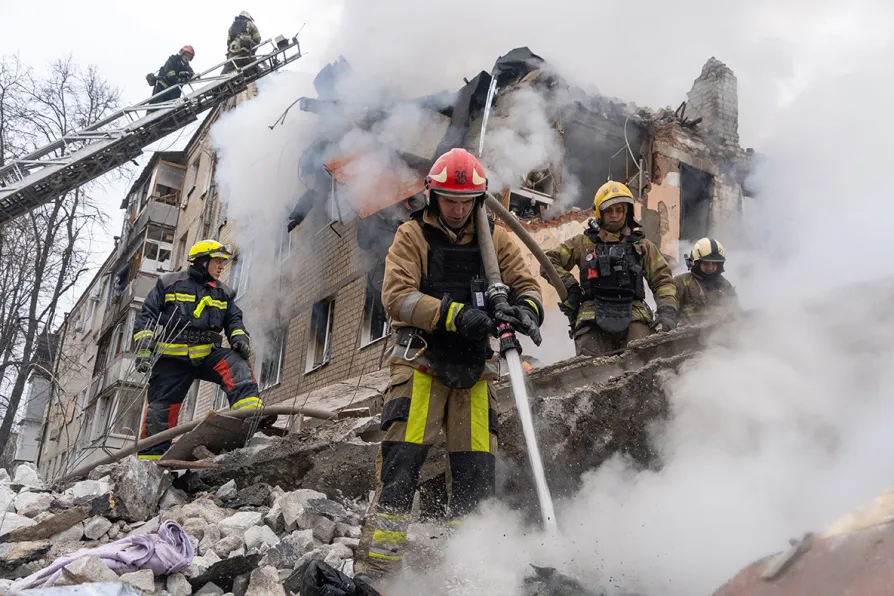
SEVIM DAGDELEN asks why the European Union is targeting the Swiss academic Jacques Baud, cutting off his access to banking services
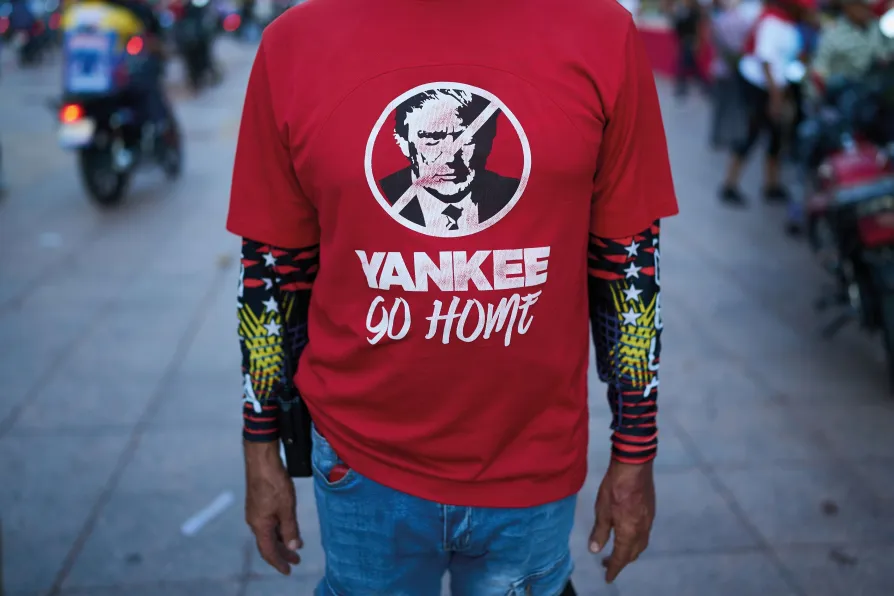
Western nations’ increasingly aggressive stance is not prompted by any increase in security threats against these countries — rather, it is caused by a desire to bring about regime changes against governments that pose a threat to the hegemony of imperialism, writes PRABHAT PATNAIK
Washington plays innocent bystander while pouring weapons and intelligence into Ukraine, just as it enables the Gaza genocide — but every US escalation leaves Ukraine weaker than the neutrality deal rejected in 2022, argue MEDEA BENJAMIN and NICOLAS JS DAVIES
