

 Latest editorial
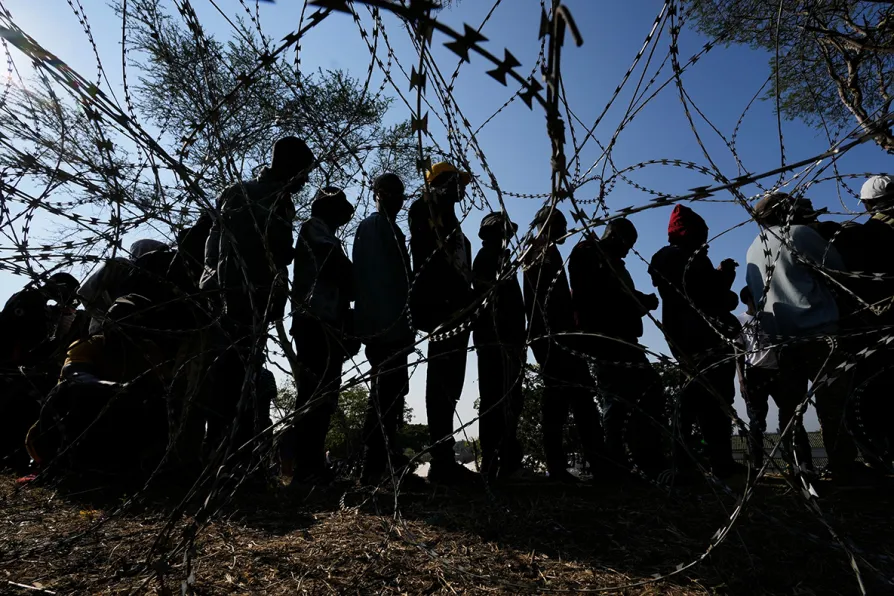 Malawian migrants stand in a queue for their deportation at a temporary centre, in Durban, South Africa, June 18, 2026


SOUTH AFRICA’S authorities have stepped up security nationwide as a deadline approaches for undocumented foreigners to leave the country.
Xenophobic protests and attacks continue to plague South Africa, having left at least two people dead and forcing a number of African countries to send aircraft to evacuate thousands of their nationals fleeing the violence.
The organised groups leading the protests have issued an ultimatum for undocumented migrants to leave the country or “face the consequences.”
Acting Police Minister Firoz Cachalia said on Monday that extra security was being deployed across South Africa.
He said the police service “has elevated its operational readiness across all provinces, with comprehensive deployment plans in place to protect communities, critical infrastructure and key public spaces.”
Mr Cachalia said he supported the right to peaceful protest, but he warned: “Criminality, intimidation, violence, the destruction of property and any attempt to undermine public safety will not be tolerated.”
Defence Minister Angie Motshekga pledged that the military would secure strategic sites, such as airports, and stand ready to assist police if needed.
Unemployment in South Africa is above 30 per cent and many people have to rely on the informal economy to survive.
There is a history of anti-foreigner violence, fuelled by allegations that migrants “steal jobs” and are behind the high crime levels across the country.
Political parties, such as former president Jacob Zuma’s opposition uMkhonto we Sizwe (MK) party, have increasingly claimed that migrants are competitors for jobs and services.
Consortium for Refugees and Migrants in South Africa (CoRMSA) member Mpho Makhubela said vigilante activity was increasing in response to wider social frustration.
“Vigilante groups feed off the country’s frustrations over unemployment, socioeconomic decline and the lack of effort to address inequality gaps,” he said.
Anti-migrant attacks in South Africa are not a new phenomenon.
Sixty two people were killed in such violence in 2008.
In 2015, 2016 and 2019, armed mobs attacked foreign-owned businesses across Johannesburg, leaving at least 12 people dead.
The latest tensions come in the run-up to local elections scheduled for November 4 . During voter registration at the weekend, gunmen shot dead four people linked to political parties.
Two were affiliated with MK and one was a Democratic Alliance ward candidate in the Western Cape, while an African National Congress ward councillor was killed in the Eastern Cape.
