IAN LAVERY MP warns that decades of neoliberal policies have left former industrial communities behind — but a renewed Labour commitment to working people could change the political landscape


Streeting’s abortive leadership bid and the weakness of the Labour right
Labour’s toxic centrists have wealthy backers but there’s little to suggest they can win over MPs or party members in an open fight, writes SOLOMON HUGHES
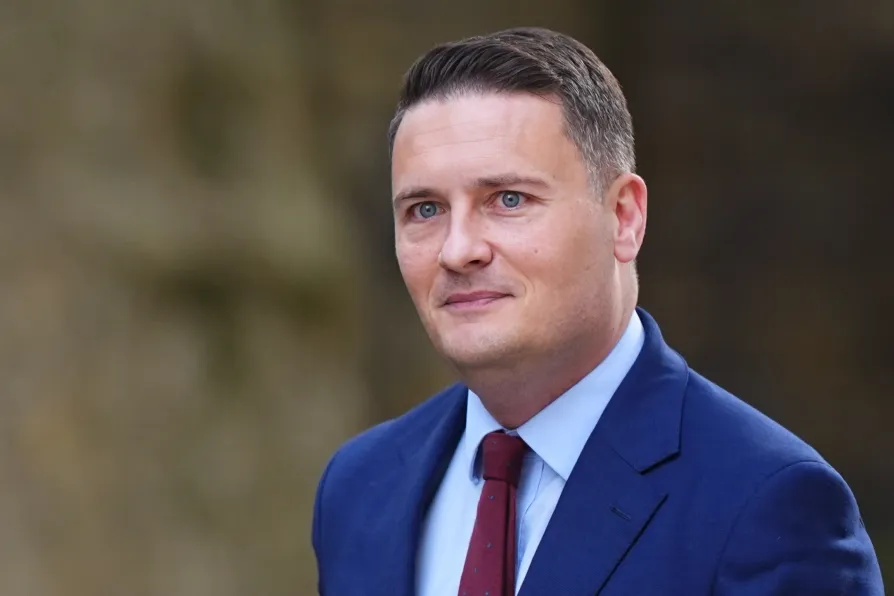
 TOXIC POLITICS: Wes Streeting

PAOLO SANTALUCIA reports on how an Italian region defies US pressure to end a Cuban doctors programme
HENRY FOWLER outlines the GFTU’s new 2026-27 education programme and argues that investing in trade union education is essential to building worker power, developing leaders and strengthening collective action
We need a government that invests in saving lives not destroying them, argues SOPHIE BOLT
More expensive by weight than gold, saffron is surprisingly simple to grow. MAT COWARD explains
The public inquiry is the result of more than a decade of determined campaigning. Now, those who fought for justice want the full story of government involvement and police conduct to be told, says KATE FLANNERY
The Durham Miners’ Gala is a celebration of working-class culture, but also a call to action — to rebuild workers’ collective strength, says KIM JOHNSON MP




LOOK closely at Wes Streeting’s Register of MP’s Interests and you can see what looks like the preparations for a leadership campaign that never was.
Streeting, champion of Labour’s right wing, struggled to get a large enough number of MPs to back him for a leadership campaign. But he found it easier to get a large number of pound notes to support him, thanks to rich “centrist” supporters.
With Labour’s “moderates” folding like a cheap suit in the face of Burnham’s “soft-left” challenge, Streeting will have to use the money for some other form of self-promotion. The cash, coming from lobbyists, gambling bosses and heiresses, tells you who wanted Streeting to win.
Streeting reportedly wasn’t able to get the necessary 81 MPs to support him for a Labour leadership bid: now Streeting must try find a space under Andy Burnham’s “coronation.”
It is a striking fact that Labour’s moderates have not run their own candidate for Labour leadership in the open since Liz Kendall came last with a derisory 4.5 per cent of the vote in 2015.
Shamed and embarrassed by Kendall’s crash-and-burn, Labour’s centrists have fought in disguise since then.
They backed Owen Smith in his failed 2016 attempt to unseat Jeremy Corbyn, when Smith was pretending to be on the left. In 2016 Smith backed higher taxes for the rich, a “war powers Act” giving MPs a veto on military action, a £200 billion investment plan for council housing and public infrastructure and a commitment Labour would take a firmly “pro-immigration stance.”
Smith failed and left Parliament to become a lobbyist for Big Pharma, abandoning his left-wing pretensions and reverting to his former corporate career.
Then Labour’s centrists backed Keir Starmer, who also posed as a leftwinger, with his “10 pledges,” echoing Smith’s faux-left programme. Starmer won, then jettisoned all his pledges and ditched any supposedly left policies.
This victory-by-deception has fallen apart. In power, Starmer has been shown up as a hollow, unpopular man, grabbing freebies, imposing authoritarian, pro-war policies while trying to cut benefits.
Centrist Labour thought simply lying their way into power was a good idea, but in practice this has deeply damaged the party. The biggest letters in the pollsters’ “word cloud” show the public spell out L-I-A-R when they see S-T-A-R-M-E-R.
Starmer’s fall gave a third chance for Labour’s moderates to run in the open. But one after the other, they have folded. Streeting, Darren Johnson and Al Carns all made noises about standing. But didn’t. Even though Labour’s back benches are stuffed with centrist drones thanks to the Peter-Mandelson-Morgan-McSweeney-run selections in 2024, none of them believe their own candidate can win support of Labour members or the public under their own banner.
Streeting couldn’t rally MPs, but money was less of a problem: according to the latest Register of MP’s Interests, Streeting raised £70,000 for political campaigning this May. That looks like the funding for an aborted leadership bid. Some £50,000 came from Fran Perrin. She is the daughter of Lord Sainsbury, the long-term sugar-daddy of Labour “moderates.”
Sainsbury got his money from the family supermarket firm, where he worked. Perrin in turn uses the family fortune from her dad to be a “philanthropist,” including supporting Labour’s right wing.
Streeting got another £5,000 from Mike Craven, another long-term “New Labour” supporter.
Craven makes his money from lobbying company Lexington, which he founded and chairs. Recent Lexington clients include outsourcer Capita and British Airways’ parent firm International Airlines Group.
Streeting got another £5,000 from Kevin McKeever, a Labour supporter who now runs lobbying firm Lowick Group. Lowick clients include Google and major bank JP Morgan.
Streeting also got £5,000 from Neil Goulden. He is one of the biggest figures in the British gambling industry.
From 2016 to 2021 Goulden was chairman of Gamesys, a firm making the “tech” behind online gambling games. Goulden was previously the full-time chairman of Gala Coral from 2000-14 when it was a British gambling giant running casinos, bookmakers and bingo halls.
Goulden is currently chairman of Britbet — a pool betting company owned by racecourses, and is also an independent consultant. Streeting got another £5,000 from former Labour MP Fiona McTaggart.
Among Streeting’s donors, Perrin was major funder of Labour Together, the key Starmer-supporting organisation, and Craven is a director of Labour Together, so Streeting’s unstarted campaign had echoes of the Starmer plan.
Burnham is standing on a platform of “change is coming,” but Streeting’s donations suggest his platform would have been “things should stay the same, with a different front man.” It would have been election campaign run for the friends of big banks, big tech, big gambling and “ultra high net worth” individuals. In the end the “moderate” faction decided this was not a winning formula.
Sadly, the moderates’ unwillingness to stand under their own banner does not mean the end of their influence. Instead of fighting in the open, they will bore from within: the top centrists are now creeping and crawling around trying to persuade Burnham to give them ministerial posts.
Burnham is likely to agree, so we will probably see a secretive campaign of co-ordinated press briefings from within Cabinet to pull Burnham rightwards very soon.
Chelsea flower power
THE latest Register of MPs’ Interests shows Streeting also joined many Tories being entertained by banks at the Chelsea Flower Show. The bankers and MPs are not at Chelsea because of a sudden interest in horticulture: as the Times recently noted, the Royal Horticultural Society gala at Chelsea is “formally a charity fundraising event, but has gained notoriety in City circles as the most important networking opportunity of the year,” where “banks and law firms apply for tickets to dole out to clients, who are invited to drink at their designated mini-bars in the huge exhibition marquee.”
Alongside the clients are MPs like Streeting who want to be the bankers’ pals. Lloyds Bank gave Streeting and his partner hospitality at the flower show worth £1,839.
Lloyds also took Labour Education Minister Josh McAlister for a £919 gala dinner at Chelsea Flower Show.
However, the records show that these two Labour MPs were joining a Tory-dominated finance-and-flowers event.
The current MPs’ Register shows Lloyds also took Tory MPs Mel Stride, Andrew Griffiths, Kevin Hollinrake and Jeremy Hunt to the Flower Show, while City firm Fenchurch Advisory took Conservative MP Oliver Dowden.

Similar stories

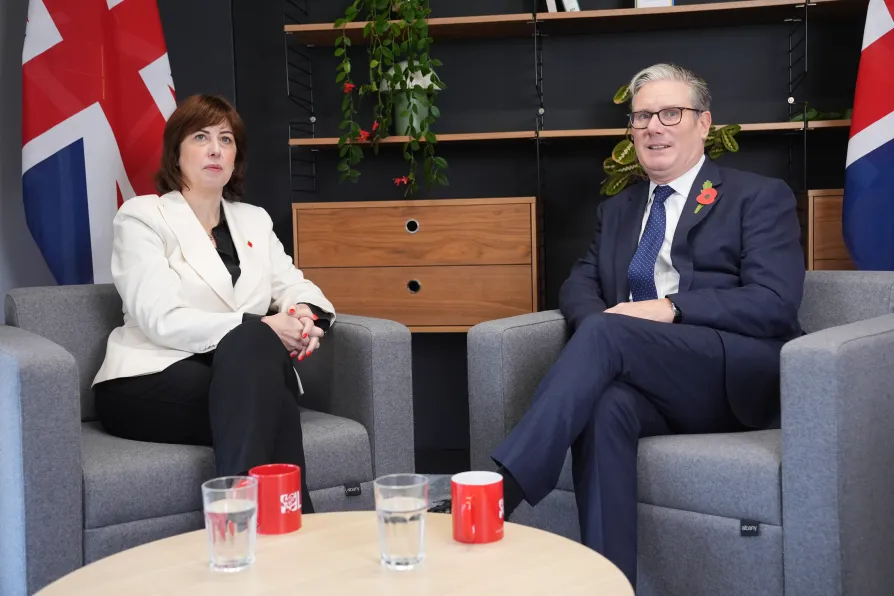
Martin Taylor, the hedge-fund multimillionaire who has poured millions into pushing Labour rightwards, helped finance Lucy Powell’s supposedly dissenting campaign — suggesting her victory was not the ‘soft-left’ rebellion some have claimed, says SOLOMON HUGHES
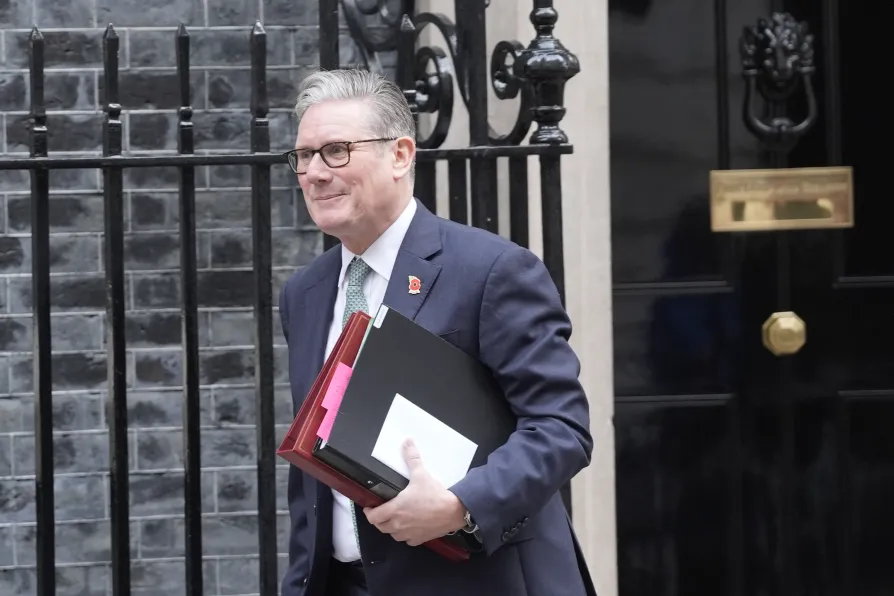
As the PM and his chief of staff’s blunders have mounted up, ANDREW MURRAY wonders who among Labour’s diminished ‘soft left’ might make a bid for the leadership
SOLOMON HUGHES asks whether Labour ‘engaging with decision-makers’ with scandalous records of fleecing the public is really in our interests