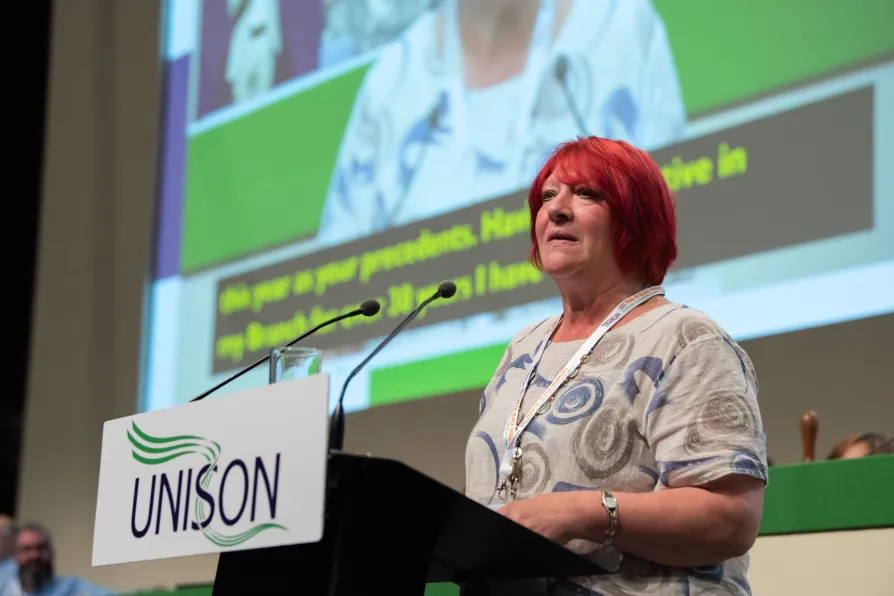
IAN LAVERY MP warns that decades of neoliberal policies have left former industrial communities behind — but a renewed Labour commitment to working people could change the political landscape


The spirit of the Gala belongs to every generation
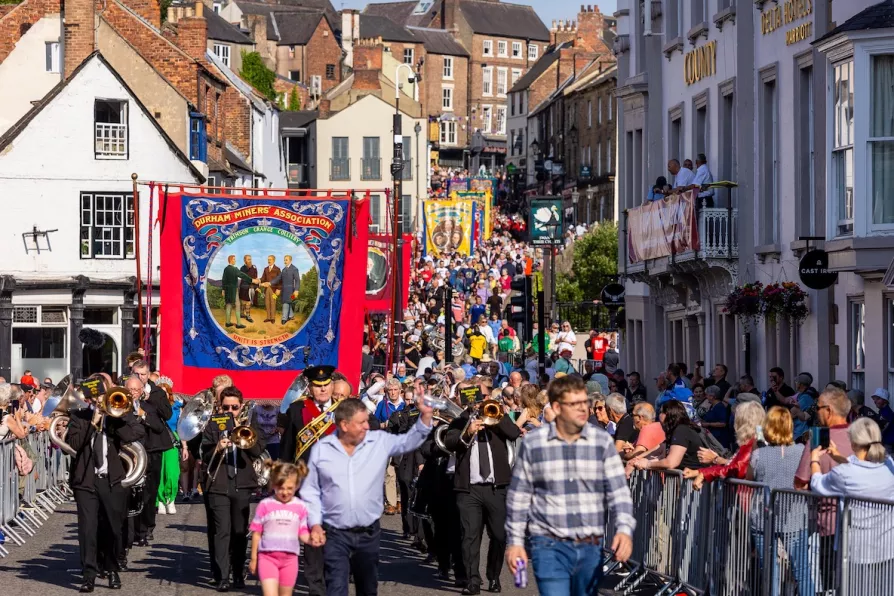
The Durham Miners’ Gala is a celebration of working-class culture, but also a call to action — to rebuild workers’ collective strength, says KIM JOHNSON MP
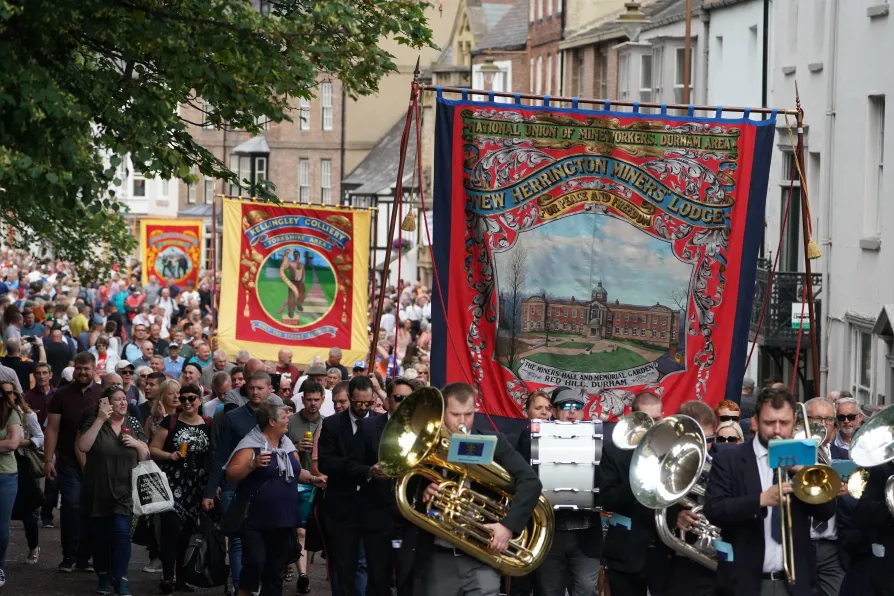
 SPIRIT LIVES ON: The Gala in 2019

PAOLO SANTALUCIA reports on how an Italian region defies US pressure to end a Cuban doctors programme
HENRY FOWLER outlines the GFTU’s new 2026-27 education programme and argues that investing in trade union education is essential to building worker power, developing leaders and strengthening collective action
We need a government that invests in saving lives not destroying them, argues SOPHIE BOLT
More expensive by weight than gold, saffron is surprisingly simple to grow. MAT COWARD explains
The public inquiry is the result of more than a decade of determined campaigning. Now, those who fought for justice want the full story of government involvement and police conduct to be told, says KATE FLANNERY




AS ONE of the world’s greatest celebrations of trade unionism, working-class culture and international solidarity, the Durham Miner’s Gala reminds us of a simple truth: working people have never won anything standing alone.
The Gala is far more than a commemoration of the past. For generations, the Durham Miners’ Association has preserved the proud legacy of mining communities while ensuring that the values forged in those communities continue to shape our future.
Equality, collective action and social justice are not relics of history; they are living principles, renewed by every generation that chooses solidarity over division.
That is what makes the Gala so powerful. It honours those who built our movement through collective struggle while inspiring the next generation to carry that struggle forward.
I have always believed that the labour movement’s greatest strength lies in solidarity and nowhere embodies that spirit more powerfully than Durham on Gala weekend.
Those values matter now more than ever.
Britain is the sixth-richest economy in the world, yet millions of working people are struggling to make ends meet. For too many families, the question is no longer about small sacrifices but about impossible choices between heating and eating.
In-work poverty has become an enduring feature of modern Britain. In-work child poverty has risen from 44 per cent in 1997 to 72 per cent today, while secure employment has increasingly been replaced by insecure contracts, low pay and unpredictable hours, leaving workers trapped in constant uncertainty.
Young workers are facing an especially harsh reality. Rising housing costs, precarious work and limited opportunities for training and progression have left many economically detached from the labour market altogether. This is not a failure of individuals — it is a failure of a system that no longer guarantees young people the very best start in life.
Meanwhile, wealth and power becomes ever more concentrated in the hands of a privileged few, leaving working people shouldering the burden. Public services have been decimated, collective bargaining weakened and communities left behind. For too long, the result is an economy that serves capital instead of labour.
But the history celebrated at Durham reminds us that this does not have to be the case.
Solutions to such problems will never come from pitting the working-class against one another. They will come from rebuilding working-class power: through strong trade unions, properly funded public services, sustained investment in communities and public ownership of the industries that shape our lives.
That is what generations of trade unionists in Durham understood, and it remains as relevant today as ever.
The rights that so many of us take for granted — the eight-hour working day, paid holidays, maternity rights, sick pay, and pensions — were not gifted to us by enlightened employers or benevolent governments. They were won because ordinary people organised collectively and refused to accept injustice.
Every banner carried through Durham this week tells that story. Our labour movement is built on solidarity and the belief that working people deserve to be valued for who they are. Those traditions remain the answer to the politics of division we see today.
As socialists, we should never apologise for our working-class roots. We should celebrate them. We should champion the people who keep the country running and we should be confident in backing and arguing for a system that serves working people, not the other way round.
That means bringing politics back into our neighbourhoods, workplaces and trade unions into the communities where socialism has always belonged, and where it was built.
Each year, the Gala reminds us that another future is possible: one built on solidarity not exploitation, co-operation instead of competition, and hope not division.
In the north-east, they call that spirit being a Marra. A trusted friend, comrade, someone who sticks with you through thick and thin.
As someone proud of my Liverpool roots and lifelong commitment to the labour movement, I’m proud to be a Marra because if you’re proud of where you come from, proud to stand with your class and determined to fight for a better future — then everyone’s a Marra.
Kim Johnson is the Labour MP for Liverpool Riverside.