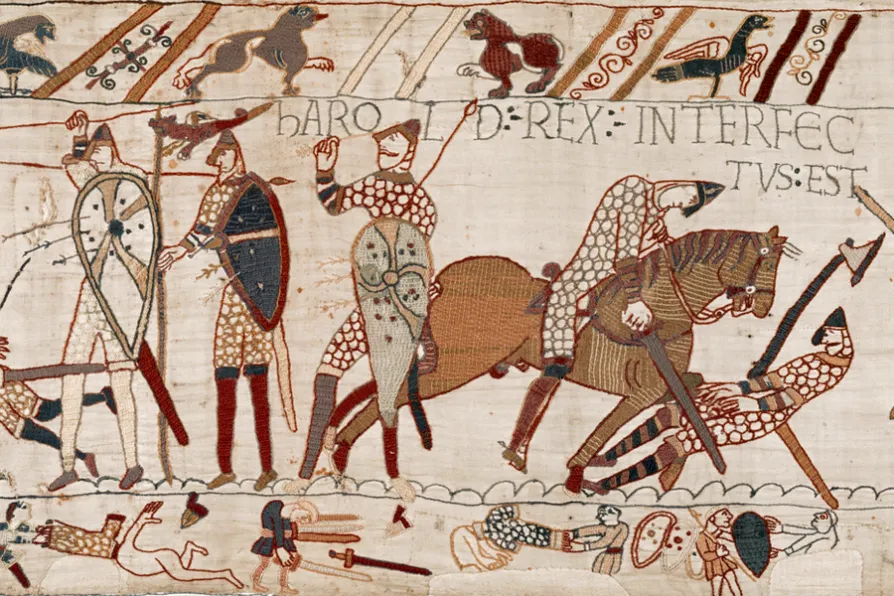
STEPHANIE BROWN draws attention to the hidden labour of the female embroiderers, and how a 19th century replica made no such error


 Latest editorial
Understanding the dialectic that is at work
A valuable tool for comprehending which way the momentum is swinging the pendulum of British politics – and why, writes GAVIN O’TOOLE
 NO USE FOR CONSENSUS: Liz Truss and Kwasi Kwarteng
MIK SABIERS revels in a band that ploughs an idiosyncratic furrow of expletive laden, guitar-driven alt rock
ANDY HEDGECOCK, MARIA DUARTE and ANGUS REID review Synthetic Sincerity, Our Hero, Balthazar, Heartstopper Forever, and A Year In London
The bard invites readers to a gig, raps for Clacton, and lays out the Burnham-Hurzeler conundrum
RON JACOBS recommends an important book that enhances the oppositional theories put forth by Fanon and, in doing so, remakes psychology itself
JAN WOOLF relishes an extensive history of our long relationship to trees in Britain that underlines the current emergency
DIANE WATT argues that while evidence of sex is not there, a 16th‑century lesbian poet could be Scotland’s answer to Gentleman Jack



The Death of Consensus: 100 Years of British Political Nightmares
by Phil Tinline
Hurst, £20
CONCEALED within the pages of The Death of Consensus is a revelation that invites the reader to think about British political history not in terms of events, but processes.
While the author insists from the outset that “none of this is to suggest that history is somehow circular,” that is precisely what his analysis of the “nightmares” upon which a dominant consensus is constructed implies.
The historical logic Phil Tinline unpicks certainly feels Hegelian and, by making the continuities and ruptures explicit, each period he examines becomes a product of contradictions inherent or implicit in the preceding stage. He has discerned a dialectic.

Similar stories

Nature as well as society works dialectically, asserts the Marx Memorial Library and Workers’ School

GAVIN O’TOOLE recommends a methodical unmasking of the US media’s complicity in the Israeli genocide, that should be a template for what’s needed to bring Britain’s corporate media to book

GAVIN O’TOOLE welcomes, and recommends a a candid, evidence-based record of Britain’s role in the slaughter visited by Israel upon the Palestinians

MARTIN HALL welcomes a study of Britain’s relationship with the EU that sheds light on the way euroscepticism moved from the margins to the centre