The Tories introduced the 50% strike ballot threshold to make industrial action harder. MATT WRACK argues that a Labour government has no justification for leaving it on the statute book


 Latest editorial
Imminent arrival of tardigrade aliens greatly exaggerated
The half a millimetre-long creatures that look like a tiny eight-legged caterpillar are resiliant beyond imagination and fascinate scientist as much as science-fiction writers
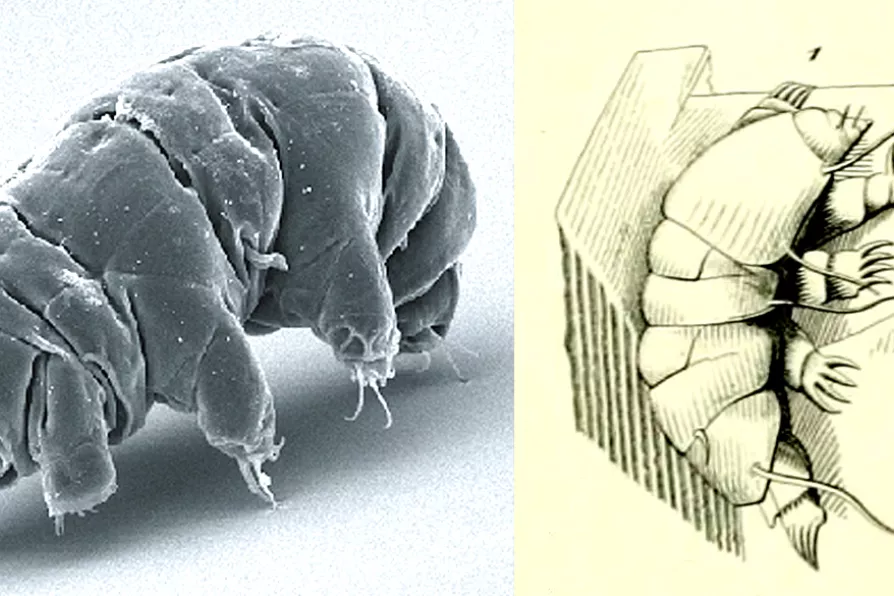 (L to R) SEM (scanning electron microscope) image of Milnesium tardigradum in active state and a drawing of a tardigrade on a grain of sand from 1840
[(L to R) doi:10.1371/journal.pone.0045682.g001 and E de Laplante - Doyere/both Creative Commons]
(L to R) SEM (scanning electron microscope) image of Milnesium tardigradum in active state and a drawing of a tardigrade on a grain of sand from 1840
[(L to R) doi:10.1371/journal.pone.0045682.g001 and E de Laplante - Doyere/both Creative Commons]

In the wake of Ann Widdecombe’s murder, JOHN GREEN wonders whether the government will really get to grips with the root cause of these attacks on our MPs
The new PM’s opening addresses offered hope, council homes and reform — but little detail on how any of it will be delivered, warns CLAUDIA WEBBE
Despite the screeching from the right-wing media, Burnham’s speech chimed with the public mood - and socialists should take advantage, says Morning Star editor BEN CHACKO
Scotland's Labour leader cannot continue to evade responsibility for the party's decline, argues LAUREN HARPER
Nature as well as society works dialectically, asserts the Marx Memorial Library and Workers’ School


Lithopanspermia is a proposed method of life being distributed around the universe, whereby extremely hardy organisms might travel on rocks ejected from one planet that crash land on another. It means alien life forms travelling from one planet to another to start a new life.
The organisms that could potentially complete this journey would need to be very tough indeed. In the first place, they would need to survive within a rock travelling through space, which would subject them to very high doses of cosmic radiation.
The precise radioactive dose would depend on how long the rock is travelling between the two planets. Rocks that travel between Earth and Mars would be travelling so long that the dose received even deep in the centre of the rock would be enough to kill any known living organism.

Similar stories

Coal-fired stoves in traditional homes are the primary source of extreme levels of air pollution in over-crowded Ulaanbaatar. As more people become climate-displaced, the situation is likely to worsen, write SCIENCE AND SOCIETY
Neutrinos are so abundant that 400 trillion pass through your body every second. ROX MIDDLETON, LIAM SHAW and MIRIAM GAUNTLETT explain how scientists are seeking to know more about them
New research into mutations in sperm helps us better understand why they occur, while debunking a few myths in the process, write ROX MIDDLETON, LIAM SHAW and MIRIAM GAUNTLETT

CARL DEATH introduces a new book which explores how African science fiction is addressing climate change