A new generation of right-wing politicians have shifted from promoting deregulation to championing anti-migrant politics warns SOLOMON HUGHES


 Latest editorial

A landmark victory for the right to strike
The International Court of Justice has delivered its clearest ruling yet that the right to strike is protected under international law, write Professor TONIA NOVITZ, Professor KEITH EWING and Lord JOHN HENDY KC
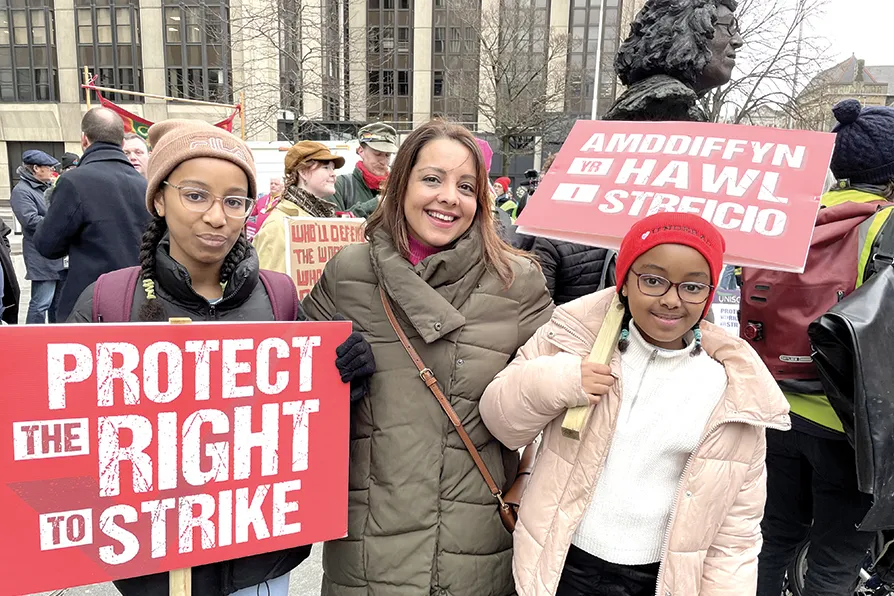 WINNING TEAM: Shavanah Taj, General Secretary of Wales TUC joins, with her two daughters, protesters from the NEU, TUC, PCS, and UCU at a TUC rally in central Cardiff, February 2023
by the Greater Manchester Workers’ and Tenants’ Association
The US relationship with Israel has evolved into a strategic liability, argues RAMZY BAROUD
A champion motorcyclist, trade union organiser and communist, Clem Beckett went from Britain’s speedway tracks to the battlefields of Spain, where he gave his life resisting Franco’s forces at Jarama. GEOFF BOTTOMS pays tribute to this remarkable anti-fascist
The greatest threat to democracy may no longer come from political parties but from unelected tech oligarchs like Peter Thiel and his powerful Silicon Valley network, argues JOHN GREEN
Claiming to ease a fertiliser shortage, the Trump administration has suspended tariffs on Moroccan phosphate imports – deepening US support for the Morocco’s control over Sahrawi territory, writes LUKE ROTELLO




ON MAY 21 this year, the International Court of Justice (ICJ) handed down its authoritative advisory opinion on whether the right to strike is protected by International Labour Organisation (ILO) Convention 87.
The latter is a treaty in international law. It is regarded as one of the most important of all ILO Conventions, and has been ratified by the United Kingdom.
Indeed, the United Kingdom was the first country to ratify the treaty, with George Isaacs — the minister of labour in the Attlee government — attending the International Labour Conference at which Convention 87 was adopted.
It was understood at the time by the British government that Convention 87 protected the right to strike.
That understanding has now been confirmed by the ICJ, by a majority of 10 to four of the judges taking part. In a powerful and lucid decision, it was held without equivocation that “the right to strike of workers and their organisations is protected under the ILO Freedom of Association and Protection of the Right to Organise Convention, 1948 (No. 87).”
But although a major victory for the protection of the right to strike as a fundamental human right, the victory is not yet complete.
The ICJ decision is the latest development in response to a long campaign by employers to undermine decades of consensus in the ILO’s supervisory bodies at the ILO that the right to strike was protected by the principle of freedom of association, as embedded in the ILO Constitution and contained in Convention 87.
That consensus was reflected in over seven decades of decisions by two ILO supervisory bodies, in particular. The first is the (tripartite) Committee on Freedom of Association (CFA) which hears complaints alleging breach of the ILO constitutional entitlement to freedom of association, including relevant Conventions such as Convention No 87.
The other is the Committee of Experts on the Application of Conventions and Recommendations (CEACR) which is not tripartite but consists of world experts on labour law, elected by the governing body.
The CEACR meets annually and examines on a rolling basis the extent to which each member state complies with the Conventions and recommendations which it has ratified.
The ICJ ascribed “great weight” to the findings of those ILO committees, noting that the ongoing acceptance of their conclusions by governments across the globe.
In thus acknowledging the influential work of the ILO supervisory bodies in interpreting Convention 87, the ICJ insisted that the right to strike was an essential element for the effective exercise of the right to freedom of association.
In a major rebuff to the employers, not only is the right to strike “one of the main activities engaged in and tools used by workers and their organisations to promote their interests and improve conditions of labour,” but according to the court, it is “instrumental in facilitating workers’ organisations to take collective action to further and defend the interests of their members.”
Apart from the respect shown to the ILO supervisory bodies, an important feature of the decision was the reliance by the court on other international and regional human rights instruments which protect the right to strike either expressly as in the case of the European Social Charter) or by implication (as in the case of the European Court of Human Rights (ECHR).
In acknowledging the importance of these other instruments the ICJ referred specifically to numerous ECHR decisions, noting that the latter has recognised the right to strike as “one of the most significant means by which a trade union may protect its members’ occupational interests and is thus a core element of the freedom of association.”
Not only that: “to restrict the right to strike to restrict it could, in certain circumstances, impair the very essence of freedom of association.”
It is important to emphasise that while the ICJ’s advisory opinion clearly establishes that the right to strike is protected in international law by virtue of ILO Convention 87, it does not say that the right to strike is unlimited, or that trade unions are to be free to determine when and how the strike might be used, or that restraints or penalties may never be invoked or imposed. Nor does it say where the boundaries (if any) should be.
In the proceedings before the court, the employers argued that endless disagreements about the extent of permissible limitations undermined the very existence of the right to strike. If this argument failed and the right to strike was found to exist, they asked the court to consider “the content of the right to strike, its limits or the conditions of its exercise, or make it possible to ascertain which authority has the competence to determine the scope and content of that right.”
Presumably this was done by the employers as a spoiling tactic. No court could possibly perform that task. But there may have been a calculation on the employers’ part that if the court was to acknowledge the existence of the right to strike, it might also be persuaded to conclude that it could be heavily circumscribed on a wide range of predictable grounds which would render its use ineffective.
To its credit, the court refused to be led down that track, making it clear that its conclusion that the right to strike is protected “does not entail any determination on the precise content, scope or conditions for the exercise of that right.”
This means that disagreements regarding the legitimate scope of the right to strike in national law will continue to be argued and discussed round the world in policy debates, the framing of national legislation and in court cases.
But the ultimate determination of what limitations are compliant with Convention 87 is left to the Committee on Freedom of Association and to the Committee of Experts, the authority of both of which is considerably enhanced by this decision of the ICJ.
What the advisory opinion ensures is that in those debates at national level, what cannot be denied is that there is a right to strike and that it is intrinsic to protection of freedom of association and the right to organise.
National parliaments, constitutional courts and supreme courts around the world will have to take notice. For that reason alone, this is a notable triumph for workers and their trade unions worldwide.
More than that, however, the ICJ decision has provided rare ammunition for workers and trade unions in the battle to regain the right to strike at national level, particularly in countries like the United Kingdom which even after the Employment Rights Act 2025 still has one of the most restrictive regimes in Europe.
The European Trade Union Confederation described it as a “landmark victory for workers in Europe and worldwide.” The British trade union movement in contrast has been mute, despite the unprecedented gift which has landed in its lap, and despite the platform the ICJ decision provides to test more seriously some of the unjustifiable restraints under which British workers and their trade unions continue to operate.
In light of the recent observations of the ILO Freedom of Association Committee in the P&O Ferries case, for example, there is no justification now (though there never was) for retaining the legal ban on solidarity action.
The ICJ has made it clear that the right to strike is protected, and the ILO supervisory bodies have made it clear that the right to strike includes the right to take such action.
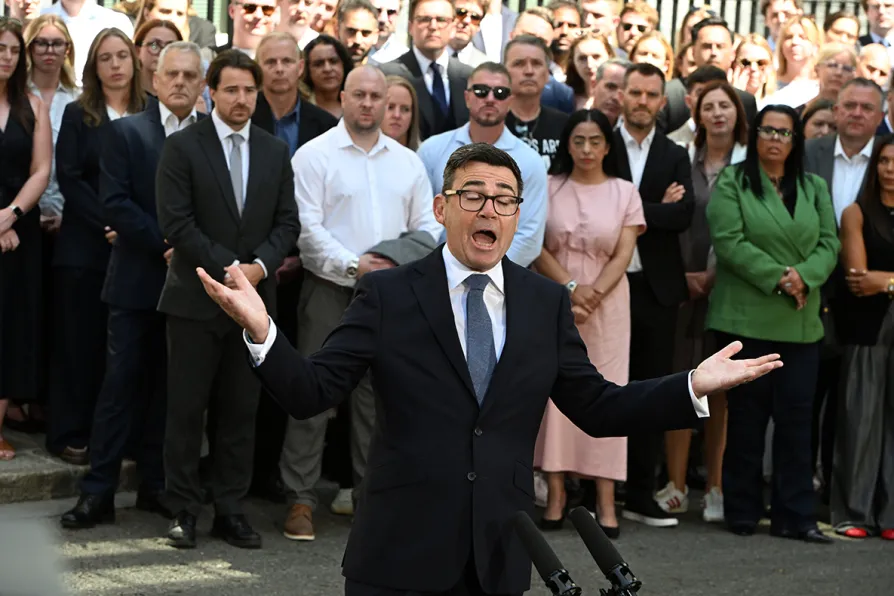
Over to you, Mr Burnham.

Similar stories
The Tories introduced the 50% strike ballot threshold to make industrial action harder. MATT WRACK argues that a Labour government has no justification for leaving it on the statute book
ANSELM ELDERGILL explains why the rule of law is fundamental to our liberty and welfare
Cypriot lawyer and former central committee member of the Progressive Working People’s Party (Akel) TOUMAZOS TSIELEPIS discusses the case for expelling the British military from Cyprus
ANSELM ELDERGILL examines the difficulties surrounding freedom of expression