Waiting for the grander vision to emerge


 Latest editorial
The military contradiction at the heart of Burnham’s plans
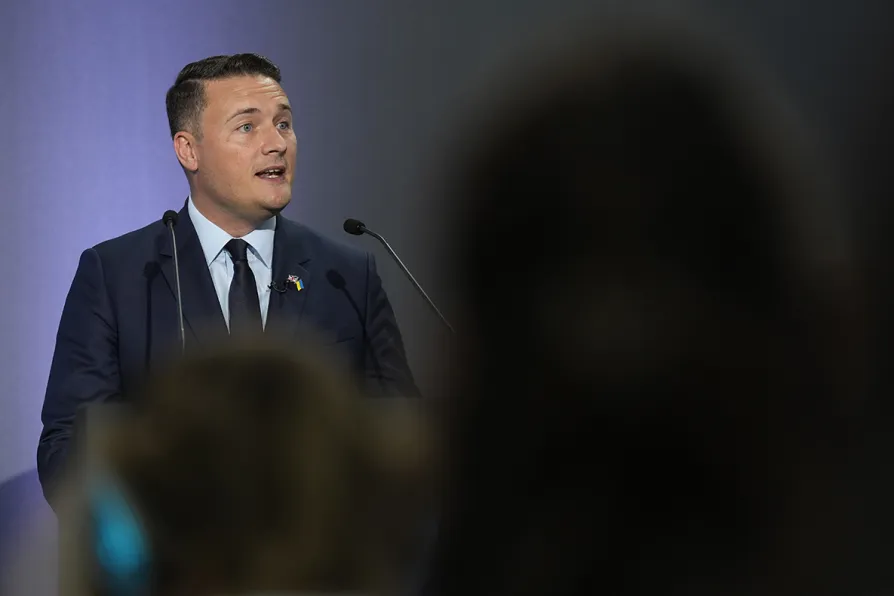 Defence Secretary Wes Streeting speaking at the Farnborough International Airshow in Hampshire, July 22, 2026





ONE headline sums up the contradiction at the heart of Andy Burnham’s new premiership.
It appeared in The Guardian and read: “Streeting says Burnham government will prioritise military over other spending.”
The Streeting in question is of course Wes, the newly minted Defence Secretary and hardcore adherent of the Blair-Mandelson wing of the Labour Party, his post a reward for the part he played in undermining Keir Starmer.
If his words are taken as an accurate portrayal of the government’s intentions, it sets at naught all its other stated good intentions.
It is most likely that he means what he says. Remember the new Chancellor, John Healey, was himself defence secretary until last month, before quitting over his predecessor at the Treasury Rachel Reeves’ apparent reluctance to boost military spending fast enough.
Now Healey is in a much stronger position to get his way, in alliance with Streeting. Nothing the Prime Minister has said indicates he will impose a different agenda on them.
Let us be clear what Healey and Streeting are signing up to. Their aim is to raise military spending to 3.5 per cent of GDP by 2035, hitting 3 per cent by 2030.
At present the arms bill is £80 billion a year, approximately. That is already the fifth largest in the world, according to the International Institute for Strategic Studies.
The projected increase, at current figures, would add around £27bn a year to that already swollen total. In fact, the actual cost would be still larger, since GDP will likely rise over the next decade.
Yet this week there were political rows about the funding of vastly smaller sums to help people with electricity bills, to cap bus fares or assist pubs.
There can be no doubt that an enormous price will have to be paid for the arms race. The main source of funds is likely to come through an attack on welfare, which Labour rightwingers from Tony Blair to George Robertson have been signalling as their preferred target.
Pat McFadden, the cadaverous Welfare Secretary appointed by Starmer to superintend this process, has been left in post in Burnham’s reshuffle, ominously.
Previous attempts by the government to reduce welfare benefits were defeated by back-bench Labour MPs, themselves reflecting mass pressure in communities. However, the arms race mandates that the artful McFadden will be setting up a rematch.
Yet the labour movement does not speak with one voice on this matter. While the TUC has rightly reversed its shameful 2022 decision to campaign for more weapons of war, significant unions continue to see industrial salvation in a bigger arms budget.
The idea that such increases — even if they were desirable, which the whole history of the British state’s recent conflicts proves they are not — can be met without cuts elsewhere is entirely fanciful.
Advocating for expanding military industry merely means promoting job losses elsewhere, as well as cuts in social provision.
That does not mean throwing the jobs of workers already employed in defence-related businesses to the wolves. If a smaller arms budget was spent entirely in Britain rather than overseas, mainly the US, those jobs could be secured.
It is vital that the movement comes together in opposition to the Healey-Streeting order of priorities. If it does not, whatever hopes attend the advent of Burnham will prove illusory.
Solidarity with the Muslim community
A MOSQUE is attacked in Britain every five days, according to the British Muslim Trust. Yet this racist violence is greeted with near-silence by the political Establishment.
And still some try to deny the existence of Islamophobia. The left must stand firm with Muslim communities against these outrages.

Similar stories
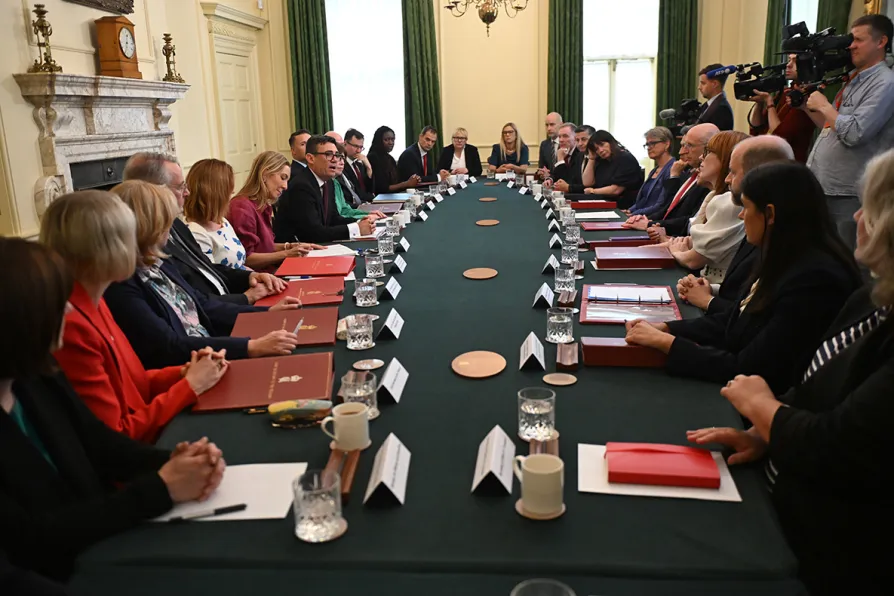
New PM slashes fuel bills and culls Starmer deadwood, but peace activists warn that placing John Healey as new Chancellor shows ‘beyond doubt that the military industrial complex is in charge of Burnham’s economic policy’