The Tories introduced the 50% strike ballot threshold to make industrial action harder. MATT WRACK argues that a Labour government has no justification for leaving it on the statute book


 Latest editorial
What makes a cat tick
Let's focus on how the genetic code provides the toolbox for the myriad possibilities in any person, or cat for that matter
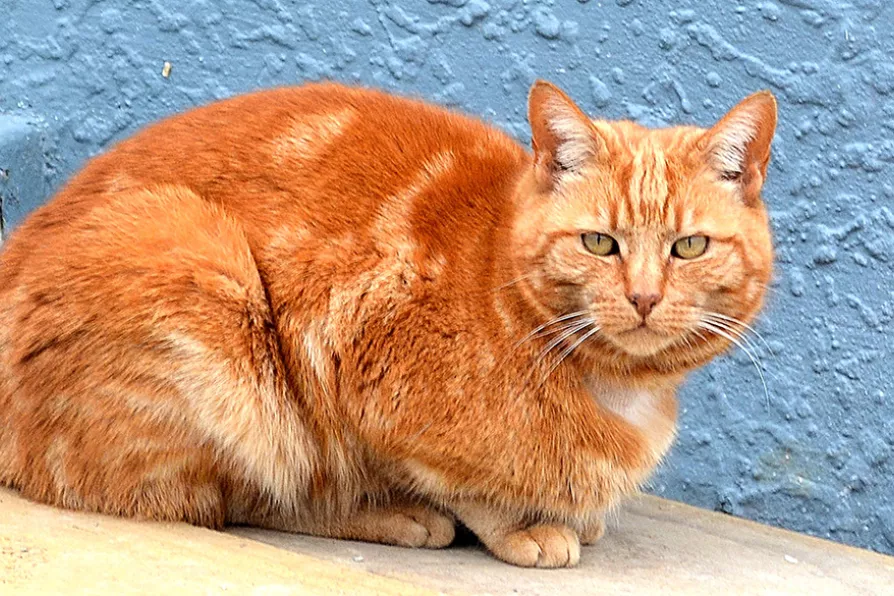 LUCK OF THE DRAW: Two copies of the eumelanin inhibiting gene gives a completely orange cat
[GPS 56/Creative Commons]
LUCK OF THE DRAW: Two copies of the eumelanin inhibiting gene gives a completely orange cat
[GPS 56/Creative Commons]

In the wake of Ann Widdecombe’s murder, JOHN GREEN wonders whether the government will really get to grips with the root cause of these attacks on our MPs
The new PM’s opening addresses offered hope, council homes and reform — but little detail on how any of it will be delivered, warns CLAUDIA WEBBE
Despite the screeching from the right-wing media, Burnham’s speech chimed with the public mood - and socialists should take advantage, says Morning Star editor BEN CHACKO
Scotland's Labour leader cannot continue to evade responsibility for the party's decline, argues LAUREN HARPER
Nature as well as society works dialectically, asserts the Marx Memorial Library and Workers’ School


THE DNA of domestic cats is bundled up into 38 chromosomes. Each chromosome is a long, tightly packed string of DNA that contains many different genes. The concept of a “gene” as a discrete unit of heredity dates back to before the discovery of DNA.
In the 20th century, it was realised that some regions of DNA are operated on by molecular machines in the cell, turning their encoded sequence into RNA and then into proteins, short-lived molecules that are involved in almost all cellular processes.
These DNA regions are what we now call genes. There is some nuance in this: for example, some regions of a gene are not turned into protein themselves and instead play a role in how exactly this happens.

Similar stories

Nature as well as society works dialectically, asserts the Marx Memorial Library and Workers’ School
RICHARD SHILLCOCK examines an enjoyable, but philosophically conventional book, and urges Marxists to employ their capacity to embrace the totality in any explanation
Neutrinos are so abundant that 400 trillion pass through your body every second. ROX MIDDLETON, LIAM SHAW and MIRIAM GAUNTLETT explain how scientists are seeking to know more about them
New research into mutations in sperm helps us better understand why they occur, while debunking a few myths in the process, write ROX MIDDLETON, LIAM SHAW and MIRIAM GAUNTLETT