ANDY McDONALD MP says Labour must show it is capable of delivering real improvements in people’s lives — bold action is required


 Latest editorial
What do voters really want from Labour?
All the evidence shows voters want Labour to shift to the left — but initial signs from Andy Burnham are worrying on that front, cautions DIANE ABBOTT
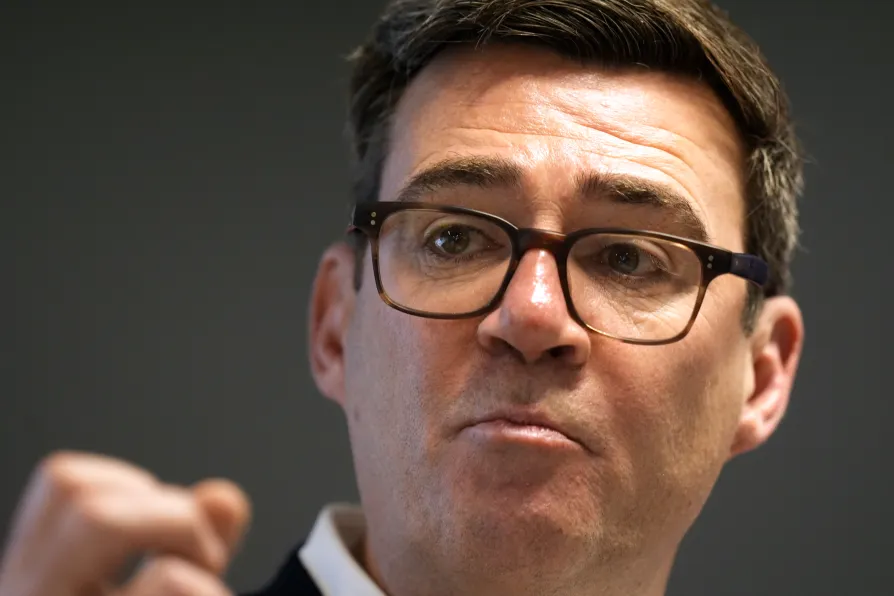 WORRYING SIGNS: Andy Burnham's initial decisions are cause for concern among the left
ANGUS REID and ANDREW JOHNSTONE report on an initiative that we must take this summer
ALLISON FEWTRELL on what Plaid Cymru's historic election victory means for the communities being failed by Wales’s housing crisis, and four things the new government can do right now
France Insoumise MP JEROME LEGAVRE speaks to Christophe Domec on building the Europe-wide peace movement that came together in the International Conference Against War last weekend
At last weekend’s International Conference Against War, LINDA PENTZ GUNTER talks to the Palestinian physician and politician about the struggles ahead to achieve a truly free Palestine


AFTER Andy Burnham’s triumph in the Makerfield by-election and the resignation of Keir Starmer there is a fork in the road, and we need to decide soberly where we are going as a labour movement.
By contrast, there has been a huge outpouring of punditry, speculation and opinion about what should happen next.
Most of it can be readily dismissed, written by those who not only do not have the interests of the labour movement at heart but are consciously hostile to the interests of the working class, the poor and oppressed minorities. Football teams do not usually take tactical advice from their next opponents. Neither should we.
The reason why the Starmer premiership is such a dreadful failure, and he will have the shortest term in office of any Labour Prime Minister, is precisely the lack of any socialist or even recognisably Labour principles in office. The public saw that and saw through him.
Applying socialist principles does not mean repeating ancient (and sometimes false) truisms. We must build and maintain a winning voter coalition to govern effectively.
It is the right of British politics, including the right of the Labour Party, which is most guilty of repeating myths.
You can’t buck the markets, the private sector is more efficient, deregulation spurs growth, you always have to stick closely to the US, and hostility to foreigners is natural, are just some of their blatantly false shibboleths.
Instead, our principles of peace, fairness, redistribution, combating poverty and opposing all forms of discrimination need constant reapplication in changing circumstances. But they are firm principles.
The new situation is firstly the Makerfield result, which sparked Starmer’s resignation one working day later. One columnist for the Financial Times reports that a veteran Blairite thought the Makerfield result was a very bad one. There is a good reason for that.
It is clear from the by-election result that voters reject Starmerism and want something to its left. It is impossible otherwise to explain how Labour could get trounced in the local elections in Makerfield, but a few weeks later, Andy Burnham could beat Reform UK by over 20 points, and on a high turnout too.
We should also bin all the disinformation that Reform was taking votes equally from Labour and Tories. If that were true, the disappearing Tory vote in the by-election must have gone to Labour, otherwise Reform UK would have won. It is a nonsense.
That mood, where the public is demanding something better, more left-wing and recognisably Labour, also explains why my parliamentary colleagues are falling over themselves to crown Andy Burnham as the new leader, when many were “loyal Starmer supporters” until last week. This is because their own voters want a dramatic change, and they live in fear of losing their seats.
The recognition of this mood among voters also explains the easy marginalisation of figures such as Starmer and Streeting, and others still who even most readers of this newspaper have never heard of. There is a new pressure from voters, and it is from the left.
But this mood also connects with long-standing public sentiment on key issues of principle. So, a recent Ipsos poll showed voters opposing cuts to welfare to fund increased military spending by more than two to one. When other options were offered as cuts, they got even less support.
Voters are sick of austerity, and they want a plan to improve their living standards, either by raising their incomes or cutting the costs of essential items, preferably both.
They reject the rhetoric of belt-tightening and believe they have sacrificed enough. They are right.
Perhaps most surprising of all is popular attitudes to racism. About 80 per cent of the population thinks that Britain is either somewhat or a great deal racist (YouGov), two-thirds believe black people are treated unfairly by the police (Ipsos) and a similar proportion accept that Muslims experience discrimination (British Future).
On foreign policy, a majority of Labour defectors to progressive parties cite the party’s stance on Gaza. The next leader would be a fool to ignore it.
These are key indicators not just of the mood of the public, but their settled views on fundamental issues. They get virtually no hearing in the media because they do not chime with the perspective of our rulers, who are committed to austerity and war, and who believe that racism and Islamophobia are useful distractions.
Yet we can see how well pursuing their agenda turned out for Keir Starmer. The eulogies to Starmer from MPs and the press are wholly misplaced.
They tell us much more about their authors than Starmer; that they support austerity, racism and a clampdown on rights.
The paeans to Starmer’s “statesmanship” ignore his support for every US war and his advocacy for genocide. Those who fail to mention it clearly feel that it is not worth mentioning, or they support it.
Pursuing this agenda has also been a disaster for the Labour Party and for the majority of the population. Starmer’s failure has been Farage’s benefit, and there could hardly be a more damning indictment.
This is the situation that Andy Burnham seems set to inherit. Stagnating economy and living standards, multiple wars and a toxic political situation, fuelled by bipartisan racism. Against this, there is a large and growing clamour for progressive change, and a mood of anger against those who fail to deliver it.
Which way will Andy Burnham jump? It is impossible to know. We have an excess of political soap opera and a deficit of clear discussion.
Instead, we must glean insights from some of his actions. The appointment of James Purnell, an ultra-Blairite who resigned from Gordon Brown’s Cabinet in the hope of provoking a coup against him, does not bode well.
Neither does the endorsement of Shabana Mahmood’s disgraceful immigration policies, nor his reported efforts to add to Starmer’s allocated funding for the Defence Investment Plan.
This is a moment for a very different course for Labour and for the country. The population is crying out for one, and the new Prime Minister can side with them. Or he can side with Trump, the warmongers, the advocates of more austerity and racist scapegoating.
It is a cliche that to govern is to choose, but cliches last because they often contain a truth.
Diane Abbott is MP for Hackney North & Stoke Newington and Mother of the House of Commons. This column appears fortnightly.
