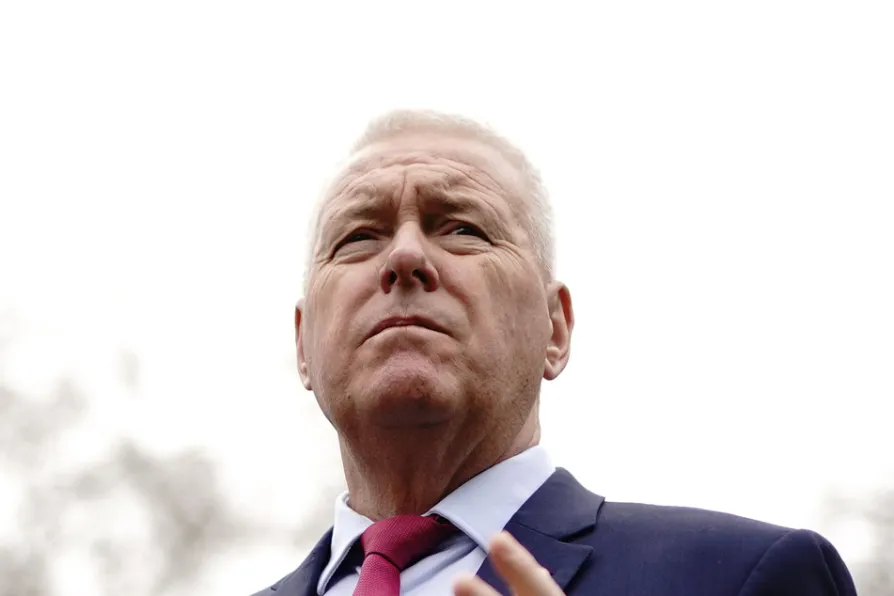
IAN LAVERY MP says an immediate focus on raising wages and reducing costs must be part of a strategy to show Labour can deliver for workers again


Solidarity with the peacemakers in a world on the brink
World Peace Council president PALLAB SENGUPTA assesses the challenges facing the international peace movement and sends greetings to the Liberation AGM
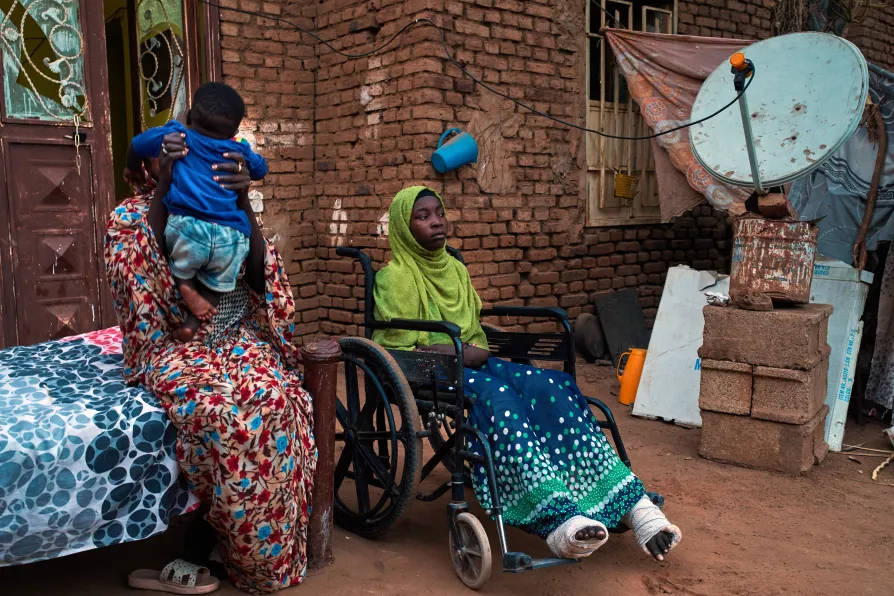
 VICTIMS OF WARNoon Madani, 18, centre, who was injured in a shelling attack, sits in a wheelchair on the patio of her family home in Khartoum
Friedrich Merz’s call for a new Plaza Accord ignores how Washington’s 1985 currency ambush destroyed Japan without fixing US deficits — China, a sovereign socialist state with 1.4 billion consumers, cannot be bullied the same way, writes CARLOS MARTINEZ
KIERA MARSHALL says there is a gulf between the privileged circles in which most politicians move and the lives of working-class youth in left-behind estates – and as a newly elected Senedd member she’s determined to do something about it
ANGUS REID and ANDREW JOHNSTONE report on an initiative that we must take this summer
At last weekend’s International Conference Against War, LINDA PENTZ GUNTER talks to the Palestinian physician and politician about the struggles ahead to achieve a truly free Palestine




TODAY humanity is passing through one of the most dangerous and complex periods since the end of the cold war. Military confrontation is replacing diplomacy, unilateral sanctions are increasingly used as instruments of political coercion, military alliances continue to expand, and enormous financial resources are diverted from social development towards armaments and preparations for war. The peoples of the world are paying the price through poverty, displacement, economic insecurity and the growing danger of wider military confrontation. In these circumstances, the responsibility of the international peace movement becomes greater than ever before.
Among the countries that continue to stand as enduring symbols of resistance against imperialist domination, Cuba occupies a unique and respected place. For more than six decades, the Cuban people have courageously resisted the criminal economic, commercial and financial blockade imposed by the United States, despite its overwhelming and repeated condemnation by the international community through successive resolutions of the United Nations General Assembly. This blockade, one of the longest-lasting systems of unilateral coercive measures in modern history, constitutes a deliberate policy of economic warfare designed to undermine the Cuban Revolution, inflict suffering on the Cuban people, and force political change through economic strangulation.
The situation has become even more critical in recent years. The policies introduced during the Trump administration marked a new phase of unprecedented hostility toward Cuba. By reinstating and significantly tightening sanctions, activating Title III of the Helms-Burton Act, severely restricting travel and remittances, and arbitrarily redesignating Cuba as a so-called State Sponsor of Terrorism in its final days in office, the administration deliberately intensified the economic siege against the island. These inhumane measures were explicitly intended to destroy the social, economic and political gains of the Cuban Revolution by depriving the country of vital sources of income, discouraging international investment and financial co-operation, and increasing hardship for the Cuban people. The continuation of many of these measures has further aggravated Cuba’s economic challenges and reinforced its unjust international isolation.
These coercive policies have severely affected every aspect of Cuban society, created acute shortages of fuel, food, medicines, medical equipment, energy supplies and other essential goods, while imposed enormous obstacles to economic recovery, sustainable development and the normal functioning of public services. They constitute a form of collective punishment directed against an entire people and represent a flagrant violation of international law, the Charter of the United Nations and the fundamental principles governing relations among sovereign states, including respect for sovereignty, non-interference in internal affairs and the right of peoples to determine their own political and economic system.
Despite these extraordinary difficulties, Cuba continues to demonstrate remarkable resilience and steadfast commitment to the principles of social justice and international solidarity. It has preserved significant achievements in universal education, public healthcare, scientific research and biotechnology, while continuing to provide medical assistance and humanitarian co-operation to many countries around the world. Cuba remains a consistent advocate of peaceful coexistence, multilateralism, respect for national sovereignty and international cooperation, making important contributions to the global struggle for peace, social progress and the right of all peoples to live free from aggression, coercion and foreign domination.
The World Peace Council reiterates its unwavering solidarity with the people of Cuba and renews its call for the immediate and unconditional lifting of the United States blockade, the removal of Cuba from the arbitrary list of so-called State Sponsors of Terrorism, and the end of all unilateral coercive measures that violate international law and the sovereign rights of nations. Defending Cuba is an integral part of the broader struggle against imperialism, unilateralism and all forms of foreign intervention, and for a world based on peace, justice, equality and respect for the sovereignty of all peoples.
The recent military aggression against Iran has further intensified instability across West Asia and created grave dangers for regional and international peace. The continuing strategic alliance between the United States and Israel, manifested through extensive military assistance, political protection and support for unilateral actions, has contributed significantly to the worsening security situation in the region. Such acts are not isolated incidents but form part of a broader strategy of military domination, geopolitical confrontation and attempts to reshape the political balance of West Asia through force, coercion and threats rather than through dialogue, diplomacy and respect for international law.
The continued reliance on military power, unilateral coercive measures, economic sanctions and persistent threats of regime change by the United States and its allies has repeatedly demonstrated its inability to produce either genuine stability or lasting security.
The World Peace Council reiterates that disputes concerning Iran must be resolved exclusively through peaceful dialogue, diplomacy, full respect for the sovereignty and territorial integrity of states, and strict adherence to the principles of the United Nations Charter. It firmly opposes all forms of military aggression, foreign intervention, unilateral coercive measures and policies aimed at imposing political outcomes through force, reaffirming that only negotiations based on equality, mutual respect and international law can contribute to a just, comprehensive and lasting peace in West Asia.
The cause of Cyprus occupies a special place within the international peace movement.
For decades, the Cypriot people have suffered the tragic consequences of division and foreign military occupation. The continuing occupation of the northern part of the island by the Turkish army remains a serious violation of international law and numerous United Nations resolutions. The continued presence of tens of thousands of foreign troops prevents the full exercise of Cyprus’s sovereignty and obstructs efforts toward a comprehensive and just settlement.
The World Peace Council reiterates its unwavering support for the reunification of Cyprus as a single, sovereign, independent state with one international personality, one sovereignty, and one citizenship, free from occupation troops, foreign military guarantees, and all forms of external intervention. A just and viable solution must be based on the relevant United Nations resolutions and international law and should ensure the peaceful coexistence and equal rights of both Greek Cypriots and Turkish Cypriots.
Equally important is the continued existence of the British Sovereign Base Areas on Cypriot territory. These military bases represent a continuing legacy of colonialism and have repeatedly been used in military operations throughout the Middle East and beyond. Their existence undermines the full sovereignty of Cyprus and contributes to the militarisation of the Eastern Mediterranean. The World Peace Council supports the long-standing demand for the removal of all foreign military bases from Cyprus and for the island to become a true zone of peace, co-operation, and friendship among peoples.
The continuing tragedy in Sudan has produced one of the world’s most severe humanitarian catastrophes. The international community must intensify efforts to facilitate an immediate ceasefire, expand humanitarian assistance, and support an inclusive political process that safeguards Sudan’s sovereignty, unity, and territorial integrity.
The World Peace Council calls upon all its member organisations and all peace-loving people to intensify their common efforts. Let us strengthen international solidarity. Let us mobilise against war and militarism. Let us defend the principles of the United Nations Charter. Let us oppose racism, fascism, colonialism, and all forms of discrimination. Let us struggle for nuclear disarmament, social justice, sustainable development, and a world based upon peaceful cooperation among nations.
The World Peace Council remains firmly committed to these principles. Together with our partners across the globe, we shall continue to raise our voices against war and occupation, support peoples fighting for their legitimate rights, and work tirelessly for a future in which peace is built not upon military superiority but upon justice, equality, solidarity, and respect for the dignity of every nation and every human being.
Let us unite our efforts for a world free from war, foreign occupation, colonialism, and militarism.
I wish Liberation a successful AGM and a year of dedicated activities in pursuit of the struggle for the cause of peace and justice across the world.
India
28 June 2026
