The new Prime Minister must abandon decades of automatic support for US foreign policy, which makes us all less safe, argues DIANE ABBOTT MP


 Latest editorial

Andy Burnham should give Venezuela back its gold
The campaign against the Bank of England’s ongoing theft of Venezuelan gold is gaining support across the labour movement and beyond, writes MATT WILLGRESS
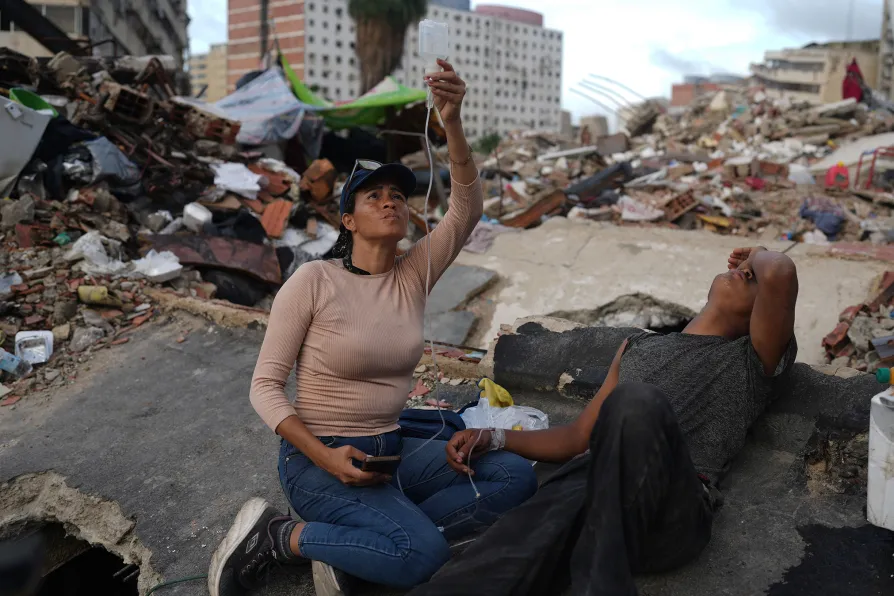 Eduardo Lopez receives medical assistance by a nurse after he has been 16 days removing debris on a collapsed building by the earthquakes searching for their loved ones in La Guaira, Venezuela
Media Lens at 25: David Cromwell and David Edwards reflect on a quarter-century of media criticism, explaining why independent journalism is more important than ever
by Weyman Bennett and Maz’s family
The International Court of Justice has delivered its clearest ruling yet that the right to strike is protected under international law, write Professor TONIA NOVITZ, Professor KEITH EWING and Lord JOHN HENDY KC
Emergency phone alerts could help Britain respond to rising wildfire risk, but Australia’s experience suggests they work best as part of a broader strategy, write ELLIOT CONVERY-FISHER and KATE PARKINS
A champion motorcyclist, trade union organiser and communist, Clem Beckett went from Britain’s speedway tracks to the battlefields of Spain, where he gave his life resisting Franco’s forces at Jarama. GEOFF BOTTOMS pays tribute to this remarkable anti-fascist



FOLLOWING the recent devastating earthquakes in the country — at the time of writing, more than 5,300 people are confirmed to have died in the quakes and more than 16,500 were injured with the numbers still rising — Venezuela’s acting president Delcy Rodriguez wrote to Britain asking for her country’s gold being held in the Bank of England to be returned.
It is quite simply a disgrace that over 30 tonnes of Venezuelan gold is still being held in London, despite the Latin American nation repeatedly requesting its return.
The gold currently has a value of £3.5 billion (or $4.74 bn) — and awareness of the issue is growing, with over 14,000 people signing a petition to the Prime Minister, and now numerous trade union leaders joining MPs and others in backing the campaign.
The earthquakes — and Venezuela’s urgent need for resources for relief and the massive task of reconstruction ahead — have brought the issue to the forefront of Latin America solidarity campaigners minds, leading to increased pressure for the issue to be resolved.
This week, the World Bank released a report stating that the earthquakes that rocked Venezuela on June 24 caused $19.6bn in direct physical damage, but the cost of rebuilding could be twice that.
As the general secretary of Unison Andrea Egan has said, “The UK government must work to ensure that Venezuela’s gold deposits in the UK can be used to urgently rebuild homes and public services in Venezuela, for the benefit of all its people.”
And as University and College Union general secretary Dr Jo Grady put it, “Given the urgent need to support Venezuela’s recovery, and in light of how expensive reconstruction will be, it is more urgent than ever that the British government stands up to Trump and releases the billions of pounds of Venezuelan gold it is holding.”
Or as Transport Salaried Staffs’ Association general secretary Maryam Eslamdoust pointedly commented, “Assets held in the UK should not become political leverage while people are suffering.”
The issue has other wider implications than Venezuela’s immediate need for resources in the current emergency situation, not least around the need for Britain to have an independent foreign policy based on respecting national sovereignty across the globe.
If Andy Burnham is serious about offering both hope and change, then switching international policies on key issues where Britain has just done US bidding — from Palestine, to Yemen, to Venezuela, to give just three examples — would be hugely significant.
In terms of Venezuela, this doesn’t end with returning the gold, it also means ending all illegal and murderous sanctions on the country and speaking up for the US to the same.
As Paul Fleming, Equity general secretary, has rightly said in backing the gold campaign, “The UK government’s longstanding approach to Venezuela has been irrational and cruel — unless this gold is released, our policy will keep compounding the crisis the Venezuelan people now face.”
The tough international economic sanctions on Venezuela from the US, Britain and other countries have been in place for over a decade and been tightened again and again over that time, causing immeasurable suffering to the people of that country, and nothing short of economic devastation.
Venezuela is clear that the colonial theft of the gold is part of that picture. In May this year, government minister William Castillo made a major presentation on the effect of sanctions on Venezuela, arguing that the “call and demand from Venezuela as a nation, not just as a government [is] that all sanctions against the country be lifted,” and cited the example of the gold needing to be returned, arguing that “it was worth $2bn when it was frozen. Today it is worth $4bn due to the appreciation of gold.”
Over 1,000 hostile sanctions from the US remain in place on Venezuela, and are a clear example of imperial intervention aimed at securing economic and political dominance for the Yankee empire.
All these sanctions need to go and the Burnham-led government facilitating the return of the gold from the Bank of England would be a step of enormous significance in this direction.
We’ll give the final word to Sarah Woolley, the Bakers, Food and Allied Workers’ Union general secretary, and General Federation of Trade Unions chair: “Venezuela’s gold should be returned because it is the sovereign property of the Venezuelan people.”
Let’s up the campaign in the weeks and months ahead to make it happen!
Over 14,000 people have now signed a petition urging the UK to give back the gold to Venezuela. The petition can be viewed at https://tinyurl.com/ReturnGoldPetition.
Online event: Emergency in Venezuela — End All Sanctions, Give Back the Gold! Tuesday July 28 at 6.30pm register at tinyurl.com/VenezuelaEmergency. With Venezuelan speakers, Jeremy Corbyn MP, Francisco Dominguez (VSC) and Kate Hudson (CND).

Similar stories
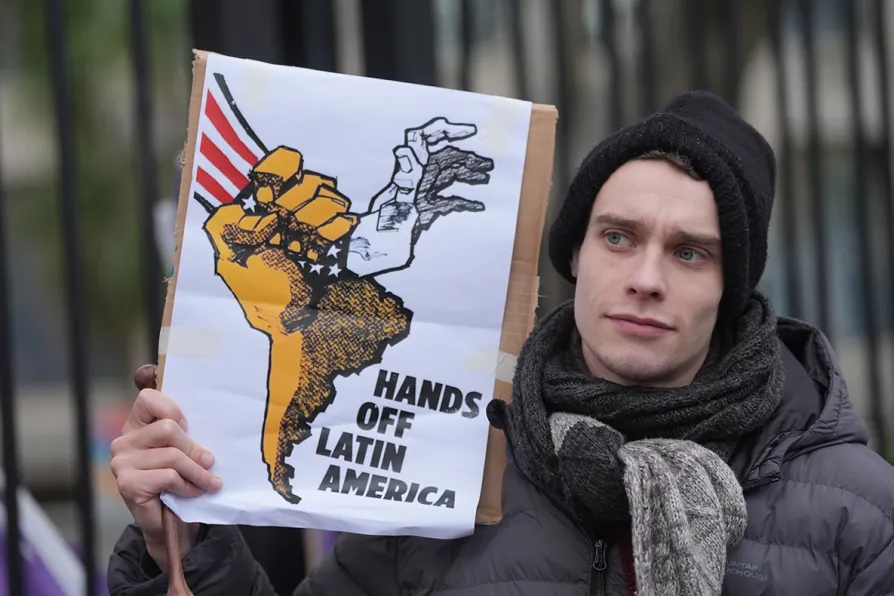
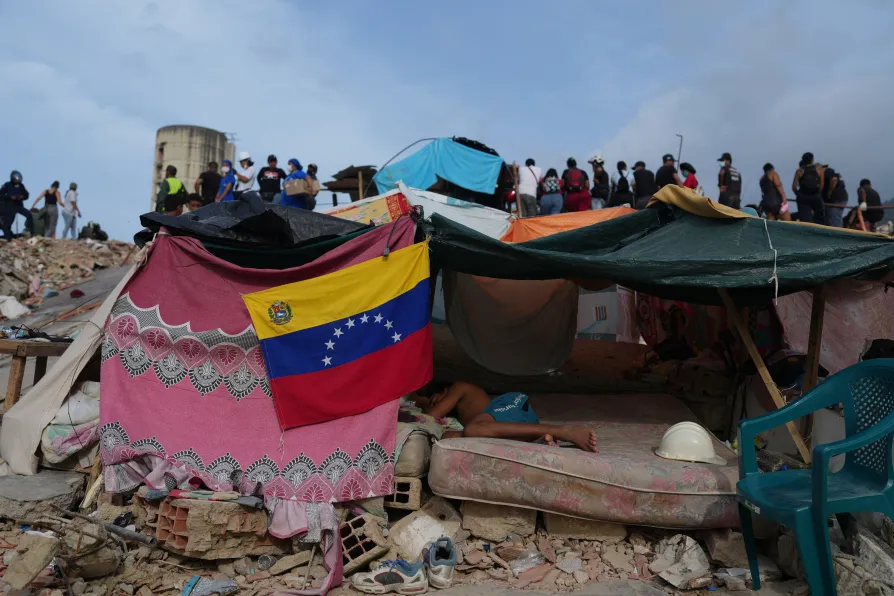
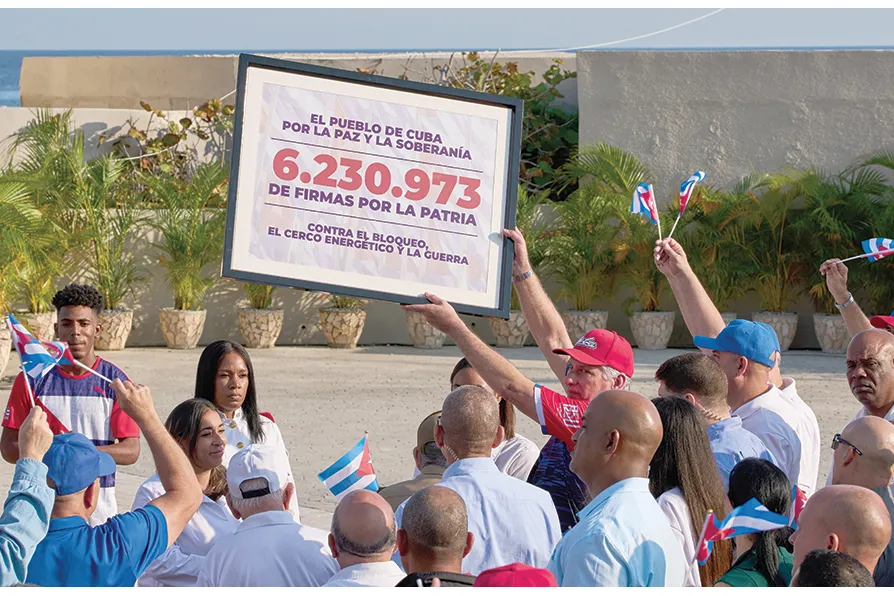
ADRIAN WEIR charts the intercontinental trade union solidarity with Cuba and its desperate predicament
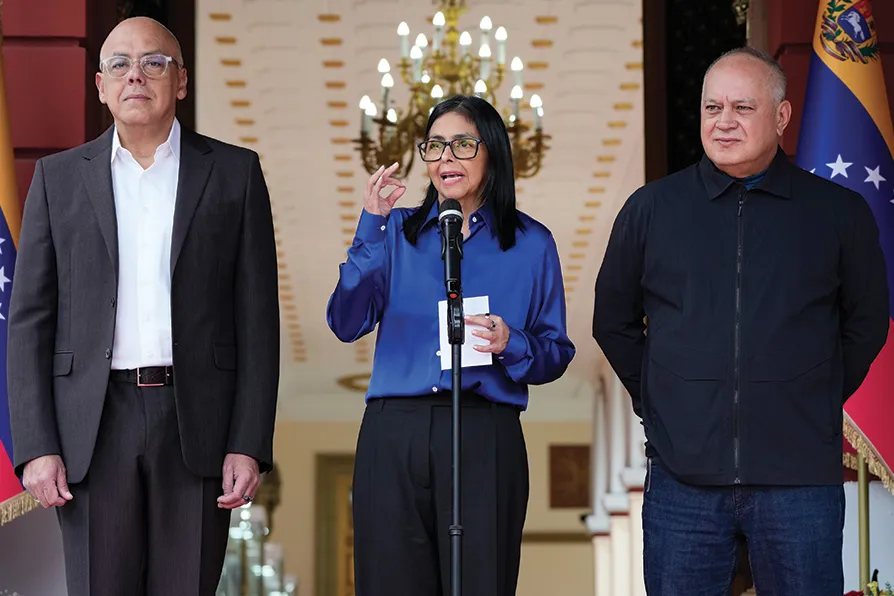
International solidarity can ensure that Trump and his machine cannot prevail without a level of political and economic cost that he will not want to pay, argues CLAUDIA WEBBE