The Tories introduced the 50% strike ballot threshold to make industrial action harder. MATT WRACK argues that a Labour government has no justification for leaving it on the statute book


 Latest editorial
The Players of Games
The links between interventionist wars and game theory
 [Gaz/cc]

In the wake of Ann Widdecombe’s murder, JOHN GREEN wonders whether the government will really get to grips with the root cause of these attacks on our MPs
The new PM’s opening addresses offered hope, council homes and reform — but little detail on how any of it will be delivered, warns CLAUDIA WEBBE
Despite the screeching from the right-wing media, Burnham’s speech chimed with the public mood - and socialists should take advantage, says Morning Star editor BEN CHACKO
Scotland's Labour leader cannot continue to evade responsibility for the party's decline, argues LAUREN HARPER
Nature as well as society works dialectically, asserts the Marx Memorial Library and Workers’ School



IN Iain M Banks’s sci-fi novel The Player of Games, one of the best game players in the galaxy, Gurgeh, is sent to play a fiendishly complex game called “Azad” on an alien planet.
Azad is played on a vast three-dimensional board with a dizzying array of cards, pieces, and strategies. The alien civilisation venerate it so highly that they are known as the Empire of Azad, and they hold a regular tournament where the overall winner is crowned emperor.
Gurgeh has been sent by his civilisation in an attempt to destabilise the aliens. He has only a few years to learn how to play, using his knowledge of all other known games in co-ordination with mind-enhancing drugs. The novel hinges on his growing addiction to the game of Azad, to the extent that he overlooks the wider games in which he is just a small part.
The novel is Banks at his satirical best. Gurgeh is from The Culture, a future “post-scarcity” civilisation run by benevolent AIs called “Minds.” The Culture don’t officially intervene in other alien worlds, but in this novel they unofficially they send Gurgeh to undermine.
In contrast, the Empire of Azad is not dissimilar to our present society: a strict hierarchy with vast suffering and cruelty. Banks manages to make the reader sympathise with Azad, understanding its citizens’ outrage as “superior” beings with unfair advantages condescend to play games with their civilisation at no risk to themselves. Banks allows for ambiguity in Gurgeh’s motives: is he doing it for the love of the game or to prevent the suffering of others?

Similar stories

ANDY HEDGECOCK welcomes an entertaining, useful guide to the threats and promises of mathematical rationality

The defence secretary’s resignation reveals not a split over principle but a dispute over pace of military spending, as Britain’s political Establishment unites behind deeper Nato commitments, argues NICK WRIGHT

TOMASZ PIERSCIONEK is intrigued by a the changing significance of its vast areas of forest to Russia’s history
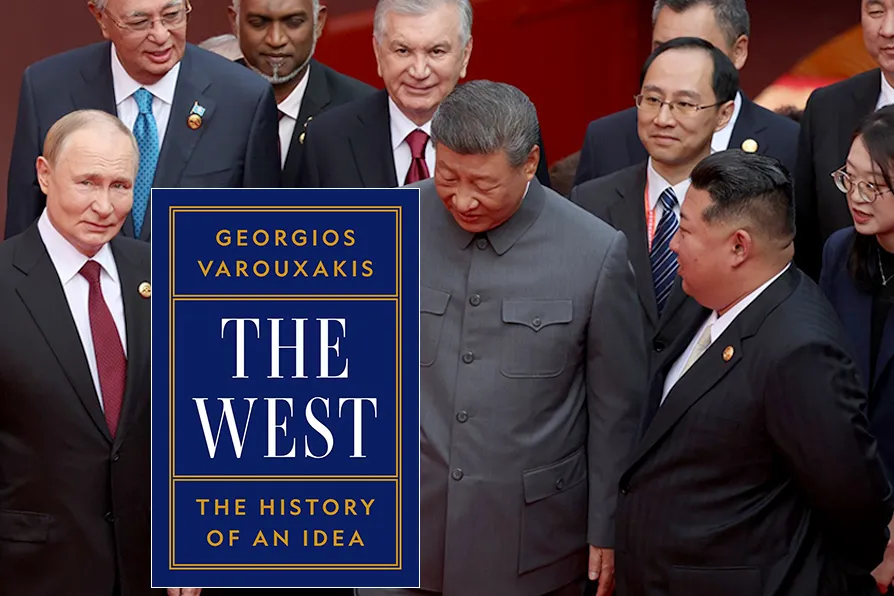
BRENT CUTLER is intrigued by the imperialist, supremacist and contradictory history of a word that is used all too easily