The Tories introduced the 50% strike ballot threshold to make industrial action harder. MATT WRACK argues that a Labour government has no justification for leaving it on the statute book


 Latest editorial
May Day: inventing our own traditions
Socialist historian KEITH FLETT looks at the 19th-century roots of the labour movement’s celebratory day
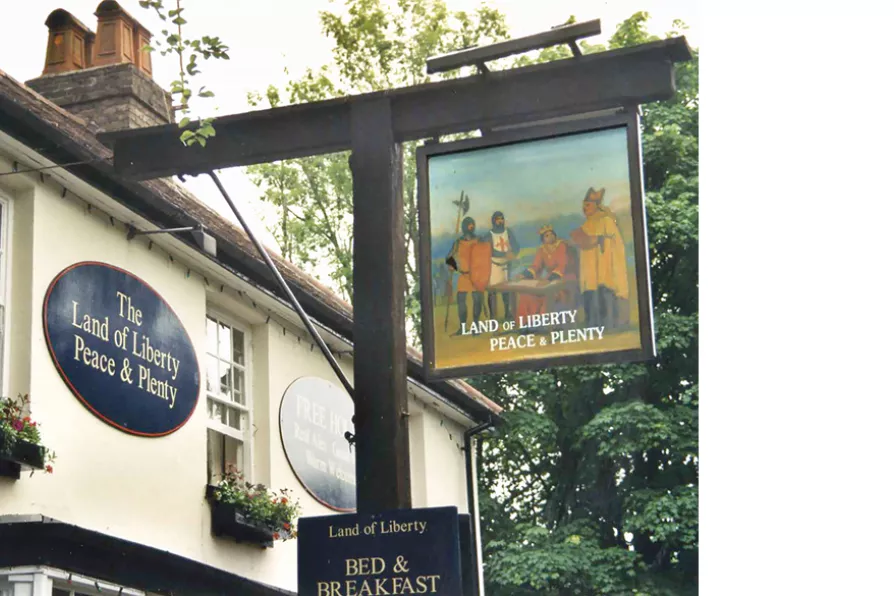 STILL STANDING: Land of Liberty Peace and Plenty, Chorleywood, 2004
[Sludge G/flickr/CC]
STILL STANDING: Land of Liberty Peace and Plenty, Chorleywood, 2004
[Sludge G/flickr/CC]

In the wake of Ann Widdecombe’s murder, JOHN GREEN wonders whether the government will really get to grips with the root cause of these attacks on our MPs
The new PM’s opening addresses offered hope, council homes and reform — but little detail on how any of it will be delivered, warns CLAUDIA WEBBE
Despite the screeching from the right-wing media, Burnham’s speech chimed with the public mood - and socialists should take advantage, says Morning Star editor BEN CHACKO
Scotland's Labour leader cannot continue to evade responsibility for the party's decline, argues LAUREN HARPER
Nature as well as society works dialectically, asserts the Marx Memorial Library and Workers’ School


ERIC HOBSBAWM underlined that all traditions are invented and the labour movement May Day is no exception. Called for by the Second International with a focus on the push for an eight-hour day, the first London May Day took place in 1890.
From the start the tradition had several variants. There was a significant London demonstration on May Day itself, which involved workers taking strike action. There was also an even larger event in Hyde Park on the subsequent Sunday. The discussion about how the tradition of May Day should be marked took place from the start.
Hobsbawm argues that the call for an event on May Day arose almost spontaneously. Some historians, myself included, think that really means we are not quite sure who was actually responsible for the idea and in particular making it actually happen.

Similar stories
JAN WOOLF relishes an extensive history of our long relationship to trees in Britain that underlines the current emergency

KEITH FLETT looks at geographical roots of working-class activism in Britain

Labour movement history in Britain shows workers secured reforms through collective pressure and political representation, rather than being gifted from above, writes KEITH FLETT
It’s not just the Starmer regime: the workers of Britain have always faced legal affronts on their right to assemble and dissent, and the Labour Party especially has meddled with our freedoms from its earliest days, writes KEITH FLETT