The Tories introduced the 50% strike ballot threshold to make industrial action harder. MATT WRACK argues that a Labour government has no justification for leaving it on the statute book


 Latest editorial
A plague on all of our houses
Why has monkeypox, which has been infecting people around Congo Basin at a low level for decades, suddenly become noteworthy in the West? Surprise, it’s racism!
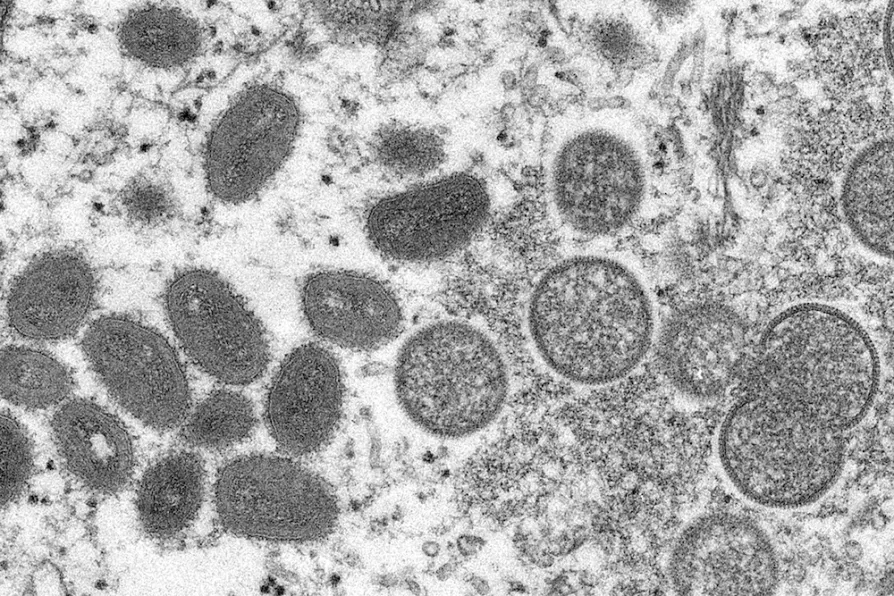 An electron microscope image of mature, oval-shaped monkeypox virions

In the wake of Ann Widdecombe’s murder, JOHN GREEN wonders whether the government will really get to grips with the root cause of these attacks on our MPs
The new PM’s opening addresses offered hope, council homes and reform — but little detail on how any of it will be delivered, warns CLAUDIA WEBBE
Despite the screeching from the right-wing media, Burnham’s speech chimed with the public mood - and socialists should take advantage, says Morning Star editor BEN CHACKO
Scotland's Labour leader cannot continue to evade responsibility for the party's decline, argues LAUREN HARPER
Nature as well as society works dialectically, asserts the Marx Memorial Library and Workers’ School




IF YOU have been following infectious disease news since the Covid-19 pandemic, you may have already seen that Britain has reached over 300 cases of monkeypox. Monkeypox is a disease caused by the monkeypox virus, which belongs to a small family of viruses that also includes smallpox. In fact, monkeypox is so similar to smallpox that it was only recognised as a distinct pathogen after smallpox was eradicated in the 1970s. Smallpox vaccines are often also quite effective at preventing monkeypox.
Other members of the family include horsepox, cowpox, and camelpox — each named for the animal that they were believed to primarily affect. The viruses are transmitted between infected animals, with rodents acting as a reservoir of infection that can reintroduce the virus into other animal populations. Many of these animal poxes are also “zoonoses” (pronounced zoo-no-sees) since human infection with these viruses is possible through contact with an infected animal.
The exception in this virus family was smallpox due to its ability to only infect humans, with frequently debilitating or fatal consequences. Smallpox was eradicated through a considerable worldwide effort using the technique of “ring” vaccination.

Similar stories

With the centenary of the UN Slavery Convention upon us, ROGER McKENZIE argues much needs to be done to rid us of all its contemporary manifestations